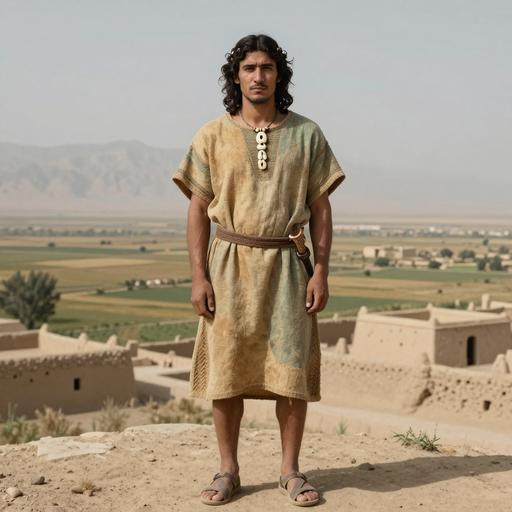
The Story
The journey of mtDNA haplogroup HV12B
Origins and Evolution
mtDNA haplogroup HV12B is a downstream lineage of HV12, itself nested within the broader HV/H macro-haplogroup (which includes H and V). Based on the phylogenetic position of HV12 and available age estimates for closely related lineages, HV12B most likely arose in the Early Holocene (roughly around 9 kya) in the Near East / Western Asia — an area that includes Anatolia and the southern Caucasus. Its emergence fits the pattern of localized diversification of maternal lineages that occurred after the Last Glacial Maximum as human groups expanded and differentiated across the Near East and adjacent regions.
Published population-genetic surveys and mitogenome studies identify HV12 and its subclades as relatively uncommon but regionally concentrated, and HV12B appears to be one of the intermediate subclades that links the parent clade (HV12) to more derived lineages. The available data indicate limited internal diversity for HV12B compared with more common Eurasian haplogroups, suggesting a modest effective maternal population size and/or incomplete sampling in some regions.
Subclades (if applicable)
As an intermediate clade under HV12, HV12B may contain a small number of downstream branches in full-mitogenome-based trees, but published sampling to date is sparse. Where whole-mitogenome resolution is available, HV12B is distinguishable from sister subclades (for example HV12A) by diagnostic mutations in the coding region. The low number of reported HV12B mitogenomes limits confident statements about its internal phylogeography, and additional whole-mtDNA sequencing from Anatolia, the Caucasus, and adjacent regions is likely to reveal finer substructure.
Geographical Distribution
HV12B shows a regional concentration consistent with the known distribution of HV12: highest frequencies and greatest diversity are observed in the Caucasus and Anatolia / western Asia, with lower-frequency detections extending into southern Europe (Italy, the Balkans) and parts of North Africa due to historical Mediterranean contacts. Sporadic single-case detections have also been reported from South Asia and northern Europe in modern screening studies, reflecting either ancient low-frequency dispersals or much more recent movements and gene flow. Phylogeographic signals suggest a Near Eastern origin with subsequent local persistence and limited outward dispersal.
Historical and Cultural Significance
Although HV12B is not a hallmark lineage of any pan-regional migratory event (unlike, for example, some major Neolithic farmer or Bronze Age steppe-associated mtDNA types), its chronology and geography link it to key cultural transitions in the Near East and the Caucasus. Possible associations include:
- Neolithic Anatolian farmer expansions (Early Holocene): HV12B could have been present among farming communities spreading from Anatolia and neighboring regions into adjacent areas, contributing at low levels to the maternal gene pool of early agrarian populations.
- Chalcolithic–Bronze Age dynamics (e.g., Kura-Araxes cultural horizon): continuity of HV12B in the Caucasus and eastern Anatolia may reflect regional population continuity or local demographic processes during 5–4 kya Bronze Age transformations.
- Historic-era contacts (Mediterranean and West Asian trade, imperial movements): occasional HV12B detections in North Africa and southern Europe can reflect maritime and overland interactions across millennia rather than large-scale demographic replacements.
Because of its rarity, HV12B is more useful for fine-scale maternal lineage tracing in regional studies (for instance, population continuity in the southern Caucasus) than for reconstructing large-scale migrations.
Conclusion
mtDNA haplogroup HV12B is a relatively rare, regionally concentrated maternal lineage that likely originated in the Near East / Western Asia in the early Holocene (around 9 kya). Its present-day distribution — strongest in the Caucasus and Anatolia with sporadic presence across the Mediterranean, North Africa and South Asia — is consistent with a model of localized diversification followed by limited dispersal. Greater whole-mtDNA sampling in the Near East and neighboring regions will help clarify HV12B's internal structure, demographic history, and the timing of its spread into peripheral areas.
Key Points
- Origins and Evolution
- Subclades (if applicable)
- Geographical Distribution
- Historical and Cultural Significance
- Conclusion