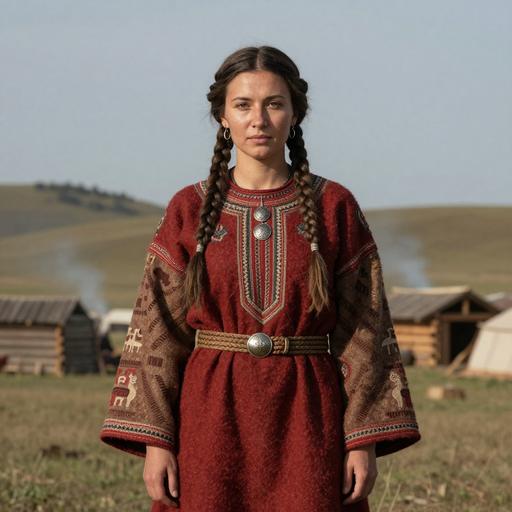
The Story
The journey of mtDNA haplogroup HV19
Origins and Evolution
mtDNA haplogroup HV19 is a subclade nested within HV1, itself a branch of the broader HV node that sits upstream of major European lineages such as H and V. Given the placement of HV19 beneath HV1 and the established Near Eastern / Western Asian origin of HV1, HV19 most plausibly formed in the Early Holocene (roughly 8–10 kya) in or near the Near East. Its time depth is shallower than the Late Pleistocene origin of HV1 (≈25 kya) and is consistent with diversification events tied to postglacial population expansions and the beginnings of farming-associated demographic shifts.
Mutational differences that define HV19 distinguish it from sister and neighbouring HV1 subclades; as with many rare mtDNA sublineages, HV19's phylogeographic pattern reflects both early Holocene dispersals and subsequent local founder effects that produced detectable, but generally low-frequency, modern pockets.
Subclades (if applicable)
As a relatively specific sublineage of HV1, HV19 may include further downstream branches detectable in high-resolution mitogenome studies; however, published and curated databases show few confirmed downstream subclades so far and limited ancient DNA representation (noted in two archaeological samples in the provided database). Continued whole-mitogenome sequencing of targeted populations in the Near East, the Caucasus and the Mediterranean is likely to refine subclade structure and internal diversity.
Geographical Distribution
The modern distribution of HV19 is best explained by an origin in the Near East followed by diffusion into neighbouring regions during the Early Holocene and later movements. Present-day occurrences are typically low to moderate in frequency and are concentrated in:
- The Near East and Anatolia, where basal HV1 lineages and derived HV19 lineages coexist, reflecting long-term local continuity and diversification.
- Southern and Western Europe (Italy, Iberia, the Balkans), where HV19 appears at low to moderate frequencies consistent with Neolithic farmer gene flow and later coastal/maritime contacts.
- The Caucasus, showing moderate representation in some local groups, consistent with geographic proximity to the origin area.
- North Africa and parts of Central/South Asia at low frequencies, reflecting prehistoric backflow and historic long-distance contact routes across the Mediterranean and via trade/migration.
Overall, HV19 is not a high-frequency European lineage like haplogroup H but forms part of the mosaic of maternal lineages that trace Neolithic expansions and Holocene gene flow across Eurasia and into North Africa.
Historical and Cultural Significance
Because HV19 is a low-frequency and regionally patchy lineage, its broad historical signal is best interpreted alongside archaeological and genomic contexts rather than as a marker for a single culture or migration. Reasonable associations include:
- Neolithic expansions (Primary association): HV19 likely diversified during or shortly after the transition to farming in the Near East and spread with early farmer populations into Anatolia and Mediterranean Europe.
- Chalcolithic / Bronze Age movements (Associated): Later mobility, trade networks and population shifts in the Bronze Age could have redistributed HV19-bearing maternal lines, producing localized enrichments in certain coastal and highland populations.
- Historic-era dispersals (Associated/Secondary): Low-frequency appearances in North Africa and South Asia may reflect both prehistoric connections and historic-era contacts (trade, migration, and empire-era movements).
Ancient DNA occurrences attributed to HV19 (including the two samples noted in the database) help anchor its antiquity and regional presence, but more ancient mitogenomes are needed to map precise cultural associations.
Conclusion
HV19 is a relatively rare, regionally informative mtDNA subclade of HV1 that documents Early Holocene maternal diversification in the Near East and subsequent dispersal into the Mediterranean, the Caucasus and neighboring regions. Its low-to-moderate modern frequencies and limited ancient DNA representation make it a lineage of interest for studies of fine-scale postglacial and Neolithic population dynamics; expanded whole-mitogenome surveys in the Near East, Caucasus and Mediterranean will likely clarify its internal structure and historical movements.
Key Points
- Origins and Evolution
- Subclades (if applicable)
- Geographical Distribution
- Historical and Cultural Significance
- Conclusion