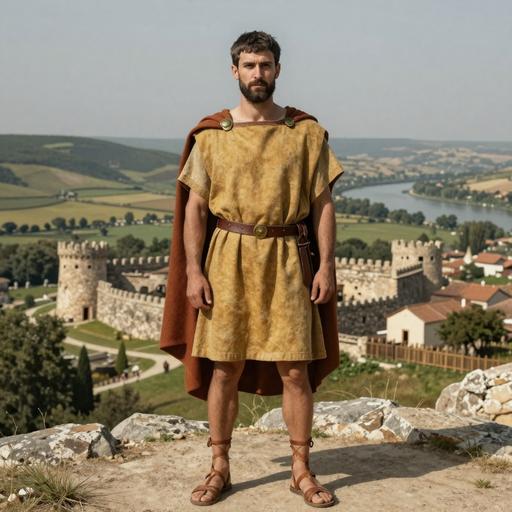
The Story
The journey of mtDNA haplogroup HV9A1
Origins and Evolution
HV9A1 is a subclade of HV9A, itself nested within haplogroup HV (a descendant of R0/HV). Based on its position in the phylogeny and the known time depth of HV9A (early Holocene, ~11 kya), HV9A1 most plausibly arose in the Near East or the southern Caucasus region during the early Holocene (around ~10 kya). Its emergence fits the pattern of maternal lineages that diversified after the Last Glacial Maximum and during the transition to agriculture, when populations in the Fertile Crescent and adjacent highlands underwent demographic expansion and radiated into surrounding regions.
Ancient DNA studies and modern population surveys of related HV subclades show that these lineages frequently reflect a combination of postglacial re-expansion from refugia and early Neolithic farmer dispersals. The limited internal diversity often reported for HV9A1 in modern samples is consistent with a modest-sized founding population and subsequent regional founder effects as the lineage dispersed along coastal and inland routes.
Subclades
HV9A1 is an intermediate clade in the HV9 phylogeny. Published and catalogued sequences show HV9A1 has few well-differentiated downstream branches identified to date; where present, such downstream branches tend to be geographically localized. This pattern indicates either a relatively recent origin for the clade or limited sampling and resolution in current datasets. Continued mitogenome sequencing, particularly from understudied Near Eastern and Caucasus populations, may reveal additional internal structure.
Geographical Distribution
The geographic distribution of HV9A1 mirrors that of its parent HV9A but at generally lower frequencies. It is most commonly observed in:
- Near Eastern and southern Caucasus populations (Anatolia, Levantine zone, southern Caucasus), where HV9A lineages show their highest diversity and where early Holocene population expansions originated.
- Southern and Mediterranean Europe, especially across the Balkans, Italy and parts of the western Mediterranean coast, consistent with coastal and overland Neolithic dispersal routes from Anatolia into Europe.
- Peripheral and low-frequency occurrences in Western Europe, North Africa (Mediterranean-facing regions), and parts of Central and South Asia, reflecting later historic movements, trade, and complex prehistoric contacts.
Modern frequency estimates for HV9A1 are generally low-to-moderate in the Near East and Caucasus and low elsewhere; confidence in fine-scale frequency maps is limited by sparse mitogenome sampling in many regions.
Historical and Cultural Significance
HV9A1 is best interpreted as a marker of early Holocene maternal ancestry tied to the demographic processes that reshaped West Eurasia after the Ice Age and during the advent of farming. It is plausibly associated with:
- Neolithic demographics: the lineage likely rode the wave of farmer-associated population growth originating in Anatolia and adjacent regions, contributing maternal ancestry to early farming communities that spread into southeastern and Mediterranean Europe.
- Maritime and coastal dispersals: presence along Mediterranean coasts suggests some spread via maritime Neolithic routes (e.g., Cardial-related expansions) as well as overland Balkan corridors.
- Later Bronze Age and historic contacts: low-level occurrences outside the core Near Eastern/Caucasus range can reflect Bronze Age mobility, later trade networks, and historic migrations around the Mediterranean and into neighboring regions.
HV9A1 is not typically associated with steppe-derived Bronze Age expansions (e.g., those characterized by substantial haplogroup U2/U4/U5 and certain Y-DNA signatures); rather, it aligns more with farmer- and Near Eastern-derived maternal backgrounds.
Conclusion
HV9A1 is a geographically informative maternal clade that helps link early Holocene populations of the Near East and southern Caucasus to subsequent Mediterranean and European maternal gene pools. While currently observed at low-to-moderate frequencies and with limited internal diversity, HV9A1 is valuable for reconstructing regional Neolithic dispersals and postglacial demographic history; increased full mitogenome sampling in the Near East and Caucasus will refine its substructure and chronology.
Key Points
- Origins and Evolution
- Subclades
- Geographical Distribution
- Historical and Cultural Significance
- Conclusion