Menu
mtDNA Haplogroup • Maternal Lineage

J1B1B

mtDNA Haplogroup J1B1B

~10,000 years ago
Near East
2 subclades
13 ancient samples
Scroll to explore
Chapter I

The Story

The journey of mtDNA haplogroup J1B1B

Origins and Evolution

Haplogroup J1B1B is a subclade nested within mtDNA haplogroup J1b1, itself a downstream branch of haplogroup J1. The wider J lineage expanded after the Last Glacial Maximum and became prominent in the Near East during the early Holocene. Based on its phylogenetic position beneath J1b1 and the geographic pattern of related lineages, J1B1B most likely arose in the Near East approximately 9–11 kya, during the period of Neolithic population growth and mobility.

The lineage represents one of several regional daughter clades that diversified as populations associated with early farming, herding and post‑glacial recolonization dispersed through Anatolia, the Levant and along Mediterranean coasts. Because J1b1 and its subclades are relatively low-frequency but geographically widespread, J1B1B is particularly informative for fine‑scale maternal ancestry and demographic studies rather than for coarse continental assignments.

Subclades

As an intermediate clade, J1B1B itself may contain a small number of downstream branches detectable in high-resolution mitogenome studies, but it is typically encountered as a terminal or near‑terminal lineage in many population samples. Where deeper substructure exists it is generally revealed only by full mitogenome sequencing; many published population surveys relying on HVS1/HVS2 and a limited set of coding‑region markers group these women into broader J1b1 categories. Continued mitogenome sequencing, especially from under‑sampled Near Eastern and Mediterranean populations, refines the known subclades and their geographic signals.

Geographical Distribution

The geographic footprint of J1B1B mirrors that of its parent clade, concentrated in and around the Near East with dispersals into adjacent regions:

  • Near East / Anatolia: Moderate frequency and diversity, consistent with an origin and early persistence in this region.
  • Southern Europe (Mediterranean rim): Low to moderate frequency, likely introduced via Neolithic and later coastal/overland movements (e.g., Cardial/Impressed Ware and other Mediterranean Neolithic routes).
  • Caucasus & North Africa: Present at low to moderate frequencies, reflecting both prehistoric contacts and historic trans‑Mediterranean interactions.
  • Central Asia: Low frequency, generally reflecting long‑distance gene flow and later historical movements.
  • Jewish diaspora populations: Detectable in some Ashkenazi and Sephardi maternal lineages, where it contributes to the complex Near Eastern substrate seen in these groups.

Overall, frequencies are greatest in Near Eastern source areas and decline toward the periphery of the Mediterranean and into Central Asia.

Historical and Cultural Significance

Because J1B1B sits within a haplogroup complex associated with early farming populations, it is useful as a maternal marker for studying the spread of Neolithic practices from Anatolia and the Levant into Europe and North Africa. Its presence along Mediterranean coasts is consistent with maritime and coastal Neolithic dispersals (e.g., Cardial/impressed‑ware expansions), and inland occurrences track overland movement corridors through the Balkans and Caucasus.

In historical times, continued population contact across the Mediterranean, the Levantine corridor and into North Africa and the Caucasus has redistributed J1B1B at low frequencies. Its detection in some Jewish maternal lineages reflects both deep Near Eastern ancestry and the complex demographic history of Jewish communities, which often incorporate local and regional maternal inputs.

While not a high‑frequency marker, J1B1B contributes to multi‑locus mitogenome profiles that can distinguish Neolithic‑derived maternal ancestry from later Bronze Age or Iron Age movements. It therefore complements autosomal and Y‑DNA evidence when reconstructing sex‑specific demographic processes.

Conclusion

mtDNA J1B1B is a geographically informative, low‑to‑moderate frequency maternal lineage that likely originated in the Near East in the early Holocene and spread with Neolithic and later movements across the Mediterranean, the Caucasus and adjoining regions. Its value is greatest in high‑resolution mitogenome studies where its substructure and coalescent time help clarify regional demographic events tied to the spread of agriculture and subsequent population contacts.

Key Points

  • Origins and Evolution
  • Subclades
  • Geographical Distribution
  • Historical and Cultural Significance
  • Conclusion
Chapter II

Tree & Relationships

Phylogenetic context and subclades

Evolution Path

This haplogroup's evolutionary journey from its earliest ancestor to the present.

Steps Haplogroup Age Estimate Archaeology Era Time Passed Immediate Descendants Tested Modern Descendants Ancient Connections
1 J1B1B Current ~10,000 years ago 🌾 Neolithic 9,500 years 2 3 13
2 J1B1 ~12,000 years ago 🌾 Neolithic 12,000 years 2 165 0
3 J1b ~17,000 years ago 🏹 Mesolithic 17,000 years 7 248 19
4 J ~45,000 years ago 🦴 Paleolithic 45,000 years 4 1,622 16
5 JT ~45,000 years ago 🦴 Paleolithic 45,000 years 2 3,237 1
6 N ~60,000 years ago 🦴 Paleolithic 60,000 years 15 15,452 13
7 L3 ~70,000 years ago 🦴 Paleolithic 70,000 years 11 17,621 6
8 L ~160,000 years ago 🦴 Paleolithic 160,000 years 7 18,987 5

Siblings (1)

Other branches from the same parent haplogroup

Chapter III

Where in the World

Geographic distribution and modern presence

Place of Origin

Near East

Modern Distribution

The populations where MTDNA haplogroup J1b1b is found include:

  1. Southern European populations (Mediterranean coasts of Iberia, Italy, Greece, Balkans)
  2. Middle Eastern populations (Near East and Anatolia)
  3. North African populations (Maghreb and coastal North Africa)
  4. Caucasus region populations
  5. Some populations in Central Asia (low frequency)
  6. Jewish populations, particularly certain Ashkenazi and Sephardi maternal lineages
CHAPTER IV

When in Time

Your haplogroup in the context of human history

~10k years ago

Neolithic Revolution

Agriculture begins, settled communities form

~9k years ago

Haplogroup J1B1B

Your mtDNA haplogroup emerged in Near East

Near East
~5k years ago

Bronze Age

Metalworking, writing, and early civilizations

~3k years ago

Iron Age

Iron tools, expanded trade networks

~2k years ago

Classical Antiquity

Greek and Roman civilizations flourish

Present

Present Day

Modern era

Your Haplogroup
Historical Era
Chapter IV-B

Linked Cultures

Ancient cultures associated with mtDNA haplogroup J1B1B

Cultural Heritage

These ancient cultures have been linked to haplogroup J1B1B based on matching ancient DNA samples from archaeological excavations. The presence of this haplogroup in these cultures provides insights into the migrations and population movements of populations carrying this haplogroup.

Armenian Late Bronze Armenian LBA-EIA Barikot Culture Bustan Culture Dehkan Culture Early Medieval Mongolian Late Bronze Age Armenian Middle Bronze Age Anatolia Parwak Shah Tepe Culture Syrian Bronze Viking
Culture assignments are based on archaeological context of ancient DNA samples and may represent regional associations during specific time periods.
Chapter V

Sample Catalog

Top 13 ancient DNA samples directly related to haplogroup J1B1B or parent clades

13 / 13 samples
Portrait Sample Country Era Date Culture mtDNA Match
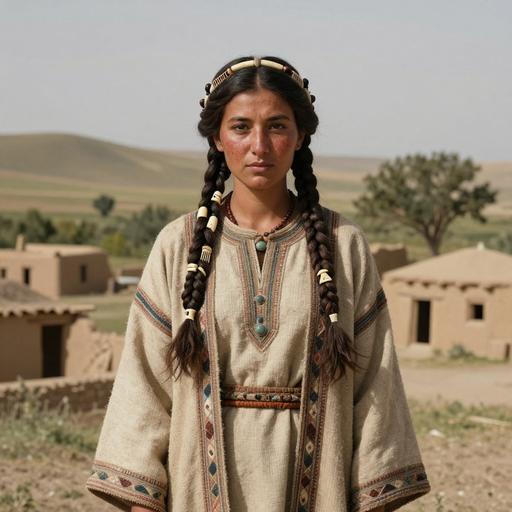
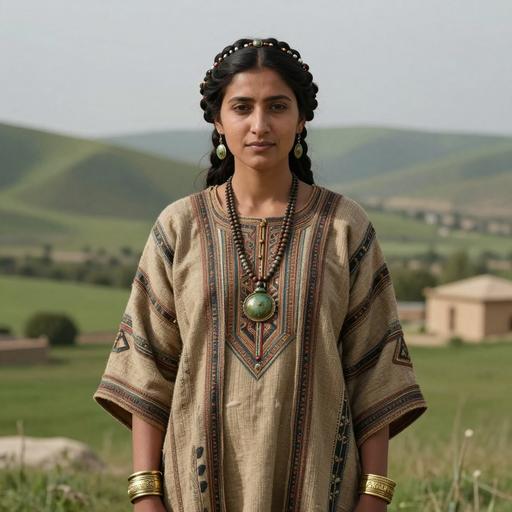
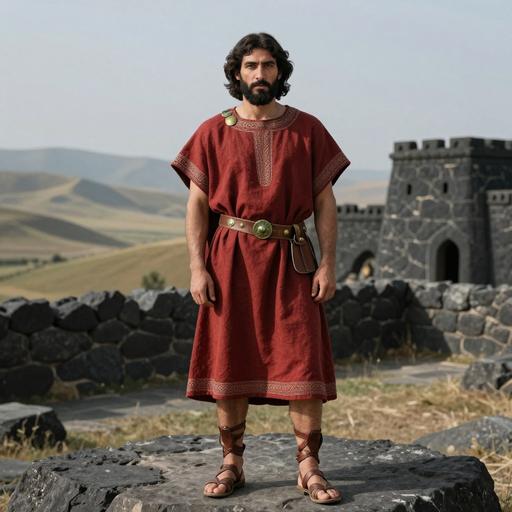
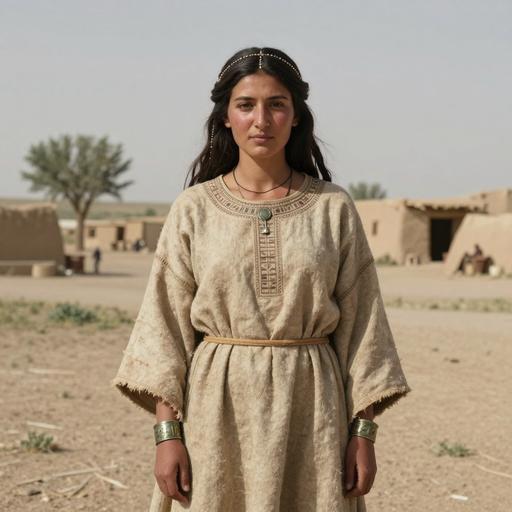
Portrait of ancient individual L8666 from Uzbekistan, dated 150 BCE - 50 CE
L8666
Uzbekistan Iron Age Dehkan Culture of Surkhandaryo 150 BCE - 50 CE Dehkan Culture J1b1b1 Direct
Portrait of ancient individual OLN009 from Mongolia, dated 700 CE - 1050 CE
OLN009
Mongolia Early Medieval Mongolia 700 CE - 1050 CE Early Medieval Mongolian J1b1b1 Direct
Portrait of ancient individual VK217 from Sweden, dated 800 CE - 1200 CE
VK217
Sweden Viking Age Sweden 800 CE - 1200 CE Viking J1b1b1 Direct
Portrait of ancient individual VK217 from Sweden, dated 800 CE - 1200 CE
VK217
Sweden The Viking Age 800 CE - 1200 CE J1b1b1 Direct
Portrait of ancient individual I6545 from Pakistan, dated 925 BCE - 826 BCE
I6545
Pakistan Barikot Iron Age Settlement in Swat Valley, Pakistan 925 BCE - 826 BCE Barikot Culture J1b1b3 Direct
Portrait of ancient individual I19347 from Armenia, dated 1250 BCE - 1100 BCE
I19347
Armenia Late Bronze Age Armenia 1250 BCE - 1100 BCE Late Bronze Age Armenian J1b1b1 Direct
Portrait of ancient individual I18163 from Armenia, dated 1250 BCE - 1100 BCE
I18163
Armenia Late Bronze Age to Early Iron Age Armenia 1250 BCE - 1100 BCE Armenian LBA-EIA J1b1b1 Direct
Portrait of ancient individual I18279 from Armenia, dated 1420 BCE - 1250 BCE
I18279
Armenia Armenian LBA 1420 BCE - 1250 BCE Armenian Late Bronze J1b1b1 Direct
Portrait of ancient individual I11519 from Uzbekistan, dated 1600 BCE - 1300 BCE
I11519
Uzbekistan Bronze Age Bustan 1600 BCE - 1300 BCE Bustan Culture J1b1b1 Direct
Portrait of ancient individual I14762 from Turkey, dated 1736 BCE - 1541 BCE
I14762
Turkey Middle Bronze Age Turkey 1736 BCE - 1541 BCE Middle Bronze Age Anatolia J1b1b1 Direct
Chapter VI

Carrier Distribution Map

Geographic distribution of 13 ancient DNA samples carrying haplogroup J1B1B

Time Period Filter
All Time Periods
Showing all samples
Each marker represents an ancient individual
Chapter VII

Temporal Distribution

Distribution of carriers across archaeological periods

Chapter VIII

Geographic Distribution

Distribution of carriers by country of origin

Chapter IX

Country × Era Distribution

Cross-tabulation of carrier countries and archaeological periods

Data

Data & Provenance

Source information and data quality

Last Updated 2026-02-16
Confidence Score 50/100
Coverage Low
Data Source

We use the latest phylotree for MTDNA haplogroup classification and data.