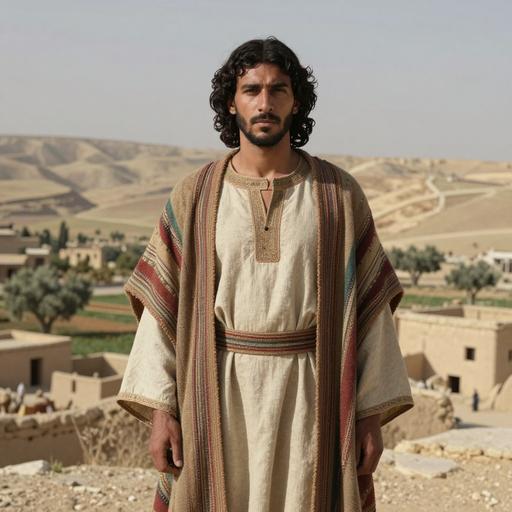
The Story
The journey of mtDNA haplogroup J1B2J
Origins and Evolution
mtDNA haplogroup J1b2 is a downstream branch of haplogroup J1b (itself within macro-haplogroup J). Based on phylogenetic placement and coalescence estimates for nearby branches, J1b2 most likely arose in the Near East around the early post‑glacial to early Neolithic period (~9 kya). Its emergence fits the general pattern of maternal lineages that expanded with the spread of farming populations from Anatolia and the Levant into the Mediterranean and adjacent regions.
Genetically, J1b2 is characterized by specific control‑region and coding‑region mutations that distinguish it from sister clades (e.g., other branches of J1b). As with many mtDNA lineages, J1b2 diversified into further subclades over the subsequent millennia; some of those downstream branches show geographically localized patterns reflecting later migrations and founder effects.
Subclades (if applicable)
J1b2 functions as an intermediate node in the J1b sub-tree. Downstream subclades (often labelled with additional letters or numbers in different databases, e.g., J1b2a, J1b2b, or J1b2j in specific phylogenies) are typically low-frequency and regionally restricted. These terminal or near‑terminal subclades can help pinpoint more recent maternal founder events (for example, localized expansions in parts of Southern Europe, the Caucasus, or among specific diaspora communities). Because nomenclature and resolution improve as full mitogenomes are sequenced, some named subclades may be reorganized when new data appear.
Geographical Distribution
The modern distribution of J1b2 is consistent with a Near Eastern origin and subsequent dispersal around the Mediterranean and into adjacent regions. Key geographical features include:
- Near East / Anatolia: Presence of ancestral diversity consistent with origin and early differentiation.
- Southern Europe: Detected at low to moderate frequencies, particularly in Mediterranean coastal areas where Near Eastern farmer ancestry had strong influence (e.g., parts of the Iberian Peninsula, Italy, Greece).
- North Africa and the Maghreb: Detected at low to moderate frequencies, often reflecting historical Mediterranean contacts and gene flow.
- Caucasus and parts of Central Asia: Pockets of J1b2 and its subclades occur, reflecting both ancient Near Eastern connections and later regional movements.
- Jewish populations: J1b2 and related J-lineages appear at varying frequencies in some Ashkenazi, Sephardi and other Jewish groups—reflecting complex founder effects and Near Eastern maternal ancestry within these communities.
Overall, J1b2 is not a high-frequency pan‑regional lineage but rather a moderate to low frequency lineage with focal concentration reflecting ancient farmer dispersals and later historical migrations.
Historical and Cultural Significance
The demographic history inferred for J1b2 ties closely to major cultural transformations in prehistory and history:
- Neolithic farmer dispersal: The timing and phylogenetic relationships of J1b2 fit a role as one of the maternal lineages incorporated into expanding early farming populations originating in Anatolia and the Levant. As such, J1b2 likely rode the demographic wave of the Neolithic into the Mediterranean basin.
- Mediterranean contacts and maritime networks: Later movements (Bronze Age trade, Phoenician colonization, Greek and Roman-era mobility) offered routes for further dissemination along coastal regions, producing scattered occurrences in North Africa and Southern Europe.
- Diasporas and historical founder effects: Within certain Jewish communities and localized regional populations, J1b2 subclades can reflect founder events and drift, producing detectable signatures in modern genetic surveys.
While J1b2 itself is not diagnostic of any single archaeological culture such as Bell Beaker or Yamnaya, its pattern is most consistent with the Neolithic agricultural expansion from the Near East; later historical processes layered additional, more localized patterns on top of that substrate.
Conclusion
mtDNA J1b2 is a Near Eastern‑rooted maternal lineage that exemplifies how early post‑glacial and Neolithic demographic processes seeded maternal diversity across the Mediterranean, the Caucasus and adjacent regions. It is generally low to moderately frequent in descendant populations, with downstream subclades useful for resolving more recent, localized maternal histories. Continued full mitogenome sequencing and ancient DNA sampling will refine the internal structure and regional histories of J1b2 and its subclades.
Key Points
- Origins and Evolution
- Subclades (if applicable)
- Geographical Distribution
- Historical and Cultural Significance
- Conclusion