Menu
mtDNA Haplogroup • Maternal Lineage

J1C15A1

mtDNA Haplogroup J1C15A1

~1,000 years ago
Near East / Caucasus
0 subclades
Scroll to explore
Chapter I

The Story

The journey of mtDNA haplogroup J1C15A1

Origins and Evolution

mtDNA haplogroup J1C15A1 is a downstream lineage of J1C15A, itself a branch of the broader J1C/J1 maternal cluster. Based on the position of J1C15A1 in the J1 phylogeny and the estimated age of its parent clade, J1C15A1 most plausibly arose in the later Holocene (roughly within the last 1–2 ky). This timing places its formation after the primary Neolithic expansions and into periods characterized by increasing regional mobility, maritime trade, and historic-era population movements across the eastern Mediterranean and the Caucasus.

The lineage's low frequency and geographically patchy occurrences are consistent with a recent founder event or localized expansion rather than an ancient, wide-ranging dispersal. That pattern is typical for many very recent mtDNA subclades: a mutation emerges in a small maternal lineage and becomes detectable in a handful of populations through drift, local growth, or migration.

Subclades (if applicable)

At present, J1C15A1 is described as a terminal or near‑terminal subclade beneath J1C15A in available phylogenies and databases. There are no widely recognized or extensively sampled downstream subclades of J1C15A1 reported in the literature; however, low-frequency private mutations and micro‑substructure may exist and could be revealed with denser mitogenome sampling in the regions where the haplogroup is observed.

Geographical Distribution

The distribution of J1C15A1 is concentrated around the eastern Mediterranean and adjacent zones, with sporadic occurrences elsewhere consistent with historic mobility:

  • Near East (Anatolia, Levant) and the Caucasus show the highest density of detected occurrences, reflecting the clade's likely origin and early local diversification.
  • Southern Europe (Mediterranean coastlines) and North Africa contain low-frequency occurrences that plausibly reflect maritime contacts, historical colonization/trade (Phoenician, Greek, Roman), later Byzantine and Islamic-era movements, and more recent population flows.
  • Jewish populations (both Ashkenazi and Sephardi) occasionally carry rare J1C-derived lineages; sporadic reports of J1C15A1 in Jewish individuals are consistent with the genealogical connections and migrations linking Levantine and Mediterranean communities.
  • Small, isolated occurrences in parts of Central Asia likely represent long-distance dispersal or recent gene flow rather than primary centers of origin.

Ancient DNA recovery of J1C15A1 is currently limited (single reported aDNA detection in the database referenced), which is coherent with its recent origin and low frequency.

Historical and Cultural Significance

Because J1C15A1 appears to have formed during the later Holocene, its distribution is best interpreted in the context of post‑Neolithic historical processes: classical-era maritime networks, the movement of peoples across the Near East and Mediterranean during the Iron Age and Classical periods, and medieval to early modern connectivity (trade, migration, imperial movements). Possible historical conduits include Phoenician/Punic navigation, Greek and Roman coastal settlement and trade, Byzantine and Islamic-era population reorganization, and later Ottoman-era mobility.

The haplogroup’s occasional presence in Jewish communities may reflect either ancient Levantine maternal ancestry retained in diasporas or later integration of local Levantine Mediterranean lineages into Jewish maternal pools. As with many rare mtDNA lineages, J1C15A1 can be informative in fine-scale maternal genealogy and population-history studies when combined with high-resolution mitogenomes and dense regional sampling.

Conclusion

J1C15A1 represents a recent, regionally concentrated maternal lineage within the J1C family that highlights how post‑Neolithic and historic movements shaped localized maternal diversity around the eastern Mediterranean and neighboring regions. Its low frequency, limited ancient DNA representation, and patchy modern distribution point to recent origin and founder effects; targeted mitogenome sequencing in the Near East, Caucasus, and Mediterranean will better resolve its internal structure, age, and migratory history.

Key Points

  • Origins and Evolution
  • Subclades (if applicable)
  • Geographical Distribution
  • Historical and Cultural Significance
  • Conclusion

Chapter II

Tree & Relationships

Phylogenetic context and subclades

Evolution Path

This haplogroup's evolutionary journey from its earliest ancestor to the present.

Steps Haplogroup Age Estimate Archaeology Era Time Passed Immediate Descendants Tested Modern Descendants Ancient Connections
1 J1C15A1 Current ~1,000 years ago 🏰 Medieval 1,200 years 0 0 0
2 J1C15A ~2,000 years ago 🏺 Classical Antiquity 2,500 years 1 0 1
3 J1C15 ~3,000 years ago ⚔️ Iron Age 3,000 years 1 0 0

4 J1C1 ~9,000 years ago 🌾 Neolithic 9,000 years 10 164 0
5 J1C ~12,000 years ago 🌾 Neolithic 12,000 years 9 605 319
6 J1 ~30,000 years ago 🦴 Paleolithic 30,000 years 2 1,069 55
7 J ~45,000 years ago 🦴 Paleolithic 45,000 years 4 1,622 16
8 JT ~45,000 years ago 🦴 Paleolithic 45,000 years 2 3,237 1
9 N ~60,000 years ago 🦴 Paleolithic 60,000 years 15 15,452 13
10 L3 ~70,000 years ago 🦴 Paleolithic 70,000 years 11 17,621 6
11 L ~160,000 years ago 🦴 Paleolithic 160,000 years 7 18,987 5

Subclades (0)

Terminal branch - no known subclades

Chapter III

Where in the World

Geographic distribution and modern presence

Place of Origin

Near East / Caucasus

Modern Distribution

The populations where MTDNA haplogroup J1C15A1 is found include:

  1. Near Eastern populations (Anatolia, Levant)
  2. Caucasus region populations
  3. Southern European populations (Mediterranean coastlines)
  4. North African populations (coastal and Maghreb areas)
  5. Jewish populations (sporadic occurrences in Ashkenazi and Sephardi groups)
  6. Small occurrences in parts of Central Asia
CHAPTER IV

When in Time

Your haplogroup in the context of human history

~10k years ago

Neolithic Revolution

Agriculture begins, settled communities form

~5k years ago

Bronze Age

Metalworking, writing, and early civilizations

~3k years ago

Iron Age

Iron tools, expanded trade networks

~2k years ago

Classical Antiquity

Greek and Roman civilizations flourish

~1k years ago

Haplogroup J1C15A1

Your mtDNA haplogroup emerged in Near East / Caucasus

Near East / Caucasus
Present

Present Day

Modern era

Your Haplogroup
Historical Era
Chapter IV-B

Linked Cultures

Ancient cultures associated with mtDNA haplogroup J1C15A1

Cultural Heritage

These ancient cultures have been linked to haplogroup J1C15A1 based on matching ancient DNA samples from archaeological excavations. The presence of this haplogroup in these cultures provides insights into the migrations and population movements of populations carrying this haplogroup.

Alföld Linear Pottery AVK French Neolithic Gumelnița Körös Culture Linear Pottery Culture Macedonian Neolithic Siena Culture Szakálhát Group Tylos Culture Unetice Culture Vekerzug Culture
Culture assignments are based on archaeological context of ancient DNA samples and may represent regional associations during specific time periods.
Chapter V

Sample Catalog

Top 50 ancient DNA samples directly related to haplogroup J1C15A1 or parent clades

50 / 50 samples
Portrait Sample Country Era Date Culture mtDNA Match
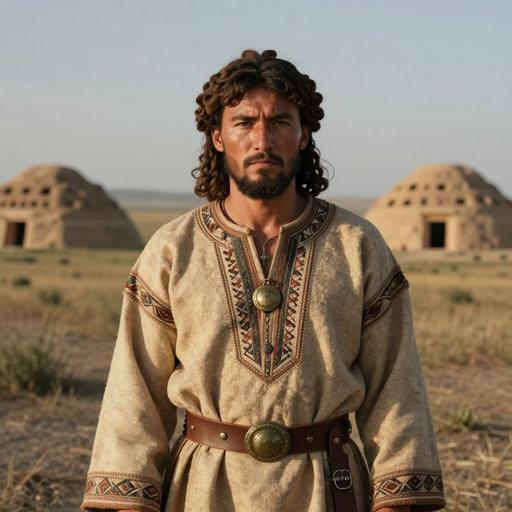
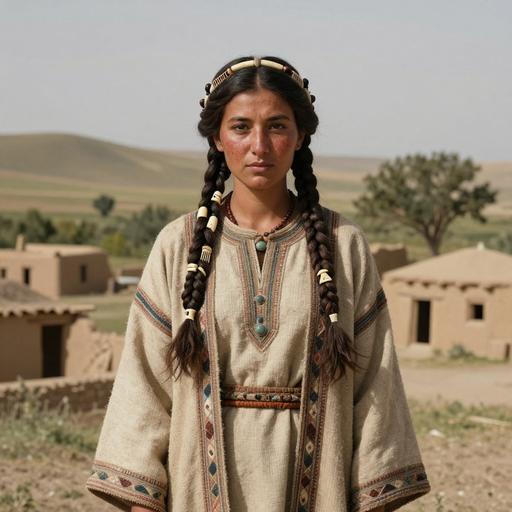
Portrait of ancient individual I11565 from Pakistan, dated 1 CE - 1000 CE
I11565
Pakistan Medieval Parwak 1 CE - 1000 CE Parwak J1b1 Direct
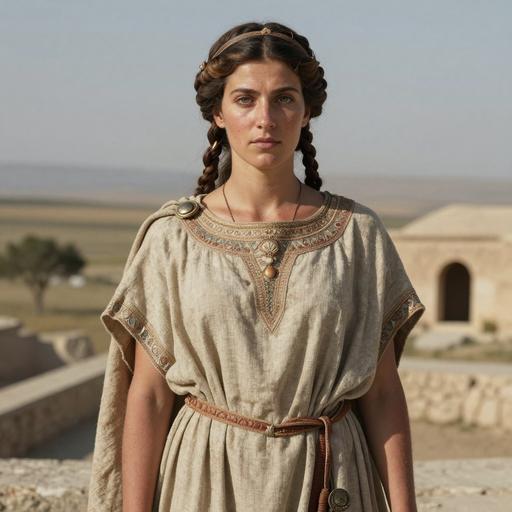
Portrait of ancient individual R1544 from Italy, dated 1 CE - 400 CE
R1544
Italy Imperial Rome 1 CE - 400 CE Roman Empire J1c Direct
Portrait of ancient individual I15501 from Serbia, dated 1 CE - 400 CE
I15501
Serbia Roman Serbia 1 CE - 400 CE Roman Provincial J1c1 Direct
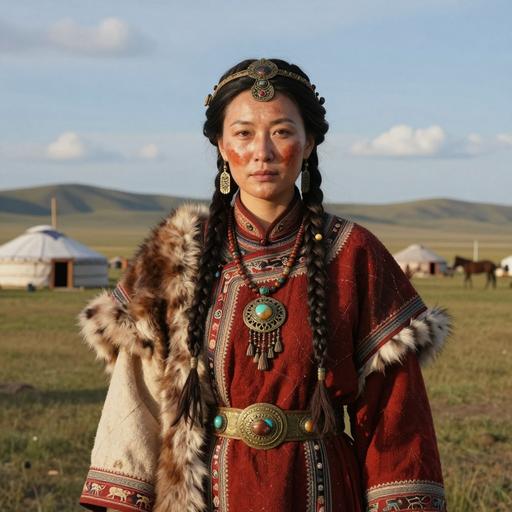
Portrait of ancient individual DA98 from Kyrgyzstan, dated 26 CE - 242 CE
DA98
Kyrgyzstan The Hun Period in Kyrgyzstan 26 CE - 242 CE Hunnic Period J1d6 Direct
Portrait of ancient individual DA98 from Kyrgyzstan, dated 26 CE - 242 CE
DA98
Kyrgyzstan The Huns 26 CE - 242 CE J1d6 Direct
Portrait of ancient individual I20139 from Turkey, dated 27 BCE - 476 CE
I20139
Turkey Roman Period 5 Turkey 27 BCE - 476 CE Roman Turkey J2a2e Direct
Portrait of ancient individual BRE005 from Kazakhstan, dated 32 BCE - 113 CE
BRE005
Kazakhstan Iron Age Kazakhstan 32 BCE - 113 CE Kazakh Iron Age J2b1a2a Direct
Portrait of ancient individual TMI001 from Mongolia, dated 40 BCE - 109 CE
TMI001
Mongolia Early Medieval Xiongnu 40 BCE - 109 CE Xiongnu J2b1a2a Direct
Portrait of ancient individual PCA0035 from Poland, dated 42 CE - 90 CE
PCA0035
Poland Wielbark Culture 42 CE - 90 CE Wielbark J2b1a5 Direct
Portrait of ancient individual PCA0057 from Poland, dated 45 CE - 77 CE
PCA0057
Poland Wielbark Culture 45 CE - 77 CE Wielbark J1c7a Direct
Chapter VI

Carrier Distribution Map

Geographic distribution of 100 ancient DNA samples carrying haplogroup J1C15A1

Time Period Filter
All Time Periods
Showing all samples
Each marker represents an ancient individual
Chapter VII

Temporal Distribution

Distribution of carriers across archaeological periods

Chapter VIII

Geographic Distribution

Distribution of carriers by country of origin

Chapter IX

Country × Era Distribution

Cross-tabulation of carrier countries and archaeological periods

Data

Data & Provenance

Source information and data quality

Last Updated 2026-02-16
Confidence Score 50/100
Coverage Low
Data Source

We use the latest phylotree for MTDNA haplogroup classification and data.