The Story
The journey of mtDNA haplogroup J1C16
Origins and Evolution
mtDNA haplogroup J1C16 is a downstream sublineage of J1C1, itself a branch of haplogroup J that expanded across the Near East and Mediterranean after the Last Glacial Maximum and into the Early Holocene. Given its phylogenetic position beneath J1C1 and the estimated age of closely related J1C subclades, J1C16 most plausibly arose in the later Neolithic to Bronze Age interval (roughly 4–5 kya) in the Near Eastern or Caucasus region. Its emergence likely represents a localized mutation event on a J1C1 background followed by limited geographic dispersal.
Because J1C16 is a relatively deep, rare subclade, direct ancient DNA evidence is sparse; inferences therefore rely on the distribution and chronology of parent clades (J1C1/J1C) and patterns seen in neighboring maternal lineages.
Subclades
At present J1C16 is a narrowly defined terminal subclade with few reported downstream branches in public phylogenies and databases. That relative paucity of substructure is consistent with: (1) a comparatively recent origin; (2) small founding population(s); or (3) undersampling in modern and ancient datasets. As more whole mitogenomes are sequenced across the Near East, Caucasus and Mediterranean, additional internal diversity within J1C16 may be discovered.
Geographical Distribution
J1C16 appears at low to moderate frequencies and is geographically concentrated around the Near East and the Caucasus, with scattered occurrences in the Mediterranean Basin and parts of Southern Europe. This pattern mirrors the broader dispersal of J1C1-derived lineages, which expanded with Neolithic farming and later regional movements (Bronze Age, Iron Age, historical era migrations). Modern detections are rare, often appearing in population surveys at low frequency or within community-specific datasets (for example, small finds in Levantine, Anatolian, Caucasus and some Mediterranean samples).
Historical and Cultural Significance
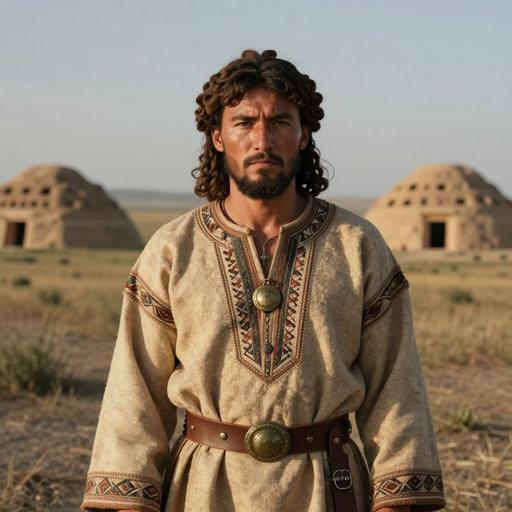
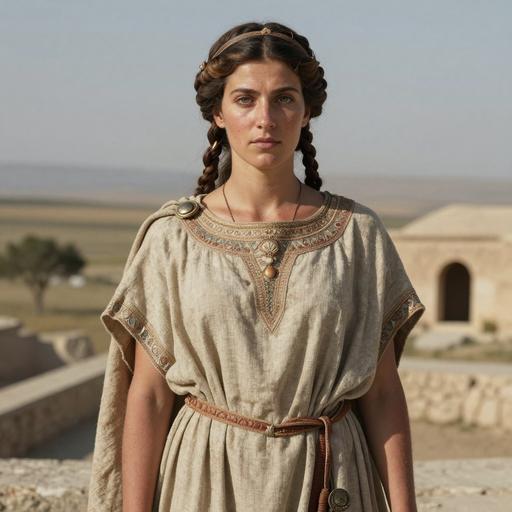
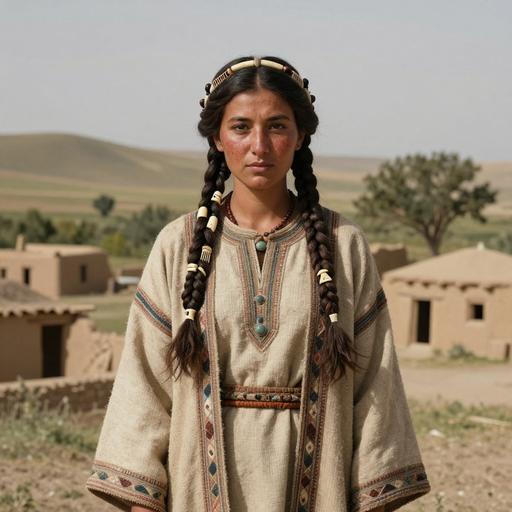
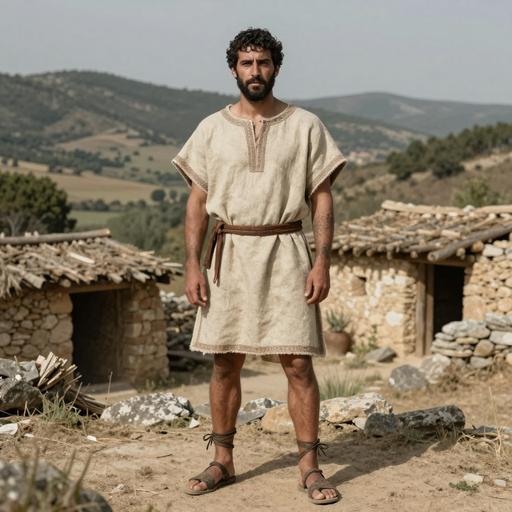
Because J1C16 is uncommon and has limited direct ancient-DNA representation, its cultural associations are inferred from geographic and chronological overlap with well-characterized demographic processes:
- Neolithic and Early Farmer influence: Parent clades of J1C contributed maternal lineages to early farming groups emanating from Anatolia and the Levant, so J1C16 may carry a minority signal of those ancestral farmer populations.
- Bronze Age regional dynamics: The likely origin window for J1C16 (later Neolithic to Bronze Age) overlaps periods of increased mobility across the Near East and Caucasus — city-states, trade networks and population movements could have facilitated local spread.
- Historic dispersals: Later maritime and overland connections in the Mediterranean (Phoenician trade, Greek and Roman periods, medieval population movements, and diasporas) offer plausible routes for the low-frequency presence of J1C16 in parts of Southern and Western Europe and North Africa.
Because the clade is rare, it has not been tied to a single prominent archaeological culture (e.g., it is not a diagnostic lineage of Bell Beaker or Yamnaya). Instead, it likely reflects localized maternal continuity and episodic dispersal through multiple cultural horizons.
Conclusion
J1C16 is best understood as a rare, regionally centered maternal subclade of J1C1 that probably arose in the Near East / Caucasus during the later Neolithic–Bronze Age. Its limited modern and ancient representation points to a history of localized persistence with occasional dispersal into neighboring regions. Expanded mitogenome sampling in the Near East, Caucasus and Mediterranean will be needed to refine its age estimate, internal diversity, and precise historical movements.
Key Points
- Origins and Evolution
- Subclades
- Geographical Distribution
- Historical and Cultural Significance
- Conclusion