The Story
The journey of mtDNA haplogroup J1C3E1
Origins and Evolution
mtDNA J1C3E1 is a subclade of J1C3E, itself a branch of haplogroup J1C3. The parent clade J1C3E is estimated to have originated in the Near East/Caucasus region during the Neolithic (around ~6 kya). J1C3E1 represents a later split within that lineage, plausibly emerging during the later Neolithic to early Bronze Age (estimated here at ~4 kya) as populations carrying J1C3E dispersed into coastal and inland Mediterranean regions and adjacent zones.
Phylogenetically, J1C3E1 inherits the defining J1 motifs and additional private mutations that distinguish it from sister subclades. Its distribution pattern and limited but persistent presence in both ancient and modern samples suggest a lineage that expanded with localized demographic events (Neolithic farmer movements, coastal maritime contacts) rather than a continent‑wide rapid replacement.
Subclades (if applicable)
As a downstream branch of J1C3E, J1C3E1 may itself contain internal variation (private mutations observed in modern and a small number of ancient samples). Current public databases report J1C3E1 as a discrete haplogroup; additional high‑coverage mitogenomes and targeted ancient DNA recovery would be needed to resolve finer substructure and date internal nodes more precisely.
Geographical Distribution
J1C3E1 shows a patchy but regionally coherent distribution consistent with Near Eastern origin and Mediterranean dispersal. Modern occurrences are reported across southern and western Europe, the Levant and broader Middle East, parts of North Africa, the Caucasus, and sporadically into Central Asia. The haplogroup is also identified in some Jewish communities (both Ashkenazi and Sephardi), reflecting historical migration and founder events. At present, J1C3E1 is uncommon in northern Europe and sub‑Saharan Africa but maintains moderate presence in Mediterranean coastal populations.
Five ancient DNA samples in curated datasets have been assigned to J1C3E1 or immediate upstream branches, supporting a presence in archaeological contexts spanning the later Neolithic through historic periods in the Mediterranean and Near East.
Historical and Cultural Significance
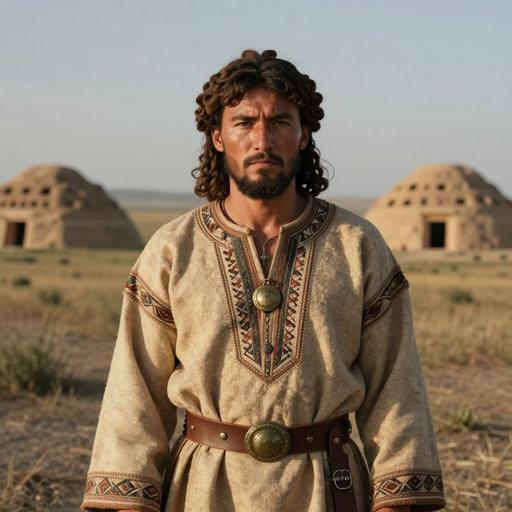
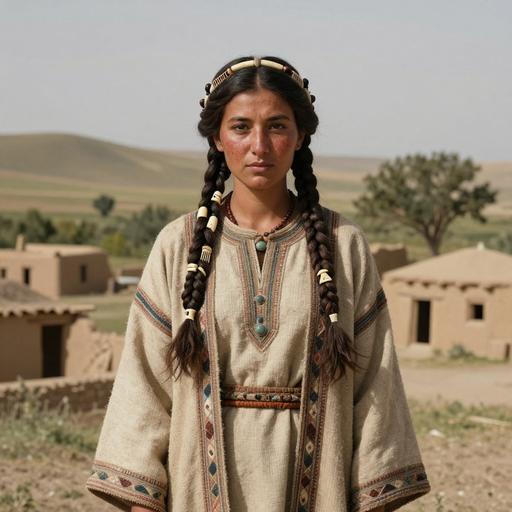
The spatiotemporal pattern of J1C3E1 is consistent with maternal lineages that participated in Neolithic farmer expansions out of Anatolia and the Levant into the Mediterranean basin and southern Europe. Later mobility — including Bronze and Iron Age trade networks, Phoenician and Greek coastal colonization, Roman imperial movements, and medieval Mediterranean exchanges — likely redistributed J1C3E1 in coastal zones. Its occurrence in some Jewish communities can be explained by founder effects and the long history of population connectivity in the Levant and Mediterranean.
Because J1C3E1 is not a high‑frequency lineage, its cultural associations are best interpreted as reflecting the broader demographic processes (agriculture, trade, and localized founder events) that shaped maternal genetic landscapes in the Near East and Mediterranean rather than linkage to a single archaeological culture.
Conclusion
J1C3E1 is a Near Eastern/Caucasus‑derived maternal subclade of J1C3E that expanded principally during and after the Neolithic into the Mediterranean, southern Europe, and adjacent regions. Its presence in both contemporary populations and a small number of ancient samples supports a history of moderate regional continuity punctuated by episodic dispersals tied to farming, coastal trade, and historical migrations. Ongoing mitogenome sequencing of both modern and ancient individuals will refine its internal structure, age estimates, and finer geographic patterns.
Key Points
- Origins and Evolution
- Subclades (if applicable)
- Geographical Distribution
- Historical and Cultural Significance
- Conclusion