Menu
mtDNA Haplogroup • Maternal Lineage

L0A1A

mtDNA Haplogroup L0A1A

~8,000 years ago
Eastern Africa (Horn of Africa region)
2 subclades
10 ancient samples
Scroll to explore
Chapter I

The Story

The journey of mtDNA haplogroup L0A1A

Origins and Evolution

mtDNA haplogroup L0A1A is a subclade nested within L0A1, itself a branch of the deep African macro-haplogroup L0. Given the parent clade L0A1 has been dated to the Late Pleistocene/early Upper Paleolithic in eastern Africa (~35 kya), L0A1A most plausibly arose later, in the early-to-mid Holocene (several thousand years ago). It is best interpreted as a regional diversification of long-standing eastern African maternal lineages rather than a pan-African founder lineage.

L0A1A is defined by derived mitochondrial variants that occur on the L0A1 backbone; like many subclades of L0A, its phylogenetic branching reflects localized demographic histories in eastern Africa and subsequent dispersal via migratory events during the Holocene.

Subclades

As a downstream branch of L0A1, L0A1A may itself contain further internal variation in different populations of eastern and southern Africa. Published population surveys and phylogenetic reconstructions show multiple L0A-derived sublineages with localized structure; while L0A1A is recognized as a distinct clade in modern mtDNA datasets, its internal substructure is modest compared with deeper L0 branches and continues to be refined as more whole-mitochondrial genomes are sampled from underrepresented African populations.

Geographical Distribution

The geographic concentration of L0A1A is in eastern Africa, particularly the Horn (Ethiopia, Somalia, Eritrea, Djibouti) and adjacent parts of Sudan and Kenya. It also occurs at lower frequencies in other eastern African groups (including Nilotic and Cushitic-speaking populations) and has been observed in Bantu-speaking populations of central and southern Africa due to admixture and gene flow associated with Holocene expansions. Low-to-moderate frequencies can be found in some central African forager groups and among southern African Khoe‑San groups where historical admixture introduced eastern African maternal lineages. Small numbers of L0A1A lineages are also present in African-descended populations in the Americas as a result of the transatlantic slave trade, and sporadic occurrences appear in North Africa and the Near East, reflecting historical contacts.

Two archaeological (ancient DNA) samples assigned to L0A1A in available databases indicate that this lineage has been observed in archaeological contexts, supporting its presence in the region during the Holocene.

Historical and Cultural Significance

L0A1A’s distribution is consistent with demographic processes that shaped eastern Africa during the Holocene. The lineage likely persisted among hunter-gatherer and early food-producing communities in the Horn and was later redistributed by:

  • Pastoralist expansions during the Pastoral Neolithic and later pastoral migrations, which moved people and maternal lineages across eastern Africa.
  • Bantu-related gene flow as Bantu-speaking agriculturalists expanded into central, eastern and southern Africa, incorporating local women into expanding populations and producing the low-to-moderate frequencies observed in some Bantu-speaking groups.

Because L0A1A is concentrated in the Horn and surrounding regions, it can be informative in reconstruction of maternal ancestry in studies of eastern African prehistory and historical demography, including investigations of Nilotic–Cushitic interactions, pastoralist dispersals, and later historical trade and migration networks linking Africa with the Near East.

Conclusion

L0A1A represents a regional Holocene branch of the deep L0 maternal tree with a strong eastern African signal. Its presence across a range of eastern, central and southern African populations—and in the African diaspora—reflects a history of local persistence combined with Holocene-era movements (pastoralist and agricultural expansions) that redistributed maternal diversity. Continued sampling of whole mitochondrial genomes from under-sampled African groups and additional ancient DNA will clarify L0A1A’s internal structure and finer-scale demographic history.

Key Points

  • Origins and Evolution
  • Subclades
  • Geographical Distribution
  • Historical and Cultural Significance
  • Conclusion
Chapter II

Tree & Relationships

Phylogenetic context and subclades

Evolution Path

This haplogroup's evolutionary journey from its earliest ancestor to the present.

Steps Haplogroup Age Estimate Archaeology Era Time Passed Immediate Descendants Tested Modern Descendants Ancient Connections
1 L0A1A Current ~8,000 years ago 🌾 Neolithic 8,000 years 2 43 10
2 L0A1 ~35,000 years ago 🦴 Paleolithic 35,000 years 5 92 0
3 L0A ~70,000 years ago 🦴 Paleolithic 70,000 years 2 166 13
4 L0 ~170,000 years ago 🦴 Paleolithic 170,000 years 4 245 6
5 L ~160,000 years ago 🦴 Paleolithic 160,000 years 7 18,987 5

Siblings (4)

Other branches from the same parent haplogroup

Chapter III

Where in the World

Geographic distribution and modern presence

Place of Origin

Eastern Africa (Horn of Africa region)

Modern Distribution

The populations where mtDNA haplogroup L0A1A is found include:

  1. East African populations (e.g., Oromo, Amhara, Somali and other Horn of Africa groups)
  2. Various Nilotic and Cushitic-speaking groups of eastern Africa
  3. Bantu-speaking populations in central and southern Africa (via admixture and regional gene flow)
  4. Some Central African forager groups at low-to-moderate frequencies
  5. Khoe‑San and southern African groups at low-to-moderate frequencies (often reflecting historical admixture)
  6. African-descended populations in the Americas (low frequency, via the transatlantic slave trade)
  7. Sporadic occurrences in North Africa and the Near East (historical admixture)
CHAPTER IV

When in Time

Your haplogroup in the context of human history

~10k years ago

Neolithic Revolution

Agriculture begins, settled communities form

~8k years ago

Haplogroup L0A1A

Your mtDNA haplogroup emerged in Eastern Africa (Horn of Africa region)

Eastern Africa (Horn of Africa region)
~5k years ago

Bronze Age

Metalworking, writing, and early civilizations

~3k years ago

Iron Age

Iron tools, expanded trade networks

~2k years ago

Classical Antiquity

Greek and Roman civilizations flourish

Present

Present Day

Modern era

Your Haplogroup
Historical Era
Chapter IV-B

Linked Cultures

Ancient cultures associated with mtDNA haplogroup L0A1A

Cultural Heritage

These ancient cultures have been linked to haplogroup L0A1A based on matching ancient DNA samples from archaeological excavations. The presence of this haplogroup in these cultures provides insights into the migrations and population movements of populations carrying this haplogroup.

Lindi Swahili Makwasinyi Nubian Christian Pemba Phase I St. Helena Colonial Tanzanian Prehistoric
Culture assignments are based on archaeological context of ancient DNA samples and may represent regional associations during specific time periods.
Chapter V

Sample Catalog

Top 10 ancient DNA samples directly related to haplogroup L0A1A or parent clades

10 / 10 samples
Portrait Sample Country Era Date Culture mtDNA Match
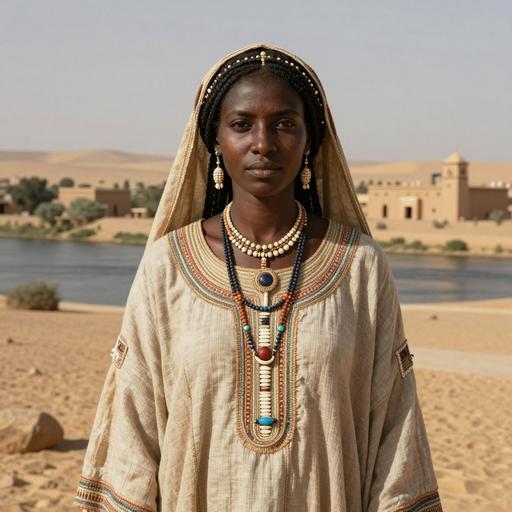
Portrait of ancient individual I21035 from Sudan, dated 650 CE - 1050 CE
I21035
Sudan Early Christian Era in Sudan 650 CE - 1050 CE Nubian Christian L0a1a1 Direct
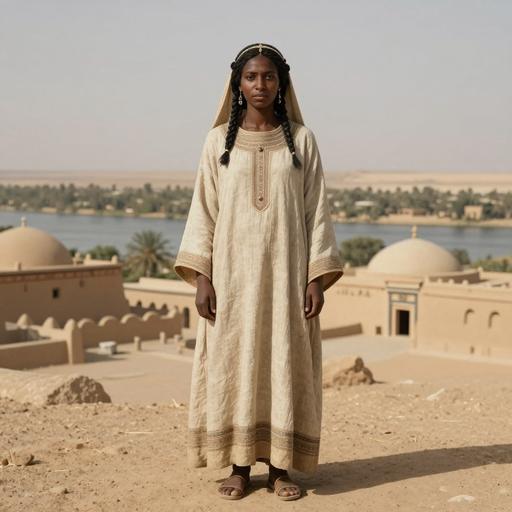
Portrait of ancient individual I20916 from Sudan, dated 650 CE - 1050 CE
I20916
Sudan Early Christian Era in Sudan 650 CE - 1050 CE Nubian Christian L0a1a Direct
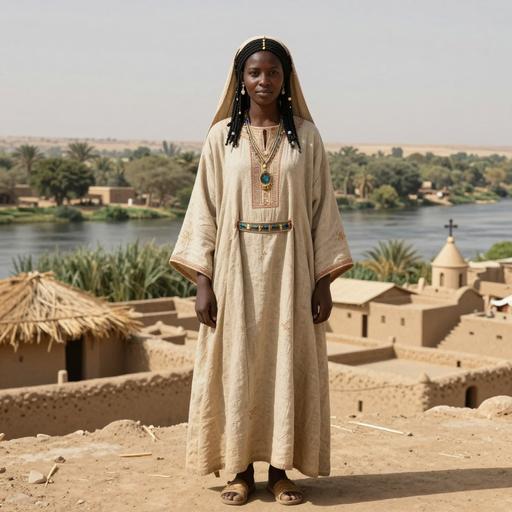
Portrait of ancient individual I19134 from Sudan, dated 650 CE - 1050 CE
I19134
Sudan Early Christian Era in Sudan 650 CE - 1050 CE Nubian Christian L0a1a1 Direct
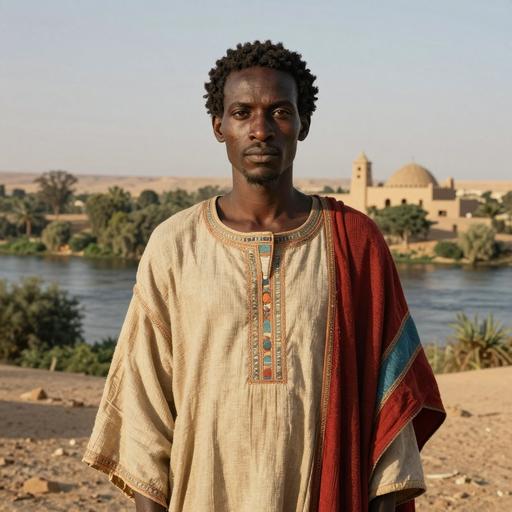
Portrait of ancient individual I19139 from Sudan, dated 650 CE - 1050 CE
I19139
Sudan Early Christian Era in Sudan 650 CE - 1050 CE Nubian Christian L0a1a1 Direct
Portrait of ancient individual I19141 from Sudan, dated 650 CE - 1050 CE
I19141
Sudan Early Christian Era in Sudan 650 CE - 1050 CE Nubian Christian L0a1a1 Direct
Portrait of ancient individual I6255 from Sudan, dated 706 CE - 884 CE
I6255
Sudan Early Christian Era in Sudan 706 CE - 884 CE Nubian Christian L0a1a1 Direct
Portrait of ancient individual I6251 from Sudan, dated 774 CE - 884 CE
I6251
Sudan Early Christian Era in Sudan 774 CE - 884 CE Nubian Christian L0a1a1 Direct
Portrait of ancient individual I6254 from Sudan, dated 892 CE - 1016 CE
I6254
Sudan Early Christian Era in Sudan 892 CE - 1016 CE Nubian Christian L0a1a1 Direct
Portrait of ancient individual I14001 from Tanzania, dated 1511 CE - 1664 CE
I14001
Tanzania Swahili Culture of Lindi 1511 CE - 1664 CE Lindi Swahili L0a1a2 Direct
Portrait of ancient individual I14781 from Kenya, dated 1698 CE - 1950 CE
I14781
Kenya Makwasinyi (Kenya) 1698 CE - 1950 CE Makwasinyi L0a1a+200 Direct
Chapter VI

Carrier Distribution Map

Geographic distribution of 10 ancient DNA samples carrying haplogroup L0A1A

Time Period Filter
All Time Periods
Showing all samples
Each marker represents an ancient individual
Chapter VII

Temporal Distribution

Distribution of carriers across archaeological periods

Chapter VIII

Geographic Distribution

Distribution of carriers by country of origin

Chapter IX

Country × Era Distribution

Cross-tabulation of carrier countries and archaeological periods

Data

Data & Provenance

Source information and data quality

Last Updated 2026-02-16
Confidence Score 50/100
Coverage Low
Data Source

We use the latest phylotree for MTDNA haplogroup classification and data.