The Story
The journey of mtDNA haplogroup L0D2A
Origins and Evolution
mtDNA haplogroup L0D2A is a downstream branch of L0d2, itself part of the broader L0d clade that is among the most ancient maternal lineages in modern humans. The parent clade L0d2 has deep roots in southern Africa dating to the Late Pleistocene; L0D2A is inferred to have arisen later within that regional context as a diversification of lineages carried by early Khoe‑San forager populations. Molecular clock estimates and the internal branch structure of L0d lineages make a Late Pleistocene to early Late Glacial origin (tens of thousands of years ago) plausible for L0D2A, with a conservative estimate here of around ~25 kya, reflecting continued lineage diversification within southern African refugia.
Subclades (if applicable)
As a named subclade of L0d2, L0D2A may itself contain further low-level sublineages characterized in high-resolution sequencing studies. In many regional mtDNA phylogenies L0d subclades show deep internal structure but limited geographic spread beyond southern Africa; detailed subclade architecture for L0D2A depends on dense whole-mitochondrial sequencing of Khoe‑San and neighboring groups. Where available, finer subclades of L0D2A tend to be localized within specific Khoe‑San populations or micro-regions.
Geographical Distribution
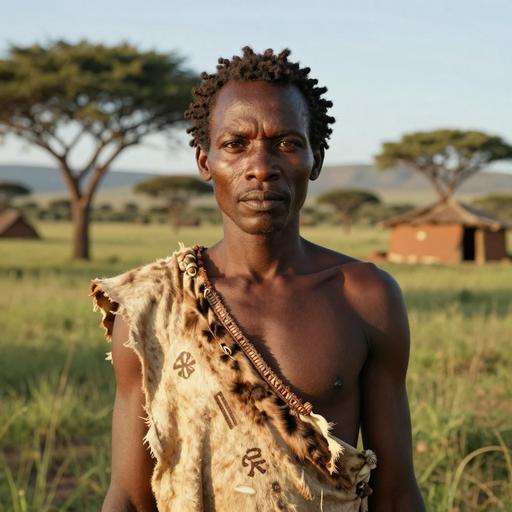
L0D2A is concentrated in southern Africa, where it attains its highest frequencies among Khoe‑San groups (for example Ju|'hoan, !Kung, Nama and related forager and click-speaking communities). It is observed at lower frequencies in some neighboring Bantu-speaking populations and has been detected at very low levels in parts of eastern and central Africa, reflecting ancient contacts and later gene flow. Rare occurrences outside Africa (e.g., in the Americas) are generally attributable to recent historical movements such as the transatlantic slave trade or modern migration, and are not indicative of ancient pan-continental spread.
Historical and Cultural Significance
L0D2A, like other L0d lineages, is strongly associated with the genetic legacy of southern African foragers and the Later Stone Age cultural horizon in the region. Its persistence in modern Khoe‑San populations provides a direct maternal-line window onto deep population structure in southern Africa prior to the arrival of pastoralists and Bantu-speaking agriculturalists. During the Holocene and especially with the Iron Age Bantu expansions (~2–3 kya), L0D2A lineages were transmitted through admixture into some Bantu-speaking communities; thus L0D2A also serves as a marker of historical contact and gene flow between foragers and incoming farmers/pastoralists.
Conclusion
mtDNA L0D2A is a geographically anchored maternal lineage that reflects deep southern African population history and the long-term continuity of Khoe‑San maternal ancestry. It is most informative when interpreted alongside other L0d subclades and autosomal and Y‑chromosome data to reconstruct demographic events such as Late Pleistocene differentiation, Holocene persistence, and later admixture with expanding agriculturalist and pastoralist groups.
Key Points
- Origins and Evolution
- Subclades (if applicable)
- Geographical Distribution
- Historical and Cultural Significance
- Conclusion