The Story
The journey of mtDNA haplogroup L0F1
Origins and Evolution
mtDNA haplogroup L0f1 is a descendant clade of the broader L0f lineage, itself nested within the ancient African macro-haplogroup L0. Based on the phylogenetic position of L0f and patterns of diversity seen in modern samples, L0f1 most likely arose in eastern or southern Africa during the Late Pleistocene (a plausible coalescence on the order of ~15–25 kya, here estimated ~18 kya). As a deep maternal lineage, L0f1 reflects long-term population continuity in parts of eastern and southern Africa and carries the signal of Pleistocene and early Holocene demographic structure among forager groups.
Mutational branches that define L0f1 are limited compared with more recent, rapidly expanding haplogroups, which is consistent with a history of relatively small, structured populations and localized persistence rather than continent-scale population expansions.
Subclades (if applicable)
Substructure within L0f1 is relatively sparse and under-characterized in the published literature, primarily because L0f1 is infrequent in large-scale surveys and under-sampled in some regions. Where deeper sequencing has been performed, modestly differentiated sublineages (reported in some datasets as L0f1a/L0f1b or similar notations) appear to be geographically restricted — some lineages cluster in the Horn/Rift Valley region while others show a southern African signal. Continued mitogenome sequencing of diverse East and Southern African populations is likely to resolve additional subclades.
Geographical Distribution
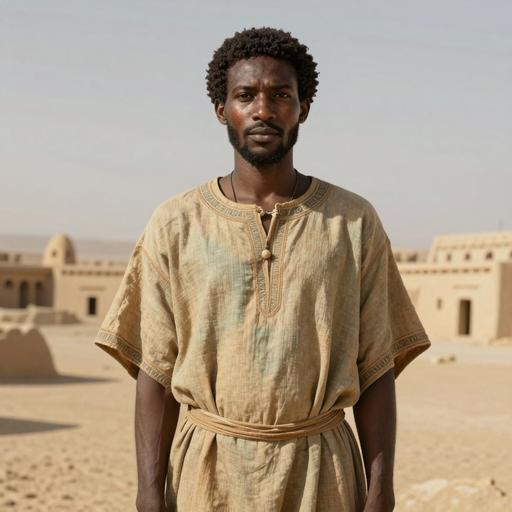
L0f1 is concentrated in eastern Africa (including parts of the Horn and Rift Valley regions) and found at lower frequencies in southern Africa and adjacent areas. It is most commonly detected in populations with historical continuity from Later Stone Age foraging and in groups that underwent later interaction with pastoralist and Bantu-speaking communities. Low-frequency occurrences in central African forager groups and rare detections among African-descended populations in the Americas (reflecting transatlantic slave trade ancestry) have been reported. Ancient DNA evidence for L0f1 is limited but present in at least one archaeological sample in available databases, supporting its antiquity in the region.
Historical and Cultural Significance
Because L0f1 belongs to the deep-rooted L0 family, it is informative for reconstructing regional maternal continuity and the demographic history of pre-agropastoral populations in eastern and southern Africa. Its association with Later Stone Age hunter-gatherers and its persistence through periods of pastoralist expansion and the Bantu dispersal make it useful for tracing maternal-line continuity versus replacement or admixture. L0f1's low and patchy frequency means it is not a marker of large-scale expansions, but rather of localized persistence and gene flow between foragers, pastoralists, and incoming agriculturalists.
Conclusion
L0f1 is a regionally important, ancient maternal lineage reflecting Late Pleistocene population structure in eastern and southern Africa. It highlights the deep maternal roots of some East and Southern African populations, and, despite its relative rarity, provides valuable resolution for studies of prehistoric demography and later interactions (pastoralist movements, Bantu-associated gene flow). Broader mitogenome sampling and more ancient DNA from eastern and southern Africa will improve resolution of L0f1 substructure and its historical dynamics.
Key Points
- Origins and Evolution
- Subclades (if applicable)
- Geographical Distribution
- Historical and Cultural Significance
- Conclusion