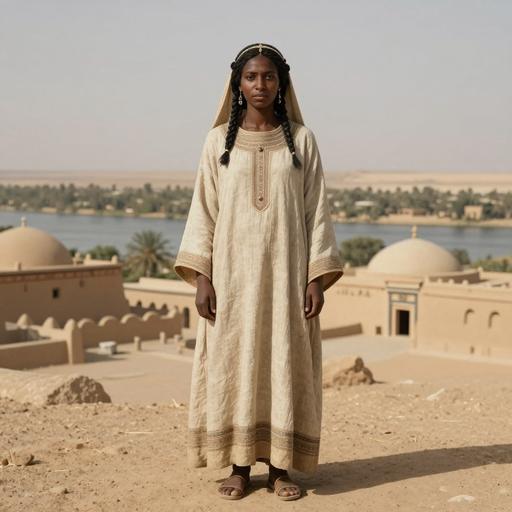
The Story
The journey of mtDNA haplogroup L1B
Origins and Evolution
mtDNA haplogroup L1B is a deep African maternal lineage that branches from the broader L1 clade. While the parent clade L1 has a very deep Pleistocene origin (~120 kya), L1B represents a later diversification within that lineage, with molecular-clock estimates typically placing its coalescence in the Late Pleistocene (~40–70 kya; here approximated to ~55 kya). L1B likely arose in a West-to-Central African homeland and diversified locally before and during the early Holocene, tracking long-term regional population structure.
Subclades (if applicable)
Several internal subclades of L1B have been described in population-level mtDNA studies (nomenclature across studies varies). Published surveys and phylogenies identify derived branches sometimes labeled L1b1, L1b1a, etc.; these sublineages show geographic structuring within West and adjacent Central Africa. Because nomenclature and resolution have improved with more complete mtDNA sequencing, some branches formerly aggregated under L1B have been reclassified in high-resolution phylogenies — researchers should consult up-to-date mtDNA trees (e.g., PhyloTree and recent literature) for precise subclade labels.
Geographical Distribution
L1B is most frequent in West Africa, particularly among Niger–Congo–speaking groups (e.g., Mande, Akan, Yoruba and related peoples), and is also present at moderate frequencies in parts of Central Africa. The lineage appears at lower frequencies in East Africa and North Africa in contexts consistent with historical and prehistoric gene flow. Due to the trans-Atlantic slave trade, L1B and its subclades are detectable in African-descended populations throughout the Americas and the Caribbean, where they contribute to the maternal diversity of African diaspora communities.
Historical and Cultural Significance
L1B predates archaeological cultures conventionally named in the Holocene, but its modern distribution has been shaped by major demographic events. The lineage likely persisted through the Later Stone Age and was part of the maternal gene pool that participated in Holocene processes such as the spread of food production, local population growth, and later movements associated with the Bantu expansions and trans-Saharan/Atlantic contacts. In historical and genetic studies, L1B serves as a marker of West African maternal ancestry and is frequently observed in studies reconstructing the origins of African diaspora maternal lineages.
Conclusion
mtDNA haplogroup L1B is an important West/Central African maternal lineage with deep Pleistocene roots and continued relevance for understanding population structure across West Africa, Central Africa, and African-descended populations in the Americas. Ongoing high-resolution mtDNA sequencing continues to refine its internal structure and improve inferences about migration timing and geographic spread.
Key Points
- Origins and Evolution
- Subclades (if applicable)
- Geographical Distribution
- Historical and Cultural Significance
- Conclusion