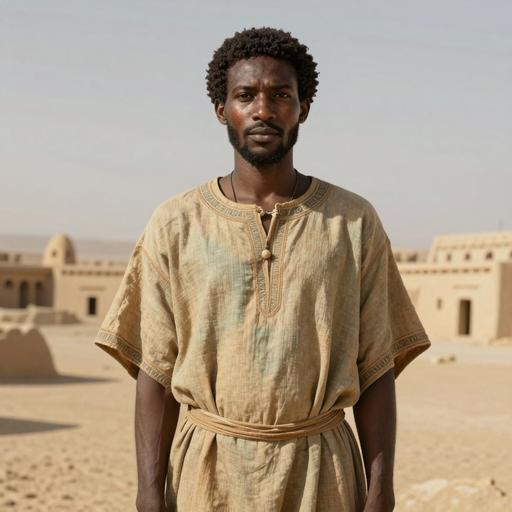
The Story
The journey of mtDNA haplogroup L1B2
Origins and Evolution
mtDNA haplogroup L1B2 is a downstream branch of the broader L1B clade. L1B itself coalesces deep in time in West/Central Africa (commonly estimated around ~55 kya), and L1B2 represents a later diversification within that regional framework — most likely during the Late Pleistocene (we estimate a coalescence for L1B2 on the order of ~30 kya, recognizing that precise dating requires dense whole-mitochondrial sequence sampling and careful molecular-clock calibration). The phylogenetic position of L1B2 places it among the older maternal lineages that contributed to the genetic landscape of West and parts of Central Africa prior to and during the Holocene.
Population genetics surveys that include full or partial mitochondrial sequences typically recover L1B2 in West African groups, and lower-frequency detections in central African forest populations and in populations outside Africa tied to historic movements (notably the trans-Atlantic slave trade). The pattern of diversity within L1B2 — when observed — is consistent with an origin in the Late Pleistocene followed by local persistence and later spread during Holocene demographic events.
Subclades (if applicable)
As an intermediate branch of L1B, L1B2 may contain additional downstream sublineages in high-resolution phylogenies (for example identified by private or regionally restricted mutations in whole-mtDNA studies). Published large-scale mtDNA trees sometimes show finer splits within L1B that are best resolved with complete mitochondrial genomes and dense sampling across West and Central Africa. Where downstream clades have been reported they are usually regionally restricted, reflecting localized maternal continuity or drift. Continued sequencing of under-sampled West and Central African populations is likely to reveal more structure within L1B2.
Geographical Distribution
The highest frequencies and greatest haplotype diversity of L1B2 are observed in West Africa, particularly among populations in coastal and forested West Africa. Moderate frequencies (or low-frequency presence) occur in parts of Central Africa, especially where historical contact with West African groups occurred. L1B2 is also found at appreciable frequencies in African-descended populations in the Americas (e.g., Afro-Caribbean, African American, Afro-Brazilian communities), reflecting forced trans-Atlantic migrations during the last 500 years. Low-frequency occurrences in North Africa and Sahelian populations are consistent with historical north–south gene flow across the Sahara and more recent admixture.
Historical and Cultural Significance
While mitochondrial haplogroups cannot be equated directly with archaeological cultures, the antiquity and regional distribution of L1B2 make it relevant to discussions of Late Pleistocene and Holocene population structure in West/Central Africa. L1B2 lineages likely contributed maternally to hunter-gatherer and early forager populations of the Late Stone Age in West Africa and persisted through major cultural transitions in the Holocene, including the emergence of regional Neolithic and later Iron Age societies. In historical times, individuals carrying L1B2 were among those taken to the Americas during the trans-Atlantic slave trade, where the haplogroup continues to be detected in African-descended populations and serves as a genetic marker of West African maternal ancestry.
Conclusion
mtDNA haplogroup L1B2 represents an important West/Central African maternal lineage with deep roots in the Late Pleistocene and continued relevance in the Holocene and historic periods. Its distribution highlights long-term regional continuity in maternal ancestry across West Africa, some penetration into Central African forest groups, and a clear signal in the African diaspora resulting from recent historical migrations. Further whole-mitochondrial sequencing across under-sampled West and Central African populations will refine the internal structure and age estimates for L1B2 and its downstream branches.
Key Points
- Origins and Evolution
- Subclades (if applicable)
- Geographical Distribution
- Historical and Cultural Significance
- Conclusion