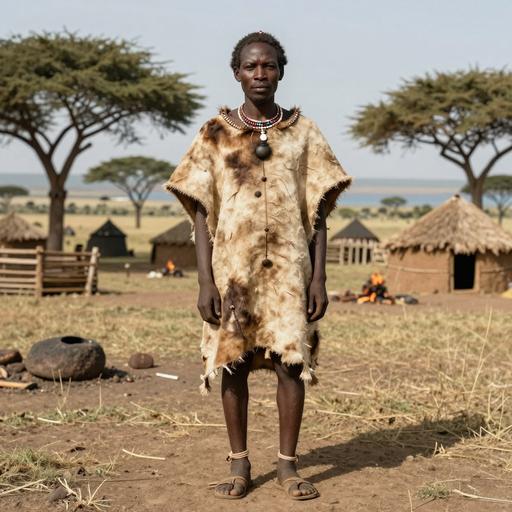
The Story
The journey of mtDNA haplogroup L3X1A
Origins and Evolution
mtDNA haplogroup L3X1A is a subclade of L3X1, itself a branch of the deep African macro-haplogroup L3. Based on its phylogenetic position and the distribution of closely related lineages, L3X1A most likely arose in the Horn of Africa / adjacent Northeast African highlands during the early Holocene (several thousand years after the Late Pleistocene origin of L3X1). Its emergence represents a localized diversification of maternal lineages that were already present in East Africa since the Late Pleistocene.
Divergence time estimates for subclades like L3X1A are necessarily approximate, but a coalescence in the range of ~6–10 kya is consistent with the pattern of Holocene regional differentiation seen in other Horn-associated mtDNA lineages. Ancient DNA hits and modern population surveys indicate continuity of related maternal lineages in the Horn across the Holocene, punctuated by later movements and gene flow.
Subclades (if applicable)
L3X1A is a downstream branch of L3X1. When present, named sub-branches of L3X1A are typically identified by private mutations in whole-mitochondrial genomes; however, at present L3X1A is best characterized as a localized terminal subclade with limited deep branching compared to more cosmopolitan L3 derivatives. As sequencing of more samples from the Horn increases, additional internal structure within L3X1A may be revealed, clarifying recent maternal expansions or isolation events.
Geographical Distribution
L3X1A is concentrated in the Horn of Africa with low-frequency occurrences beyond that core area. Modern population genetic surveys and limited ancient DNA observations place the highest frequencies and diversity of this lineage among Ethiopian and Eritrean highland groups and neighboring Cushitic-speaking peoples. Low-frequency detections in Nile Valley populations and coastal North Africa and the southern Levant are consistent with historical contact, trade networks, and limited backflow.
Geographically, the pattern is best described as a Horn-centered distribution with decreasing frequency radiating into adjacent Northeast African and Red Sea coastal regions. This distribution is characteristic of Holocene maternal lineages that show both long-term regional continuity and later localized movement.
Historical and Cultural Significance
Because L3X1A is concentrated in populations of the Horn, its presence helps reconstruct maternal continuity and localized demographic history in Ethiopia, Eritrea, Somalia and adjacent Sudanese Nile Valley communities. It likely reflects a combination of:
- Deep local ancestry tied to Late Pleistocene/Holocene East African populations (through its parent L3X1).
- Holocene-era demographic processes such as local expansions of pastoralist or agropastoralist groups, micro-regional isolation in highland environments, and later historical interactions (trade, migration, and cultural exchange across the Red Sea and Nile corridors).
While not a marker of major long-range migrations by itself, L3X1A contributes to the multi-line evidence (archaeology, linguistics, autosomal and uniparental markers) used to understand population persistence in the Horn and episodes of gene flow into neighboring regions.
Conclusion
L3X1A is a diagnostically Horn-of-Africa maternal subclade derived from L3X1, representing early Holocene diversification within a region of deep maternal lineages. Its moderate regional specificity and low-frequency peripheral occurrences make it a useful marker for studying maternal continuity, fine-scale population structure, and episodes of regional contact in Northeast Africa. Continued targeted mitogenome sequencing and ancient DNA sampling in the Horn and adjacent regions will refine its phylogeny and timeline and clarify its role in Holocene demographic events.
Key Points
- Origins and Evolution
- Subclades (if applicable)
- Geographical Distribution
- Historical and Cultural Significance
- Conclusion