Menu
mtDNA Haplogroup • Maternal Lineage

L3X2A

mtDNA Haplogroup L3X2A

~9,000 years ago
Horn of Africa / East Africa
1 subclades
1 ancient samples
Scroll to explore
Chapter I

The Story

The journey of mtDNA haplogroup L3X2A

Origins and Evolution

mtDNA haplogroup L3X2A is a subclade of L3X2, itself a branch of the wider macro-haplogroup L3, which is central to the maternal phylogeny of modern humans and forms the backbone of many Eurasian and African lineages. L3X2 likely arose in the Horn/East Africa region during the Late Pleistocene (~30 kya for L3X2), while L3X2A appears to have differentiated later, plausibly in the early Holocene (approximately 9 kya), as small maternal lineages diversified within regional populations. Its emergence fits a pattern of local diversification in eastern Africa following climatic stabilization after the Last Glacial Maximum and during renewed population growth and mobility associated with early Holocene subsistence shifts.

Subclades

At present, L3X2A is characterized as a relatively shallow and rare sublineage within L3X2. Published and database sequences show limited internal structure for L3X2A, and many observations represent terminal branches rather than numerous well-differentiated downstream clades. This limited diversity is consistent with a localized origin and/or a demographic history involving modest effective population sizes and partial isolation. As more complete mitogenomes are sampled from the Horn and adjacent regions, modest downstream diversity or additional minor subclades could be revealed.

Geographical Distribution

L3X2A is concentrated in the Horn of Africa and nearby parts of Northeast Africa. Modern population surveys and targeted sampling have detected L3X2 and its subclades, including L3X2A, among several Ethiopian, Eritrean and Somali groups and in some Nile Valley populations. Low-frequency detections also occur along North African and southern Arabian coastal areas, reflecting Holocene-era contacts, trade, and backflow between East Africa and adjacent regions. One ancient DNA sample assigned to the L3X2 clade (including sublineage-level resolution consistent with L3X2A in a limited dataset) indicates that at least some branches of this lineage were present in archaeological contexts in the region, supporting regional continuity.

Historical and Cultural Significance

Because L3X2A is geographically concentrated and relatively rare, it is informative for reconstructing maternal continuity and local population structure in the Horn and Nile Valley across the Holocene. Its distribution among Amhara, Oromo, Tigray, Eritrean highland groups, Somali, Afar, and some Sudanese Nile Valley populations indicates persistence among both Cushitic- and Semitic-speaking groups and among communities with varied subsistence strategies, from highland agro-pastoralists to lowland pastoralists. The haplogroup's presence in groups such as the Beta Israel highlights its multi-ethnic presence in the Ethiopian plateau. Low-frequency occurrences outside the region point to episodic gene flow (trade, migration, or back-migration) rather than broad demographic replacement.

Conclusion

L3X2A is a regionally informative maternal lineage that exemplifies local mtDNA differentiation in the Horn of Africa during the Holocene. Its rarity and limited substructure suggest a history of localized retention, modest population sizes, and selective dispersal episodes tied to historical contacts across the Red Sea and Nile corridors. Continued sequencing of whole mitochondrial genomes from diverse Horn and Northeast African populations will clarify fine-scale structure and the timing of diversification within L3X2A.

Key Points

  • Origins and Evolution
  • Subclades
  • Geographical Distribution
  • Historical and Cultural Significance
  • Conclusion
Chapter II

Tree & Relationships

Phylogenetic context and subclades

Evolution Path

This haplogroup's evolutionary journey from its earliest ancestor to the present.

Steps Haplogroup Age Estimate Archaeology Era Time Passed Immediate Descendants Tested Modern Descendants Ancient Connections
1 L3X2A Current ~9,000 years ago 🌾 Neolithic 9,000 years 1 1 1
2 L3X2 ~30,000 years ago 🦴 Paleolithic 30,000 years 1 1 0
3 L3X ~55,000 years ago 🦴 Paleolithic 55,000 years 2 4 1
4 L3 ~70,000 years ago 🦴 Paleolithic 70,000 years 11 17,621 6
5 L ~160,000 years ago 🦴 Paleolithic 160,000 years 7 18,987 5
Chapter III

Where in the World

Geographic distribution and modern presence

Place of Origin

Horn of Africa / East Africa

Modern Distribution

The populations where mtDNA haplogroup L3X2A is found include:

  1. Amhara (Ethiopia)
  2. Oromo (Ethiopia)
  3. Tigray and Eritrean highland groups
  4. Somali populations (Horn of Africa)
  5. Sudanese Nile Valley groups (including Nubian/Beja-adjacent populations)
  6. Afar and other Cushitic-speaking groups of the Horn
  7. Beta Israel (Ethiopian Jewish community) and other Ethiopian minorities
  8. Small, low-frequency occurrences in North African and Middle Eastern coastal populations (due to historical contact and backflow)
CHAPTER IV

When in Time

Your haplogroup in the context of human history

~10k years ago

Neolithic Revolution

Agriculture begins, settled communities form

~9k years ago

Haplogroup L3X2A

Your mtDNA haplogroup emerged in Horn of Africa / East Africa

Horn of Africa / East Africa
~5k years ago

Bronze Age

Metalworking, writing, and early civilizations

~3k years ago

Iron Age

Iron tools, expanded trade networks

~2k years ago

Classical Antiquity

Greek and Roman civilizations flourish

Present

Present Day

Modern era

Your Haplogroup
Historical Era
Chapter IV-B

Linked Cultures

Ancient cultures associated with mtDNA haplogroup L3X2A

Cultural Heritage

These ancient cultures have been linked to haplogroup L3X2A based on matching ancient DNA samples from archaeological excavations. The presence of this haplogroup in these cultures provides insights into the migrations and population movements of populations carrying this haplogroup.

Bungule Corded Ware Elmenteitan Culture Jordanow-Michelsberg Culture Khovd Long-Term Pastoral Neolithic Pre-Aksumite Slab Grave Culture St. Helena Colonial Tanzanian Prehistoric
Culture assignments are based on archaeological context of ancient DNA samples and may represent regional associations during specific time periods.
Chapter V

Sample Catalog

Top 1 ancient DNA samples directly related to haplogroup L3X2A or parent clades

1 / 1 samples
Portrait Sample Country Era Date Culture mtDNA Match
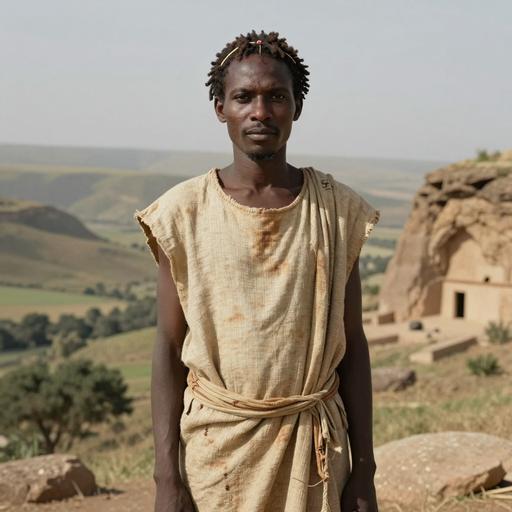
Portrait of ancient individual mota from Ethiopia, dated 2576 BCE - 2465 BCE
mota
Ethiopia Ethiopia 4500 Years Before Present 2576 BCE - 2465 BCE Pre-Aksumite L3x2a Direct
Chapter VI

Carrier Distribution Map

Geographic distribution of 1 ancient DNA samples carrying haplogroup L3X2A

Time Period Filter
All Time Periods
Showing all samples
Each marker represents an ancient individual
Chapter VII

Temporal Distribution

Distribution of carriers across archaeological periods

Chapter VIII

Geographic Distribution

Distribution of carriers by country of origin

Chapter IX

Country × Era Distribution

Cross-tabulation of carrier countries and archaeological periods

Data

Data & Provenance

Source information and data quality

Last Updated 2026-02-16
Confidence Score 50/100
Coverage Low
Data Source

We use the latest phylotree for MTDNA haplogroup classification and data.