The Story
The journey of mtDNA haplogroup L4B
Origins and Evolution
mtDNA haplogroup L4B arises as a branch within mtDNA macro-haplogroup L4, itself a deep African lineage. While the broader L4 clade has a very old time depth (often placed deep in the Pleistocene), L4B represents a later diversification within East Africa during the Late Pleistocene to early Holocene (order of tens of thousands of years ago). As an intermediate clade, L4B descended from the ancestral L4 node and split into sublineages that became locally structured by population histories in eastern and northeastern Africa.
The clade is defined by a limited set of mitochondrial mutations that distinguish it from sister clades (e.g., L4a, L4c); these mutations accumulated after the main L4 radiation. Because of its age and geographic confinement, L4B preserves signals of long-term continuity among East African foraging and early pastoralist groups, with later low-frequency spread through movements and the historic African diaspora.
Subclades
L4B contains a number of downstream sublineages (often labeled L4b1, L4b2, etc., in different phylogenies) that show additional regional structure. Some subclades are more frequent among specific ethnic groups (for example, particular L4B sublineages are observed at higher frequency among southern Tanzanian forager populations and among Horn of Africa groups). Overall diversity within L4B is moderate relative to the entire L4 clade, consistent with it being a derived but still ancient East African lineage.
Geographical Distribution
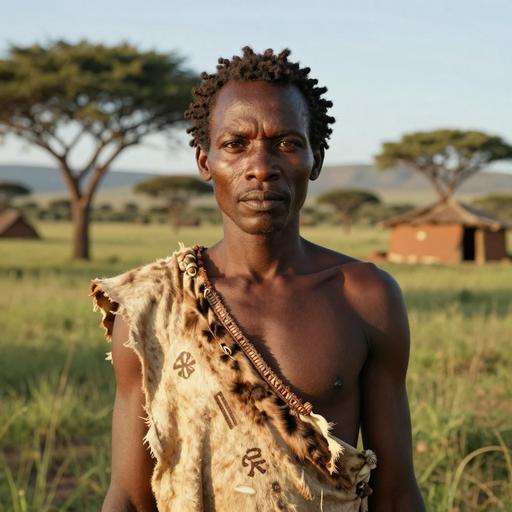
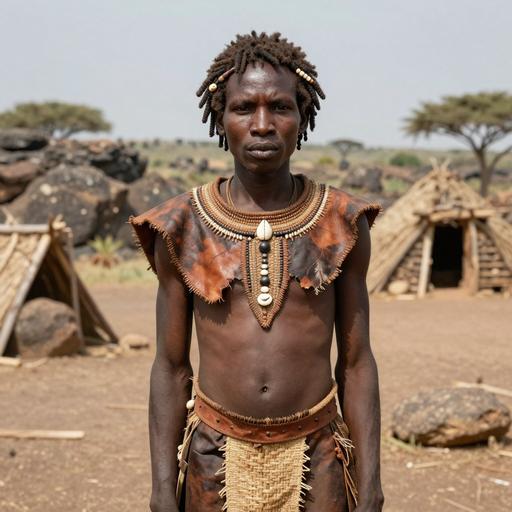
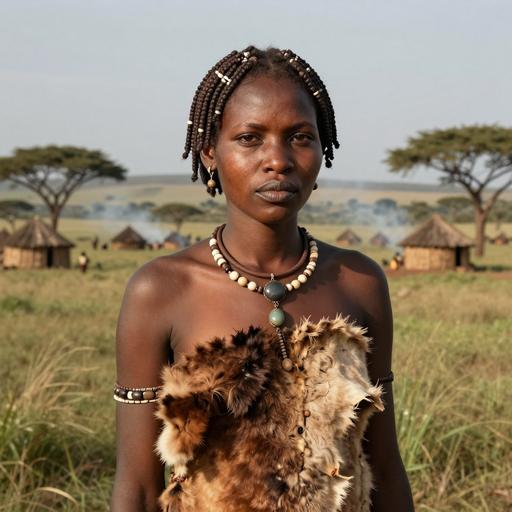
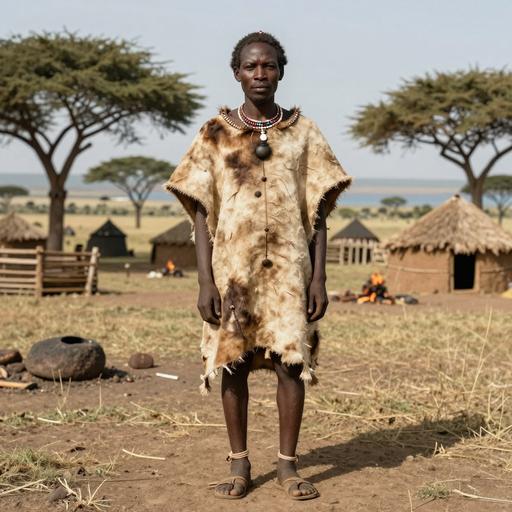
Primary concentration: East Africa (especially the Rift Valley and adjacent areas) and the Horn of Africa. L4B is observed at its highest frequencies and diversity among some Tanzanian hunter-gatherer groups (notably Hadza and Sandawe) and among populations in Ethiopia, Somalia and neighboring Kenyan and Sudanese groups.
Secondary occurrences: Low-frequency occurrences are documented in North Africa and the southern Arabian Peninsula, plausibly reflecting Holocene contacts across the Red Sea and historic gene flow. Small numbers of L4B haplotypes also appear in African-descended populations in the Americas and Caribbean, reflecting the transatlantic slave trade and subsequent diaspora.
Historical and Cultural Significance
L4B is informative for reconstructing the maternal history of East African foragers and pastoralists. Its presence among the Hadza and Sandawe links it to lineages surviving from deep Pleistocene populations in eastern Africa, while its occurrence among Afroasiatic-speaking groups in the Horn (e.g., Oromo, Amhara, Somali) points to later episodes of gene flow and admixture between indigenous foragers and expanding pastoralist/farmer groups.
Although L4B is not tied to well-defined Eurasian archaeological cultures (e.g., Bell Beaker or Yamnaya), within Africa it is associated with long-term local continuity across the Late Pleistocene and Holocene, and with regional processes such as the spread of pastoralism in eastern Africa during the mid- to late-Holocene. Ancient DNA sampling in eastern Africa remains limited, but existing data are consistent with continuity of some L4 lineages in the region across substantial time depth.
Conclusion
mtDNA haplogroup L4B is a regionally important East African maternal lineage that records deep local ancestry and subsequent interactions in the Horn and eastern Africa. Its distribution and diversity make it a valuable marker for studies of population structure, prehistoric demography, and the genetic relationships among East African hunter-gatherer, pastoralist, and agricultural communities.
Key Points
- Origins and Evolution
- Subclades
- Geographical Distribution
- Historical and Cultural Significance
- Conclusion