Menu
mtDNA Haplogroup • Maternal Lineage

L5B1

mtDNA Haplogroup L5B1

~18,000 years ago
East/Central Africa
0 subclades
Scroll to explore
Chapter I

The Story

The journey of mtDNA haplogroup L5B1

Origins and Evolution

mtDNA haplogroup L5B1 is a subclade of L5B, itself a branch of the broader African mtDNA macro-haplogroup L5. The parent clade L5B is inferred to have arisen in East/Central Africa during the Late Pleistocene (the parent is often dated ~45 kya), and L5B1 represents a downstream lineage that most likely diversified later, plausibly in the Late Pleistocene to early Holocene (on the order of ~15–25 kya by phylogenetic inference). As with other deep African maternal lineages, L5B1 carries mutations that mark a localized branch of maternal ancestry and its internal diversity and geographic pattern suggest long-term regional continuity rather than a recent broad expansion.

Subclades

As a named terminal or near-terminal subclade (L5B1), this lineage may include a small number of further internal haplotypes observed in modern samples, but published data indicate the clade is rare and poorly subdivided compared with more widespread African haplogroups (e.g., L2, L3). Where present, finer substructure can often be resolved only with full mitochondrial genome sequencing; many reports of L5 sublineages in the literature are based on control-region or partial coding-region variation and therefore underrepresent true diversity.

Geographical Distribution

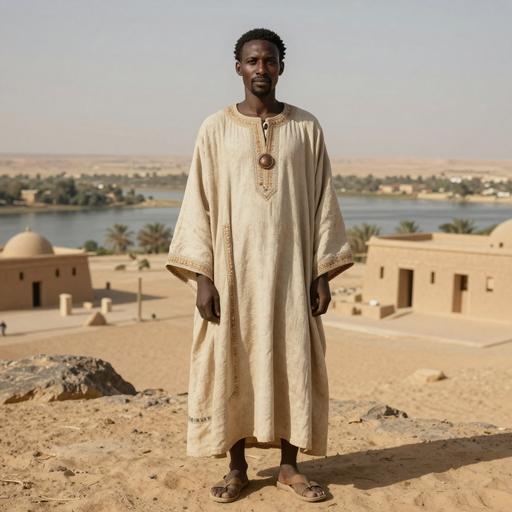
L5B1 is primarily found in Central and Eastern Africa. Reported occurrences come from forest-dwelling Central African groups (Mbuti, Biaka, Baka) and from some East African groups (Hadza, Oromo, Amhara), generally at low to moderate frequencies in local samples. The haplogroup is rare overall and shows a patchy distribution consistent with deep, localized maternal lineages maintained in relatively isolated or small-scale populations. Trace occurrences in African-descended populations in the Americas are attributable to the trans-Atlantic slave trade and reflect recent historical admixture rather than prehistoric dispersal.

Historical and Cultural Significance

Because L5B1 is concentrated among hunter-gatherer and some pastoralist groups, its presence illuminates long-term maternal continuity in Central and East African populations and can help distinguish local ancestry components in genetic studies of the region. The affinity of L5-derived lineages with rainforest hunter-gatherers (e.g., Mbuti, Biaka, Baka) and with forager groups like the Hadza suggests that L5B1 preserves genetic signals of ancient population structure in sub-Saharan Africa. Its rarity and restriction to certain populations also means L5B1 is less useful as a marker of broad migrations but valuable for reconstructing micro-scale demographic history and maternal genealogies.

Ancient DNA and Temporal Context

L5B1 is identified in a small number of modern samples and has limited representation in ancient DNA datasets (one identified aDNA sample in the referenced database), which constrains direct archaeological correlation. Where ancient and modern data align, they indicate persistence of L5-lineages through the Late Pleistocene into the Holocene, with continued presence among populations practicing diverse subsistence strategies (foraging, mixed farming, pastoralism).

Conclusion

L5B1 is a geographically and demographically restricted mtDNA lineage that reflects deep maternal roots in East/Central Africa. Its study contributes to a finer-grained understanding of regional population continuity, interactions among forager and food-producing groups, and the maternal legacy carried into the African diaspora. Continued whole-mitochondrial sequencing in under-sampled African populations and additional ancient DNA recovery will refine the age, internal structure, and historical dynamics of L5B1.

Key Points

  • Origins and Evolution
  • Subclades
  • Geographical Distribution
  • Historical and Cultural Significance
  • Ancient DNA and Temporal Context

Chapter II

Tree & Relationships

Phylogenetic context and subclades
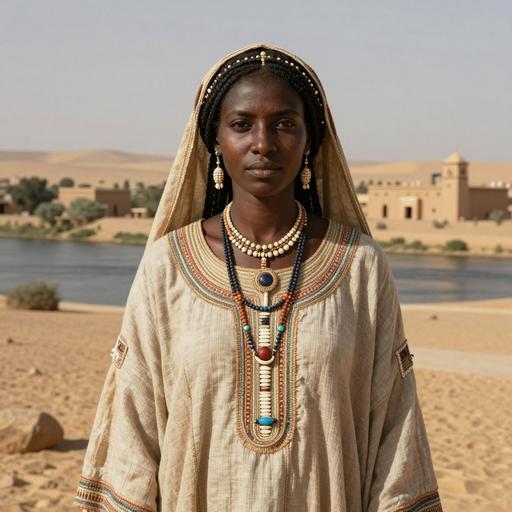
Evolution Path

This haplogroup's evolutionary journey from its earliest ancestor to the present.

Steps Haplogroup Age Estimate Archaeology Era Time Passed Immediate Descendants Tested Modern Descendants Ancient Connections
1 L5B1 Current ~18,000 years ago 🏹 Mesolithic 18,000 years 0 7 0
2 L5B ~45,000 years ago 🦴 Paleolithic 45,000 years 2 8 3
3 L5 ~90,000 years ago 🦴 Paleolithic 90,000 years 2 13 0
4 L ~160,000 years ago 🦴 Paleolithic 160,000 years 7 18,987 5

Subclades (0)

Terminal branch - no known subclades

Siblings (1)

Other branches from the same parent haplogroup

Chapter III

Where in the World

Geographic distribution and modern presence

Place of Origin

East/Central Africa

Modern Distribution

The populations where mtDNA haplogroup L5B1 is found include:

  1. Mbuti (Central African rainforest hunter-gatherers)
  2. Biaka (Central African Republic)
  3. Baka (Cameroon / Gabon)
  4. Hadza (Tanzania; occasional reports)
  5. Oromo (Ethiopia; low to moderate frequencies)
  6. Amhara (Ethiopia; low frequencies)
  7. African-descended populations in the Americas (trace frequencies due to historical admixture)
CHAPTER IV

When in Time

Your haplogroup in the context of human history
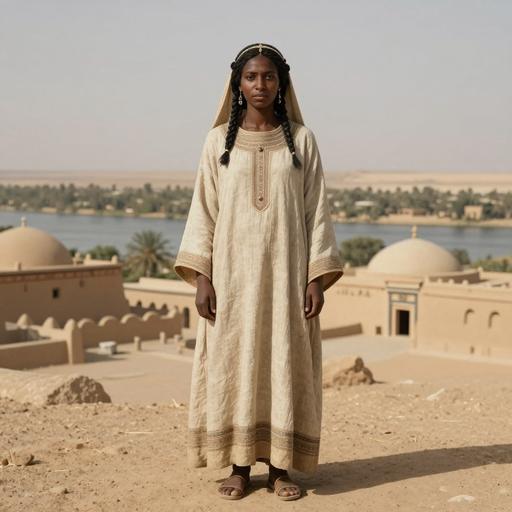
~20k years ago

Last Glacial Maximum

Peak of the last ice age, populations isolated

~18k years ago

Haplogroup L5B1

Your mtDNA haplogroup emerged in East/Central Africa

East/Central Africa
~10k years ago

Neolithic Revolution

Agriculture begins, settled communities form

~5k years ago

Bronze Age

Metalworking, writing, and early civilizations

~3k years ago

Iron Age

Iron tools, expanded trade networks

~2k years ago

Classical Antiquity

Greek and Roman civilizations flourish

Present

Present Day

Modern era

Your Haplogroup
Historical Era
Chapter IV-B

Linked Cultures

Ancient cultures associated with mtDNA haplogroup L5B1

Cultural Heritage

These ancient cultures have been linked to haplogroup L5B1 based on matching ancient DNA samples from archaeological excavations. The presence of this haplogroup in these cultures provides insights into the migrations and population movements of populations carrying this haplogroup.

Bungule Corded Ware Iron Age Pastoral Jordanow-Michelsberg Culture Khovd Long-Term Malawian LSA Slab Grave Culture St. Helena Colonial Tanzanian LSA Unetice Culture
Culture assignments are based on archaeological context of ancient DNA samples and may represent regional associations during specific time periods.

Chapter V

Sample Catalog

Top 50 ancient DNA samples directly related to haplogroup L5B1 or parent clades

50 / 50 samples
Portrait Sample Country Era Date Culture mtDNA Match
Portrait of ancient individual KHO007 from Mongolia, dated 26 CE - 125 CE
KHO007
Mongolia Middle to Late Bronze Age to Xiongnu to Late Medieval Khovd, Mongolia 26 CE - 125 CE Khovd Long-Term L3 Direct
Portrait of ancient individual baa001 from South Africa, dated 38 BCE - 120 BCE
baa001
South Africa South Africa 1900 Years Before Present 38 BCE - 120 BCE Middle Iron Age L0d2c1 Direct
Portrait of ancient individual I13977 from Tanzania, dated 47 BCE - 113 BCE
I13977
Tanzania Prehistoric in Tanzania 47 BCE - 113 BCE Tanzanian Prehistoric L0f2a1 Direct
Portrait of ancient individual I13970 from Tanzania, dated 50 BCE - 60 BCE
I13970
Tanzania Prehistoric in Tanzania 50 BCE - 60 BCE Tanzanian Prehistoric L3h1a2a1 Direct
Portrait of ancient individual I15499 from Serbia, dated 80 CE - 215 CE
I15499
Serbia Roman Serbia 80 CE - 215 CE Roman Provincial L2a1j Direct
Portrait of ancient individual NEV020 from Turkey, dated 80 CE - 227 CE
NEV020
Turkey Nevalı Çori Roman Period 80 CE - 227 CE Nevalı Çori Culture L2a1+143+@16309 Direct
Portrait of ancient individual I8808 from Kenya, dated 84 BCE - 211 BCE
I8808
Kenya Late Stone Age in Kenya 84 BCE - 211 BCE LSA Kenya L4b2a2c Direct
Portrait of ancient individual UCT386 from South Africa, dated 88 BCE - 202 BCE
UCT386
South Africa South Africa 1900 Years Before Present 88 BCE - 202 BCE Middle Iron Age L0d1b2b1b Direct
Portrait of ancient individual UCT386 from South Africa, dated 88 BCE - 202 BCE
UCT386
South Africa Ancient South Africa 88 BCE - 202 BCE L0d1b2b1b Direct
Portrait of ancient individual I10719 from Kenya, dated 91 BCE - 24 BCE
I10719
Kenya Pastoral Neolithic Elmenteitan in Kenya 91 BCE - 24 BCE Elmenteitan Culture L3h1a2a1 Direct
Chapter VI

Carrier Distribution Map

Geographic distribution of 100 ancient DNA samples carrying haplogroup L5B1

Time Period Filter
All Time Periods
Showing all samples
Each marker represents an ancient individual
Chapter VII

Temporal Distribution

Distribution of carriers across archaeological periods

Chapter VIII

Geographic Distribution

Distribution of carriers by country of origin

Chapter IX

Country × Era Distribution

Cross-tabulation of carrier countries and archaeological periods

Data

Data & Provenance

Source information and data quality

Last Updated 2026-02-16
Confidence Score 50/100
Coverage Low
Data Source

We use the latest phylotree for MTDNA haplogroup classification and data.