The Story
The journey of mtDNA haplogroup L5B
Origins and Evolution
mtDNA haplogroup L5B is a subclade of haplogroup L5, itself part of the deep African macro-haplogroup L. Based on the position of L5 in the mitochondrial phylogeny and typical coalescence times for subclades, L5B likely diversified during the Late Pleistocene after the initial emergence of L5. This places its origin tens of thousands of years ago within East/Central Africa, where many early maternal lineages expanded and differentiated. As with other L lineages, L5B records a long-standing component of African maternal diversity and preserves signals of population structure present before and during the major Holocene demographic changes.
Subclades (if applicable)
L5B is a relatively rare and understudied branch compared with more common African lineages. Public phylogenies and population surveys indicate only minor internal structure within L5B (often annotated in some databases as L5b1, L5b2, etc.), but these subclades are typically low-frequency and unevenly sampled. Improved sampling and full mitogenome sequencing in Central and East African populations are likely to clarify internal branching and allow more precise dating of sublineages.
Geographical Distribution
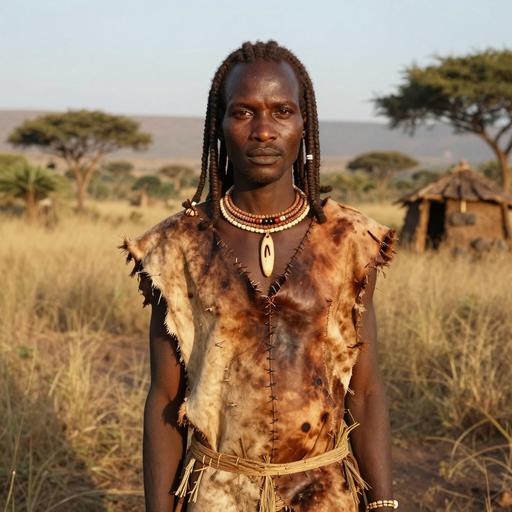
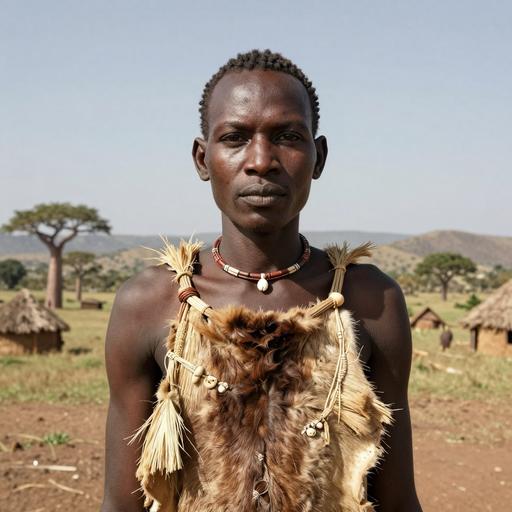
L5B is concentrated in Central and Eastern Africa, with the highest representation in certain rainforest hunter-gatherer (Pygmy) groups and occasional occurrences among East African pastoralists and agriculturalists. Its presence in African-descended populations of the Americas is sporadic and reflects historical trans-Atlantic admixture rather than prehistoric expansion. The lineage's patchy distribution today is consistent with long-term local retention in small, often isolated populations and with later gene flow between forager and neighboring farming/pastoral groups.
Historical and Cultural Significance
Because L5B is most commonly observed in foraging groups (e.g., Central African rainforest hunter-gatherers) and occasionally in East African groups, it is valuable for reconstructing local demographic history, including population continuity and interaction between foragers and expanding pastoral/agricultural societies. The haplogroup contributes to reconstructions of deep maternal population structure in Africa and informs models of how small-scale groups preserved ancient lineages through climatic and cultural transitions from the Late Pleistocene into the Holocene. The detection of L5B in at least one archaeological (ancient DNA) sample further supports its long-term presence in regional populations.
Conclusion
L5B is a rare, regionally restricted mtDNA lineage that encapsulates part of Africa's deep maternal diversity. Its distribution among Central and East African forager and neighboring populations, together with low representation in diasporic communities, points to a demographic history of early origin, local persistence, and limited but detectable gene flow. Future targeted mitogenome sequencing of under-sampled African populations will improve resolution of L5B's internal structure, age estimates, and finer-scale geographical patterning.
Key Points
- Origins and Evolution
- Subclades (if applicable)
- Geographical Distribution
- Historical and Cultural Significance
- Conclusion