Menu
mtDNA Haplogroup • Maternal Lineage

M1A1B

mtDNA Haplogroup M1A1B

~5,000 years ago
Northeast Africa / Horn of Africa
1 subclades
9 ancient samples
Scroll to explore
Chapter I

The Story

The journey of mtDNA haplogroup M1A1B

Origins and Evolution

mtDNA haplogroup M1A1B is a derived branch of M1A1, itself part of the broader M1 clade that is widely interpreted as an Asian-derived lineage that back-migrated into North-East Africa in the early Holocene. Given the position of M1A1B downstream of M1A1, its most likely origin lies within the same Northeast African/Horn of Africa corridor where M1A1 shows its greatest diversity. Based on phylogenetic branching order and coalescent expectations for Holocene mtDNA subclades, M1A1B likely emerged in the mid-Holocene (on the order of a few thousand years after the main M1A1 expansion), here estimated to roughly ~5 thousand years ago (5 kya), reflecting a regional diversification event following the initial M1 backflow.

Subclades (if applicable)

As a named downstream subclade, M1A1B may contain further internal variation detectable only with complete mitogenomes. Published mtDNA trees and databases show M1A1 divides into multiple lineages; M1A1B represents one of these localized lineages. Where full mitogenome sequencing has been done, M1A1B can be identified by its defining control-region and coding-region mutations (specific mutation labels vary by nomenclature version). Further substructure within M1A1B is expected but currently limited by sample coverage — additional deep sequencing in Horn and Nile corridor populations is likely to reveal finer subclades.

Geographical Distribution

M1A1B is most frequent and diverse in the Horn of Africa and along the Nile corridor, consistent with the parent M1A1 distribution. From there it appears at lower frequencies in North Africa (Maghreb and Nile Delta), the Levant and parts of the southern Mediterranean (Iberia, southern Italy, Sicily). Occasional occurrences in Arabian Peninsula populations and diasporic/merchant communities are consistent with historical movements across the Red Sea and the Mediterranean. The lineage also appears sporadically in historical and archaeological samples from North Africa, reflecting Holocene continuity or later local movements.

Historical and Cultural Significance

Because M1A1B represents a Holocene regional diversification, its distribution tracks several important demographic processes in Northeast Africa and adjacent regions: post-glacial and early Holocene population expansions, the development and spread of pastoralist economies in eastern Africa, and later historical-era trans-Saharan and Red Sea contacts. Its presence in North African archaeological remains attributed to Iberomaurusian/Capsian-related contexts and in later Horn-of-Africa pastoral contexts (where sampled) suggests both deep local continuity and episodes of localized expansion. Low-frequency occurrences in the Levant, Arabian Peninsula and southern Mediterranean likely reflect a combination of prehistoric contacts and historical movements (trade, migration, and diasporas).

Conclusion

M1A1B is best understood as a regional Holocene maternal lineage that radiated within the broader M1A1 population of Northeast Africa and the Horn. It is informative for studies of Holocene demography in the Nile–Horn corridor and adjacent North Africa and can serve as a marker for localized maternal continuity and migration across the Red Sea and Mediterranean margins. Expanded mitogenome sampling in underrepresented populations will improve resolution of its internal structure and precise age.

Key Points

  • Origins and Evolution
  • Subclades (if applicable)
  • Geographical Distribution
  • Historical and Cultural Significance
  • Conclusion
Chapter II

Tree & Relationships

Phylogenetic context and subclades

Evolution Path

This haplogroup's evolutionary journey from its earliest ancestor to the present.

Steps Haplogroup Age Estimate Archaeology Era Time Passed Immediate Descendants Tested Modern Descendants Ancient Connections
1 M1A1B Current ~5,000 years ago 🔶 Bronze Age 5,000 years 1 14 9
2 M1A1 ~10,000 years ago 🌾 Neolithic 10,000 years 2 23 0
3 M1A ~15,000 years ago 🏹 Mesolithic 15,000 years 1 24 1
4 M1 ~26,000 years ago 🦴 Paleolithic 26,000 years 7 119 3
5 M ~60,000 years ago 🦴 Paleolithic 60,000 years 11 1,200 41
6 L3 ~70,000 years ago 🦴 Paleolithic 70,000 years 11 17,621 6
7 L ~160,000 years ago 🦴 Paleolithic 160,000 years 7 18,987 5

Siblings (1)

Other branches from the same parent haplogroup

Chapter III

Where in the World

Geographic distribution and modern presence

Place of Origin

Northeast Africa / Horn of Africa

Modern Distribution

The populations where mtDNA haplogroup M1A1B is found include:

  1. Berber-speaking groups of North Africa (Morocco, Algeria, Tunisia, Libya)
  2. Egyptians and other Nile Valley populations
  3. Horn of Africa populations (Ethiopians, Eritreans, Somalis, Oromo)
  4. Sudanese and Nubian populations
  5. Levantine and Arabian Peninsula groups (low to moderate frequencies)
  6. Mediterranean populations at low frequency (Iberian Peninsula, southern Italy, Sicily)
  7. Jewish communities with Middle Eastern and North African ancestry (Sephardi, Mizrahi)
  8. Canary Islanders and some Atlantic island populations (trace occurrences)
  9. North African archaeological remains attributed to Iberomaurusian/Capsian-related contexts
  10. Scattered individuals in broader Near Eastern and European historical-period samples
CHAPTER IV

When in Time

Your haplogroup in the context of human history

~10k years ago

Neolithic Revolution

Agriculture begins, settled communities form

~5k years ago

Bronze Age

Metalworking, writing, and early civilizations

~5k years ago

Haplogroup M1A1B

Your mtDNA haplogroup emerged in Northeast Africa / Horn of Africa

Northeast Africa / Horn of Africa
~3k years ago

Iron Age

Iron tools, expanded trade networks

~2k years ago

Classical Antiquity

Greek and Roman civilizations flourish

Present

Present Day

Modern era

Your Haplogroup
Historical Era
Chapter IV-B

Linked Cultures

Ancient cultures associated with mtDNA haplogroup M1A1B

Cultural Heritage

These ancient cultures have been linked to haplogroup M1A1B based on matching ancient DNA samples from archaeological excavations. The presence of this haplogroup in these cultures provides insights into the migrations and population movements of populations carrying this haplogroup.

Bell Beaker Early Árpád Elmenteitan Culture Goyet Cave Indonesian Hunter-Gatherer Culture North African Neolithic Pastoral Neolithic Pre-Nuragic Culture Third Intermediate
Culture assignments are based on archaeological context of ancient DNA samples and may represent regional associations during specific time periods.
Chapter V

Sample Catalog

Top 9 ancient DNA samples directly related to haplogroup M1A1B or parent clades

9 / 9 samples
Portrait Sample Country Era Date Culture mtDNA Match
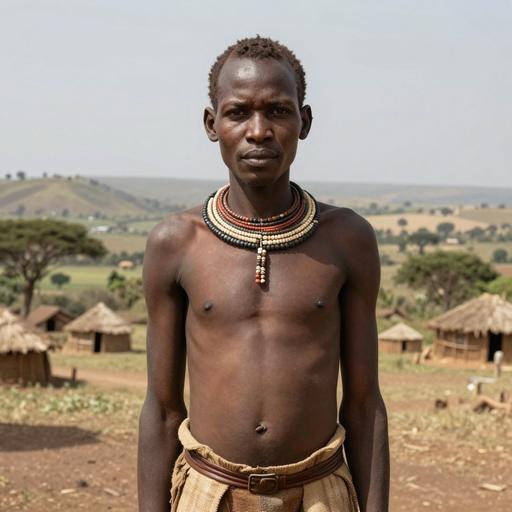
Portrait of ancient individual I8830 from Kenya, dated 409 BCE - 373 BCE
I8830
Kenya Pastoral Neolithic in Kenya 409 BCE - 373 BCE Pastoral Neolithic M1a1b Direct
Portrait of ancient individual I8830 from Kenya, dated 409 BCE - 373 BCE
I8830
Kenya Pastoralist Societies in East Africa 409 BCE - 373 BCE M1a1b Direct
Portrait of ancient individual I8923 from Kenya, dated 748 BCE - 411 BCE
I8923
Kenya Pastoral Neolithic Elmenteitan in Kenya 748 BCE - 411 BCE Elmenteitan Culture M1a1b Direct
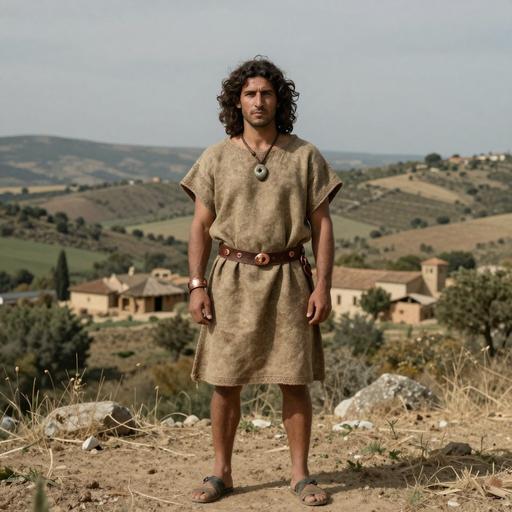
Portrait of ancient individual PLE-418 from Hungary, dated 1060 CE - 1100 CE
PLE-418
Hungary Early Árpád Dynasty Period Hungary 1060 CE - 1100 CE Early Árpád M1a1b1 Direct
Portrait of ancient individual I15940 from Italy, dated 2397 BCE - 2146 BCE
I15940
Italy Chalcolithic Sardinia, Italy 2397 BCE - 2146 BCE Pre-Nuragic Culture M1a1b1 Direct
Portrait of ancient individual I15940 from Italy, dated 2397 BCE - 2146 BCE
I15940
Italy Chalcolithic Sardinia 2397 BCE - 2146 BCE M1a1b1 Direct
Portrait of ancient individual I4246 from Spain, dated 2401 BCE - 2146 BCE
I4246
Spain Bell Beaker Culture, Spain 2401 BCE - 2146 BCE Bell Beaker M1a1b1 Direct
Portrait of ancient individual I4246 from Spain, dated 2401 BCE - 2146 BCE
I4246
Spain The Bell Beaker Culture 2401 BCE - 2146 BCE M1a1b1 Direct
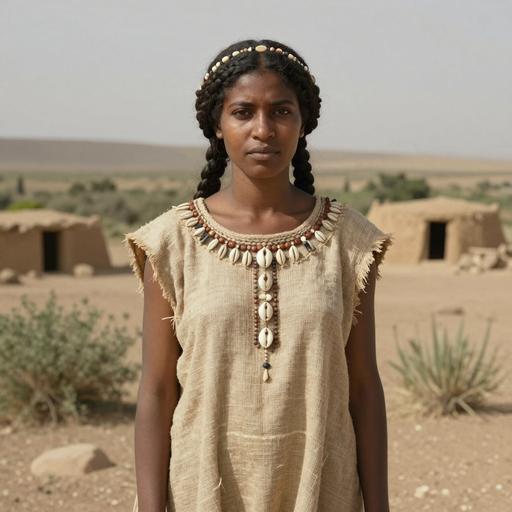
Portrait of ancient individual skh001 from Morocco, dated 4487 BCE - 4345 BCE
skh001
Morocco Middle Neolithic North Africa 4487 BCE - 4345 BCE North African Neolithic M1a1b Direct
Chapter VI

Carrier Distribution Map

Geographic distribution of 9 ancient DNA samples carrying haplogroup M1A1B

Time Period Filter
All Time Periods
Showing all samples
Each marker represents an ancient individual
Chapter VII

Temporal Distribution

Distribution of carriers across archaeological periods

Chapter VIII

Geographic Distribution

Distribution of carriers by country of origin

Chapter IX

Country × Era Distribution

Cross-tabulation of carrier countries and archaeological periods

Data

Data & Provenance

Source information and data quality

Last Updated 2026-02-16
Confidence Score 50/100
Coverage Low
Data Source

We use the latest phylotree for MTDNA haplogroup classification and data.