Menu
mtDNA Haplogroup • Maternal Lineage

M28B1

mtDNA Haplogroup M28B1

~8,000 years ago
South Asia (Indian subcontinent)
0 subclades
Scroll to explore
Chapter I

The Story

The journey of mtDNA haplogroup M28B1

Origins and Evolution

mtDNA haplogroup M28B1 sits as a downstream branch within haplogroup M28B, itself a member of macro-haplogroup M, which diversified in Eurasia after the initial Out-of-Africa dispersals. Based on the parent clade M28B (estimated ~12 kya) and observed diversity patterns, M28B1 most likely arose in the early Holocene (on the order of ~8 kya) on the Indian subcontinent. Its emergence is consistent with post-Last Glacial Maximum (post-LGM) regional diversification of South Asian maternal lineages rather than with the earliest Paleolithic phase of macrohaplogroup M.

The lineage shows low overall diversity and a geographically restricted footprint, which is typical for maternal subclades that have persisted within relatively isolated or endogamous populations. Two ancient DNA occurrences in available databases indicate the haplogroup has been present in the region through at least parts of the Holocene, supporting continuity between some archaeological contexts and modern indigenous groups.

Subclades (if applicable)

At present, M28B1 is reported as a narrowly distributed subclade with limited evidence of deep downstream branching. Published and public-mitochondrial sequence datasets indicate few well-differentiated internal branches; most observed M28B1 chromosomes are closely related, consistent with a modest demographic expansion or prolonged stability after origin. As more complete mitogenomes from South Asia are sequenced, minor derived branches may be discovered, but current data suggest restricted diversification compared with more widespread South Asian lineages (e.g., M2, M5).

Geographical Distribution

M28B1 is concentrated in the Indian subcontinent, with the highest relative incidence among indigenous (Adivasi/tribal) and some Dravidian-speaking groups in peninsular and central India. It also appears at low frequencies among broader South Asian populations including Sri Lankan indigenous and non-indigenous groups, and as sporadic detections in Pakistan, Bangladesh, Nepal, and Himalayan-foothill populations. Isolated occurrences in South Asian diaspora communities (Middle East, Europe, North America) reflect recent migration rather than ancient range expansion. The overall pattern is one of regional confinement with occasional spillover into neighboring populations.

Historical and Cultural Significance

The distribution and genetic characteristics of M28B1 are most consistent with long-term maternal continuity among indigenous South Asian groups rather than with major continent-scale migrations. Because it is relatively rare and predominantly observed in tribal and some Dravidian groups, M28B1 is informative for reconstructing local demographic history — including population continuity, micro-differentiation, and endogamy — in peninsular and central India and adjacent areas.

M28B1 is not associated with major transcontinental cultural expansions (for example, it does not typify steppe-derived Bronze Age migrations). Its presence in Sri Lanka and among Veddah and other island groups points to early coastal and near-coastal Holocene population structures and limited gene flow across ecological and cultural boundaries.

Conclusion
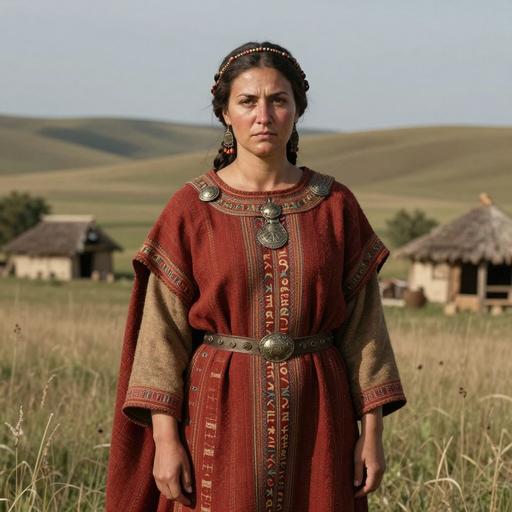
mtDNA haplogroup M28B1 is a small, regionally-focused maternal lineage that reflects the complex, multi-layered peopling of South Asia during the Holocene. It provides evidence for localized continuity among indigenous populations and serves as a useful marker for fine-scale maternal genealogies within the Indian subcontinent. Ongoing mitogenome sequencing and ancient DNA sampling in South Asia will refine its age estimates, internal structure, and precise prehistoric associations.

Key Points

  • Origins and Evolution
  • Subclades (if applicable)
  • Geographical Distribution
  • Historical and Cultural Significance
  • Conclusion

Chapter II

Tree & Relationships

Phylogenetic context and subclades

Evolution Path
This haplogroup's evolutionary journey from its earliest ancestor to the present.

Steps Haplogroup Age Estimate Archaeology Era Time Passed Immediate Descendants Tested Modern Descendants Ancient Connections
1 M28B1 Current ~8,000 years ago 🌾 Neolithic 8,000 years 0 0 0
2 M28B ~12,000 years ago 🌾 Neolithic 12,000 years 1 0 2
3 M28 ~18,000 years ago 🏹 Mesolithic 18,000 years 2 2 0
4 M2 ~50,000 years ago 🦴 Paleolithic 50,000 years 5 31 3
5 M ~60,000 years ago 🦴 Paleolithic 60,000 years 11 1,200 41
6 L3 ~70,000 years ago 🦴 Paleolithic 70,000 years 11 17,621 6
7 L ~160,000 years ago 🦴 Paleolithic 160,000 years 7 18,987 5

Subclades (0)

Terminal branch - no known subclades

Chapter III

Where in the World

Geographic distribution and modern presence


Place of Origin

South Asia (Indian subcontinent)

Modern Distribution

The populations where mtDNA haplogroup M28B1 is found include:

  1. Adivasi and tribal groups across peninsular and central India (e.g., Gond, Bhil and other indigenous communities)
  2. Dravidian-speaking populations in South India (Tamil and Telugu regions) at low-moderate frequencies
  3. Indo-Aryan speaking populations in parts of North and Central India (sporadic occurrences)
  4. Sri Lankan populations including indigenous communities (e.g., Veddah) and broader Sri Lankan groups
  5. Populations of Pakistan with South Asian maternal ancestry (rare detections)
  6. Bangladesh and Bengali populations at very low frequencies
  7. Nepalese lowland and foothill populations (occasional detections)
  8. Himalayan foothill groups with South Asian maternal ancestry (low frequency)
  9. South Asian diaspora communities (e.g., in the Middle East, Europe) as isolated reports
  10. Neighboring South-Central Asian groups in limited, low-frequency instances
CHAPTER IV

When in Time

Your haplogroup in the context of human history

~10k years ago

Neolithic Revolution

Agriculture begins, settled communities form

~8k years ago

Haplogroup M28B1

Your mtDNA haplogroup emerged in South Asia (Indian subcontinent)

South Asia (Indian subcontinent)
~5k years ago

Bronze Age

Metalworking, writing, and early civilizations

~3k years ago

Iron Age

Iron tools, expanded trade networks

~2k years ago

Classical Antiquity

Greek and Roman civilizations flourish

Present

Present Day

Modern era

Your Haplogroup
Historical Era
Chapter IV-B

Linked Cultures

Ancient cultures associated with mtDNA haplogroup M28B1

Cultural Heritage

These ancient cultures have been linked to haplogroup M28B1 based on matching ancient DNA samples from archaeological excavations. The presence of this haplogroup in these cultures provides insights into the migrations and population movements of populations carrying this haplogroup.

British Neolithic Goyet Cave Gravettian Lapita Ostuni Culture Spanish Gravettian Vanuatu Colonial Vietnamese Neolithic
Culture assignments are based on archaeological context of ancient DNA samples and may represent regional associations during specific time periods.
Chapter V

Sample Catalog

Top 50 ancient DNA samples directly related to haplogroup M28B1 or parent clades

50 / 50 samples
Portrait Sample Country Era Date Culture mtDNA Match
Portrait of ancient individual I13692 from Taiwan, dated 1 CE - 800 CE
I13692
Taiwan Iron Age Taiwan 1 CE - 800 CE Taiwanese Iron M7c1c3 Direct
Portrait of ancient individual I14925 from Taiwan, dated 1 CE - 800 CE
I14925
Taiwan Iron Age Taiwan 1 CE - 800 CE Taiwanese Iron M7b1a2a1 Direct
Portrait of ancient individual I14927 from Taiwan, dated 1 CE - 800 CE
I14927
Taiwan Iron Age Taiwan 1 CE - 800 CE Taiwanese Iron M7b1a2a1 Direct
Portrait of ancient individual I2948 from Vietnam, dated 44 BCE - 61 CE
I2948
Vietnam Bronze Age Vietnam 44 BCE - 61 CE Dong Son Culture M8a2 Direct
Portrait of ancient individual I2948 from Vietnam, dated 44 BCE - 61 CE
I2948
Vietnam Bronze Age Vietnam 44 BCE - 61 CE Dong Son Culture M8a2 Direct
Portrait of ancient individual AMA004 from Indonesia, dated 51 BCE - 76 BCE
AMA004
Indonesia Early Bronze Age Indonesia 51 BCE - 76 BCE Early Bronze Indonesian M73a Direct
Portrait of ancient individual R67 from Italy, dated 100 CE - 300 CE
R67
Italy Imperial Rome 100 CE - 300 CE Roman Empire M Direct
Portrait of ancient individual L8671 from Uzbekistan, dated 150 BCE - 50 CE
L8671
Uzbekistan Iron Age Serkharakat Culture of Surkhandaryo 150 BCE - 50 CE Serkharakat Culture M5a Direct
Portrait of ancient individual C3315 from China, dated 152 BCE - 23 BCE
C3315
China Iron Age Caishichang, Xinjiang, China 152 BCE - 23 BCE Caishichang Culture M3 Direct
Portrait of ancient individual I6549 from Pakistan, dated 165 BCE - 2 BCE
I6549
Pakistan Butkara: Iron Age Religious and Cultural Center in Swat Valley, Pakistan 165 BCE - 2 BCE Butkara Culture M30 Direct
Chapter VI

Carrier Distribution Map

Geographic distribution of 100 ancient DNA samples carrying haplogroup M28B1

Time Period Filter
All Time Periods
Showing all samples
Each marker represents an ancient individual
Chapter VII

Temporal Distribution

Distribution of carriers across archaeological periods

Chapter VIII

Geographic Distribution

Distribution of carriers by country of origin

Chapter IX

Country × Era Distribution

Cross-tabulation of carrier countries and archaeological periods

Data

Data & Provenance

Source information and data quality

Last Updated 2026-02-16
Confidence Score 50/100
Coverage Low
Data Source

We use the latest phylotree for MTDNA haplogroup classification and data.