Menu
mtDNA Haplogroup • Maternal Lineage

M30D

mtDNA Haplogroup M30D

~9,000 years ago
South Asia
1 subclades
4 ancient samples
Scroll to explore
Chapter I

The Story

The journey of mtDNA haplogroup M30D

Origins and Evolution

mtDNA haplogroup M30D is a downstream lineage of haplogroup M30, itself a South Asian branch of macro-haplogroup M. Based on phylogenetic position and comparative mutation counts within M30, M30D most likely coalesced in the early Holocene (approximately 8–10 kya) as local maternal lineages in the subcontinent diversified following the Last Glacial Maximum. As a subclade of M30, M30D inherits the deeper Paleolithic/Mesolithic ancestry of M while representing a more regionally restricted Holocene diversification event.

Subclades (if applicable)

At present, M30D is recognized as a distinct terminal or near-terminal branch under M30 in published and public phylogenies; additional internal substructure (micro-lineages) has been reported in targeted population studies but remains limited in scope. Where detailed sequencing has been done, M30D samples sometimes separate into closely related haplotypes defined by private mutations, consistent with localized drift and founder effects in small populations. Future whole-mitogenome surveys across under-sampled South Asian groups may reveal additional named subclades within M30D.

Geographical Distribution

M30D is primarily a South Asian maternal lineage. It occurs at low-to-moderate frequencies across multiple regions of the Indian subcontinent, including both tribal (indigenous) and caste populations. The highest representation is within diverse communities in India, with lower-frequency occurrences in Sri Lanka, Pakistan, Bangladesh, Nepal and sporadically in adjoining regions of Central and Southeast Asia. Outside South Asia, M30D is generally rare and typically reflects recent historical gene flow or modern diaspora movements rather than ancient population expansions.

Historical and Cultural Significance

Because M30D is nested within a South Asian diversification (M30) whose time depth falls in the early Holocene, its presence is informative for studies of postglacial population structure, the spread of local Holocene adaptations, and demographic processes in South Asia. The haplogroup may have been present in populations associated with early farming and pastoralist developments in South Asia (e.g., Neolithic sites such as Mehrgarh) and would have persisted through subsequent cultural horizons including Chalcolithic and Bronze Age (Indus urban) contexts. However, direct association with specific archaeological cultures is tentative because ancient mtDNA data from many South Asian sites remain sparse; when M30-class lineages are identified in ancient remains they provide anchors tying modern population structure to prehistoric demography.

Conclusion

M30D represents a regionally restricted maternal lineage that exemplifies Holocene diversification within the Indian subcontinent. It is most useful in population-genetic studies as a marker of localized maternal ancestry and microevolutionary processes (founder effects, drift, and limited gene flow) in South Asian populations. Continued mitogenome sequencing—especially from understudied tribal, island, and ancient samples—will refine its internal structure, precise age estimates, and archaeological correlations.

Key Points

  • Origins and Evolution
  • Subclades (if applicable)
  • Geographical Distribution
  • Historical and Cultural Significance
  • Conclusion
Chapter II

Tree & Relationships

Phylogenetic context and subclades

Evolution Path

This haplogroup's evolutionary journey from its earliest ancestor to the present.

Steps Haplogroup Age Estimate Archaeology Era Time Passed Immediate Descendants Tested Modern Descendants Ancient Connections
1 M30D Current ~9,000 years ago 🌾 Neolithic 9,000 years 1 15 4
2 M30 ~15,000 years ago 🏹 Mesolithic 15,000 years 5 71 0
3 M3 ~25,000 years ago 🦴 Paleolithic 25,000 years 6 167 3
4 M ~60,000 years ago 🦴 Paleolithic 60,000 years 11 1,200 41
5 L3 ~70,000 years ago 🦴 Paleolithic 70,000 years 11 17,621 6
6 L ~160,000 years ago 🦴 Paleolithic 160,000 years 7 18,987 5

Siblings (4)

Other branches from the same parent haplogroup

Chapter III

Where in the World

Geographic distribution and modern presence

Place of Origin

South Asia

Modern Distribution

The populations where mtDNA haplogroup M30D is found include:

  1. Various South Asian populations (tribal groups and caste populations across India)
  2. Sri Lankan populations (Tamil and Sinhalese groups)
  3. Pakistani populations (selected groups in Punjab, Sindh and adjoining regions)
  4. Bangladeshi populations (low to moderate frequencies in some groups)
  5. Nepalese and Himalayan highland populations (sporadic occurrences)
  6. Central Asian populations (low frequency, typically due to gene flow)
  7. Southeast Asian groups (rare occurrences in Myanmar/Thailand region)
  8. Regional island populations in the Indian Ocean rim (low frequency)
  9. Modern diaspora populations in Europe and the Americas (very low frequency)
  10. Ancient South Asian archaeological individuals (rare/limited ancient DNA occurrences)
CHAPTER IV

When in Time

Your haplogroup in the context of human history

~10k years ago

Neolithic Revolution

Agriculture begins, settled communities form

~9k years ago

Haplogroup M30D

Your mtDNA haplogroup emerged in South Asia

South Asia
~5k years ago

Bronze Age

Metalworking, writing, and early civilizations

~3k years ago

Iron Age

Iron tools, expanded trade networks

~2k years ago

Classical Antiquity

Greek and Roman civilizations flourish

Present

Present Day

Modern era

Your Haplogroup
Historical Era
Chapter IV-B

Linked Cultures

Ancient cultures associated with mtDNA haplogroup M30D

Cultural Heritage

These ancient cultures have been linked to haplogroup M30D based on matching ancient DNA samples from archaeological excavations. The presence of this haplogroup in these cultures provides insights into the migrations and population movements of populations carrying this haplogroup.

Butkara Culture Gogdara Culture Gonur Culture Katelai Culture Loebanr Culture Mtwapa Roopkund Culture Saidu Sharif Culture Shahr-i Sokhta
Culture assignments are based on archaeological context of ancient DNA samples and may represent regional associations during specific time periods.
Chapter V

Sample Catalog

Top 4 ancient DNA samples directly related to haplogroup M30D or parent clades

4 / 4 samples
Portrait Sample Country Era Date Culture mtDNA Match
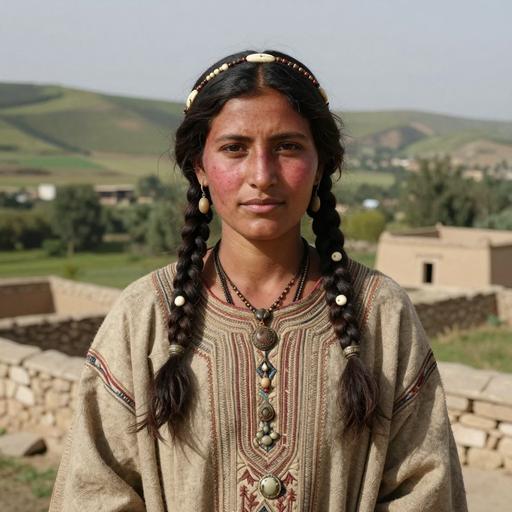
Portrait of ancient individual I7723 from Pakistan, dated 400 BCE - 200 BCE
I7723
Pakistan Saidu Sharif Iron Age Complex in Swat Valley, Pakistan 400 BCE - 200 BCE Saidu Sharif Culture M30d1 Direct
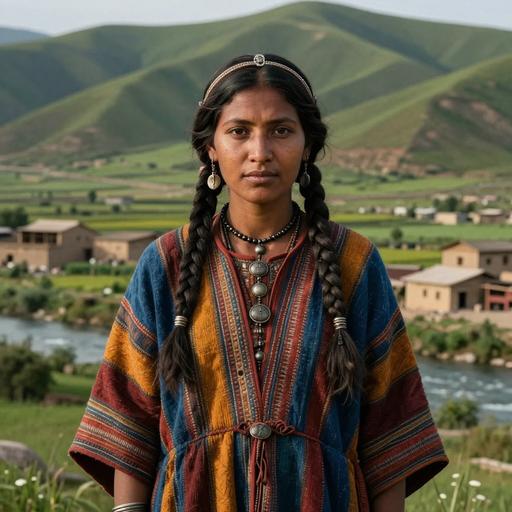
Portrait of ancient individual I12461 from Pakistan, dated 1000 BCE - 800 BCE
I12461
Pakistan The Pakistan Katelai Iron Age Culture 1000 BCE - 800 BCE Katelai Culture M30d1 Direct
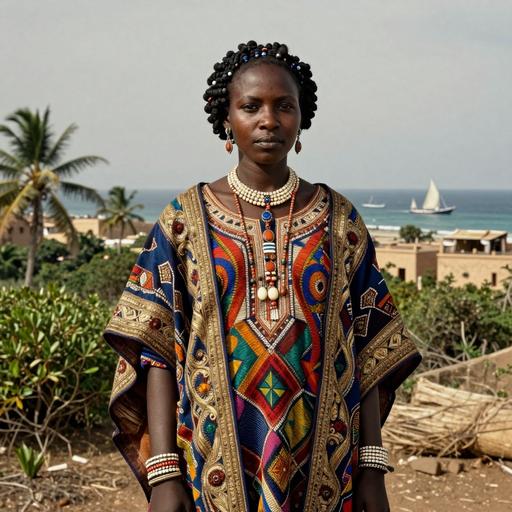
Portrait of ancient individual I23550 from Kenya, dated 1200 CE - 1450 CE
I23550
Kenya Swahili Culture of Mtwapa 1200 CE - 1450 CE Mtwapa M30d1 Direct
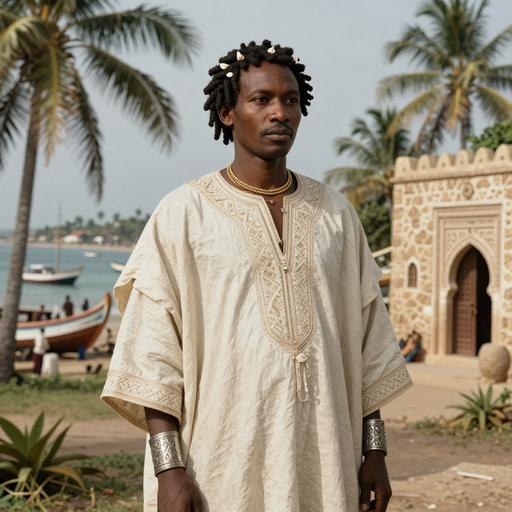
Portrait of ancient individual I17409 from Kenya, dated 1226 CE - 1297 CE
I17409
Kenya Swahili Culture of Mtwapa 1226 CE - 1297 CE Mtwapa M30d1 Direct
Chapter VI

Carrier Distribution Map

Geographic distribution of 4 ancient DNA samples carrying haplogroup M30D

Time Period Filter
All Time Periods
Showing all samples
Each marker represents an ancient individual
Chapter VII

Temporal Distribution

Distribution of carriers across archaeological periods

Chapter VIII

Geographic Distribution

Distribution of carriers by country of origin

Chapter IX

Country × Era Distribution

Cross-tabulation of carrier countries and archaeological periods

Data

Data & Provenance

Source information and data quality

Last Updated 2026-02-16
Confidence Score 50/100
Coverage Low
Data Source

We use the latest phylotree for MTDNA haplogroup classification and data.