Menu
mtDNA Haplogroup • Maternal Lineage

M3A

mtDNA Haplogroup M3A

~9,000 years ago
South Asia
2 subclades
7 ancient samples
Scroll to explore
Chapter I

The Story

The journey of mtDNA haplogroup M3A

Origins and Evolution

mtDNA haplogroup M3A is a derived subclade of haplogroup M3, itself a member of the macro-haplogroup M. M3 has been characterized as a predominantly South Asian lineage that likely arose in the Late Pleistocene (~25 kya). M3A represents one of the downstream branches that diversified within South Asia during the early Holocene (post-glacial period), reflecting local maternal diversification and demographic processes such as population continuity and regional expansions after the Last Glacial Maximum. The estimated time depth for M3A (on the order of ~8–12 kya) aligns with known Holocene demographic changes in the subcontinent, including the spread and intensification of foraging and early farming practices in parts of South Asia.

Subclades

As an intermediate clade of M3, M3A typically shows limited but detectable internal structure in high-resolution sequencing studies; some datasets resolve minor downstream branches (often labelled with additional alphanumeric suffixes in full phylogenies). In many population surveys based on HVS-I or partial coding-region data, M3A is treated as a single recognizable haplogroup because deep internal branching has been modest compared with older macro-haplogroups. Ongoing mitogenome sequencing continues to refine its internal topology and to identify low-frequency subbranches.

Geographical Distribution

M3A is concentrated in the Indian subcontinent, where its highest frequencies and diversity are observed, consistent with an in-situ origin and long-term presence. It is found across a broad set of groups including tribal populations and caste groups, and is also observed in Sri Lanka and parts of Pakistan, Bangladesh and Nepal. Low-frequency occurrences in Central Asia and Southeast Asia, and in island communities around the Indian Ocean, are best interpreted as later gene flow out of South Asia rather than independent origins. A small number of ancient South Asian individuals sequenced to date carry M3 or downstream lineages, supporting continuity of maternal lineages in the region from the Holocene to the present.

Historical and Cultural Significance

Because M3A is rooted within a South Asian radiation of mtDNA lineages, it is informative about maternal ancestry and demographic history within the subcontinent. Its presence in both tribal and caste populations indicates that the lineage predates many recent social stratifications and has been carried by multiple cultural groups over millennia. The timing of M3A diversification overlaps with archaeological horizons such as the early Holocene Neolithic sites in South Asia (e.g., Mehrgarh) and later with the growth of complex societies in the Bronze Age (e.g., the Indus Civilization), although M3A is not diagnostic of any single archaeological culture. Low-frequency occurrences outside South Asia reflect historical movements — trade, migration, and localized gene flow — rather than primary dispersal from those regions.

Conclusion

M3A is a regionally important maternal lineage for reconstructing South Asian population history. As a subclade of M3, it documents postglacial maternal diversification within the subcontinent and serves as a marker of deep local ancestry found across tribal and caste groups. Continued whole-mitogenome sequencing and integration with ancient DNA will further clarify its substructure, age estimates, and precise role in Holocene demographic events in South Asia.

Key Points

  • Origins and Evolution
  • Subclades
  • Geographical Distribution
  • Historical and Cultural Significance
  • Conclusion
Chapter II

Tree & Relationships

Phylogenetic context and subclades

Evolution Path

This haplogroup's evolutionary journey from its earliest ancestor to the present.

Steps Haplogroup Age Estimate Archaeology Era Time Passed Immediate Descendants Tested Modern Descendants Ancient Connections
1 M3A Current ~9,000 years ago 🌾 Neolithic 9,000 years 2 53 7
2 M3 ~25,000 years ago 🦴 Paleolithic 25,000 years 6 167 3
3 M ~60,000 years ago 🦴 Paleolithic 60,000 years 11 1,200 41
4 L3 ~70,000 years ago 🦴 Paleolithic 70,000 years 11 17,621 6
5 L ~160,000 years ago 🦴 Paleolithic 160,000 years 7 18,987 5

Siblings (5)

Other branches from the same parent haplogroup

Chapter III

Where in the World

Geographic distribution and modern presence

Place of Origin

South Asia

Modern Distribution

The populations where mtDNA haplogroup M3A is found include:

  1. Various South Asian populations (tribal groups and caste populations across India)
  2. Sri Lankan populations (Tamil and Sinhalese groups)
  3. Pakistani populations (selected groups in Punjab, Sindh and adjoining regions)
  4. Bangladeshi populations (low to moderate frequencies in some groups)
  5. Nepalese and Himalayan highland populations (sporadic occurrences)
  6. Central Asian populations (low frequency, typically due to gene flow)
  7. Southeast Asian groups (rare occurrences in Myanmar/Thailand region)
  8. Regional island populations in the Indian Ocean rim (low frequency)
  9. Modern diaspora populations in Europe and the Americas (very low frequency)
  10. Ancient South Asian archaeological individuals (identified in a small number of aDNA samples)
CHAPTER IV

When in Time

Your haplogroup in the context of human history

~10k years ago

Neolithic Revolution

Agriculture begins, settled communities form

~9k years ago

Haplogroup M3A

Your mtDNA haplogroup emerged in South Asia

South Asia
~5k years ago

Bronze Age

Metalworking, writing, and early civilizations

~3k years ago

Iron Age

Iron tools, expanded trade networks

~2k years ago

Classical Antiquity

Greek and Roman civilizations flourish

Present

Present Day

Modern era

Your Haplogroup
Historical Era
Chapter IV-B

Linked Cultures

Ancient cultures associated with mtDNA haplogroup M3A

Cultural Heritage

These ancient cultures have been linked to haplogroup M3A based on matching ancient DNA samples from archaeological excavations. The presence of this haplogroup in these cultures provides insights into the migrations and population movements of populations carrying this haplogroup.

Barikot Butkara Culture Caishichang Culture Goyet Cave Gravettian Hetian Culture Jierzankale Culture Roopkund Culture Singoor
Culture assignments are based on archaeological context of ancient DNA samples and may represent regional associations during specific time periods.
Chapter V

Sample Catalog

Top 7 ancient DNA samples directly related to haplogroup M3A or parent clades

7 / 7 samples
Portrait Sample Country Era Date Culture mtDNA Match
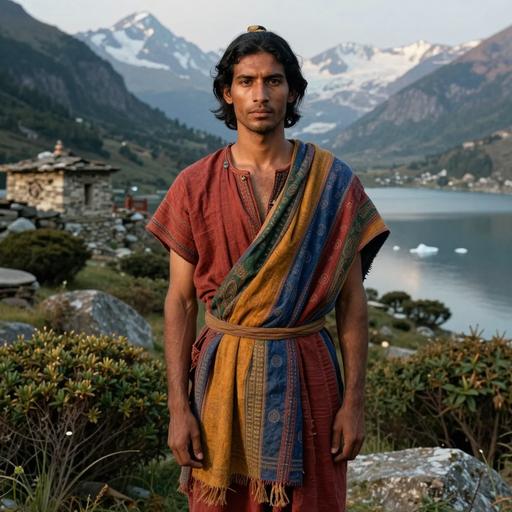
Portrait of ancient individual I6943 from India, dated 674 CE - 773 CE
I6943
India Roopkund Skeletons A 674 CE - 773 CE Roopkund Culture M3a1 Direct
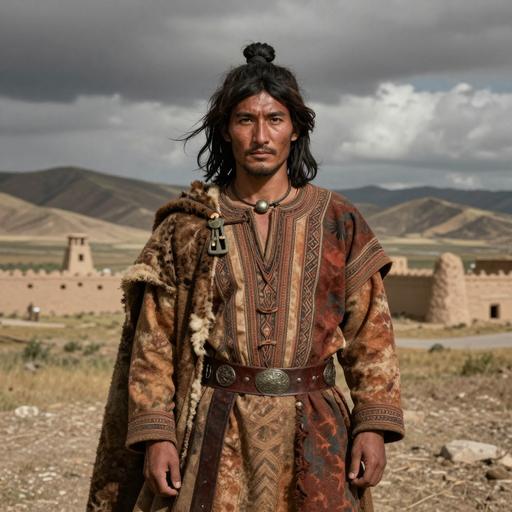
Portrait of ancient individual C1212 from China, dated 733 BCE - 397 BCE
C1212
China Iron Age Jierzankale, Xinjiang, China 733 BCE - 397 BCE Jierzankale Culture M3a1+204 Direct
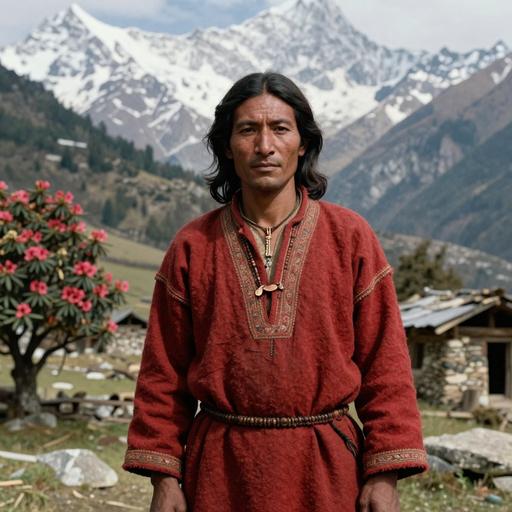
Portrait of ancient individual I3342 from India, dated 772 CE - 950 CE
I3342
India Roopkund Skeletons A 772 CE - 950 CE Roopkund Culture M3a2 Direct
Portrait of ancient individual I3407 from India, dated 772 CE - 974 CE
I3407
India Roopkund Skeletons A 772 CE - 974 CE Roopkund Culture M3a1 Direct
Portrait of ancient individual I12450 from Pakistan, dated 819 BCE - 785 BCE
I12450
Pakistan Butkara: Iron Age Religious and Cultural Center in Swat Valley, Pakistan 819 BCE - 785 BCE Butkara Culture M3a2 Direct
Portrait of ancient individual I6890 from Pakistan, dated 1028 CE - 1157 CE
I6890
Pakistan Historic Barikot 1028 CE - 1157 CE Barikot M3a2 Direct
Portrait of ancient individual I1805 from Pakistan, dated 1490 CE - 1649 CE
I1805
Pakistan Medieval Singoor 1490 CE - 1649 CE Singoor M3a1 Direct
Chapter VI

Carrier Distribution Map

Geographic distribution of 7 ancient DNA samples carrying haplogroup M3A

Time Period Filter
All Time Periods
Showing all samples
Each marker represents an ancient individual
Chapter VII

Temporal Distribution

Distribution of carriers across archaeological periods

Chapter VIII

Geographic Distribution

Distribution of carriers by country of origin

Chapter IX

Country × Era Distribution

Cross-tabulation of carrier countries and archaeological periods

Data

Data & Provenance

Source information and data quality

Last Updated 2026-02-16
Confidence Score 50/100
Coverage Low
Data Source

We use the latest phylotree for MTDNA haplogroup classification and data.