The Story
The journey of mtDNA haplogroup M42A
Origins and Evolution
M42A is a subclade of mtDNA haplogroup M42, itself derived from the South Asian branch of macro-haplogroup M. As a downstream lineage, M42A most likely formed after the initial diversification of M42 in South Asia during the terminal Pleistocene to early Holocene. The clade represents a maternal lineage that persisted within regional hunter-gatherer and early Holocene communities and was carried forward into later local populations. Like many deep-rooted South Asian M-lineages, M42A indicates long-term maternal continuity in subcontinental forager and mixed subsistence populations.
M42A is defined by a set of coding- and control-region mutations on top of the M42 backbone; precise diagnostic mutations have been established only through full mtDNA sequencing in the populations where it occurs. Phylogenetically it occupies an intermediate position linking the older M42 diversity to more geographically restricted daughter lineages.
Subclades
As a named subclade, M42A may itself split into minor downstream branches in well-sampled datasets, but these internal subdivisions are typically rare and geographically localized. Where deeper sequencing has been performed, researchers sometimes identify micro-branches that reflect local founder effects or isolation in tribal or highland communities. Because sampling across many South Asian tribal populations remains uneven, additional substructure within M42A likely exists but is incompletely documented.
Geographical Distribution
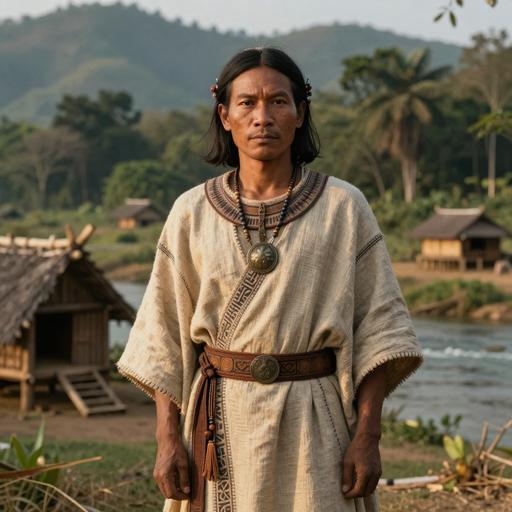
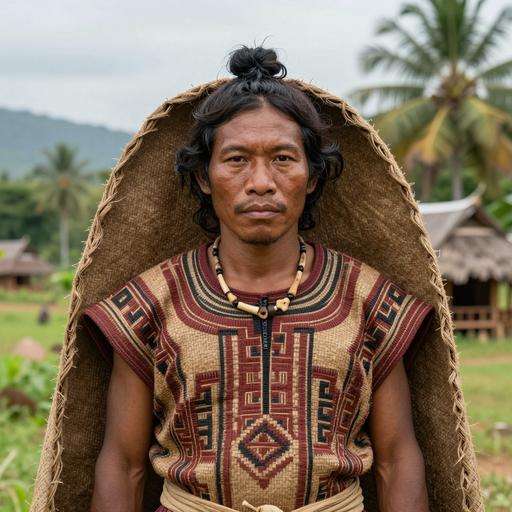
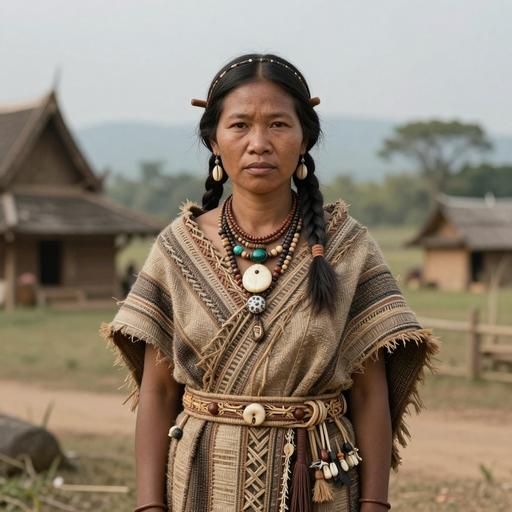
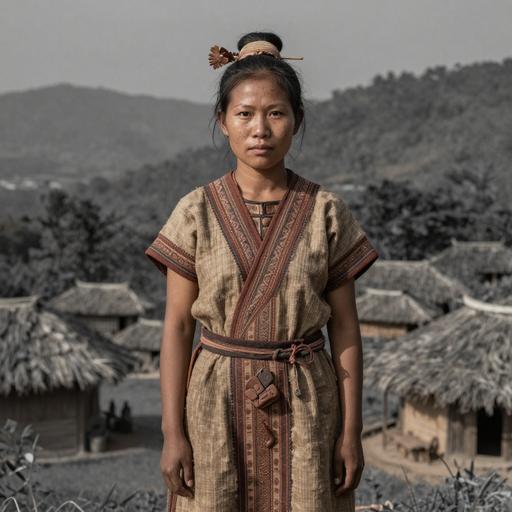
The distribution of M42A is concentrated in the Indian subcontinent with low, patchy occurrences in neighboring regions. It is most frequently observed among indigenous and tribal groups (including some Dravidian-associated tribes and other autochthonous communities), with lower frequencies in caste and general-population samples from both northern and southern India. Sporadic occurrences are reported from Sri Lanka, Nepal and Himalayan fringe groups, parts of eastern South Asia (Bangladesh and adjacent Indian states), and isolated low-frequency detections in Myanmar and adjoining Southeast Asian populations. Very occasional reports from Pakistan and Central Asian border samples likely reflect historical gene flow or low-frequency dispersal rather than broad regional expansion.
Historical and Cultural Significance
Because M42A is a deep maternal lineage with roots in the early Holocene of South Asia, it is informative for studies of maternal continuity among hunter-gatherer and early agricultural communities in the region. The haplogroup's presence in tribal populations today suggests continuity or limited gene flow with later arrivals. In archaeological contexts, M42A would most plausibly be associated with indigenous forager groups of the late Pleistocene/early Holocene and with local populations interacting with incoming Neolithic and Bronze Age communities (for example, during the eras of regional agricultural development and the Indus urban complex). Its low frequency in more cosmopolitan samples indicates it was not a major driver of large pan-regional demographic expansions but instead reflects localized persistence and occasional assimilation into broader gene pools.
Conclusion
M42A is an informative South Asian maternal lineage representing persistence of early Holocene maternal diversity within the subcontinent. Its geographic pattern—concentrated in tribal and indigenous groups with sporadic presence in neighboring regions—highlights the deep, regionally structured maternal ancestry of South Asia and the importance of further dense sampling and full mitogenome sequencing to resolve its internal structure and historical dynamics.
Key Points
- Origins and Evolution
- Subclades
- Geographical Distribution
- Historical and Cultural Significance
- Conclusion