The Story
The journey of mtDNA haplogroup M4A4
Origins and Evolution
Haplogroup M4a4 is a subclade of mtDNA haplogroup M4a, itself a South Asian branch of macro-haplogroup M. While the parent M4a is estimated to have arisen in the Late Pleistocene (~16 kya) within the Indian subcontinent, M4a4 represents a more recent diversification likely in the mid-to-late Holocene (on the order of a few thousand years ago). Its emergence reflects local maternal lineage differentiation within South Asia following Paleolithic and early Holocene population structure: initial macro-M settlement and later regional diversification among tribal and caste populations.
Phylogenetically, M4a4 is nested under M4a and defined by specific control-region and coding-region mutations that distinguish it from sister lineages within M4a. Because it is a lower-frequency, downstream subclade, its internal diversity is modest relative to older regional lineages (e.g., M2). Age estimates are derived from the branch length beneath M4a and observed sequence diversity in modern and a small number of ancient samples.
Subclades
As a downstream marker within M4a, M4a4 may itself contain minor internal branches observed in high-resolution whole-mtDNA studies, though published sampling remains limited. Where deeper sequencing exists, M4a4 branches can show geographically localized substructure (for example, variants concentrated in particular tribal groups or Himalayan-adjacent populations), indicating recent founder effects or drift. Continued mitogenome sequencing across South Asia may reveal further subclades and refine the time-depth of diversification.
Geographical Distribution
M4a4 is concentrated in the Indian subcontinent with the highest relative frequencies within certain indigenous and tribal groups and detectable presence in broader caste and general-population samples across north and south India. It also appears at lower frequencies in neighboring regions:
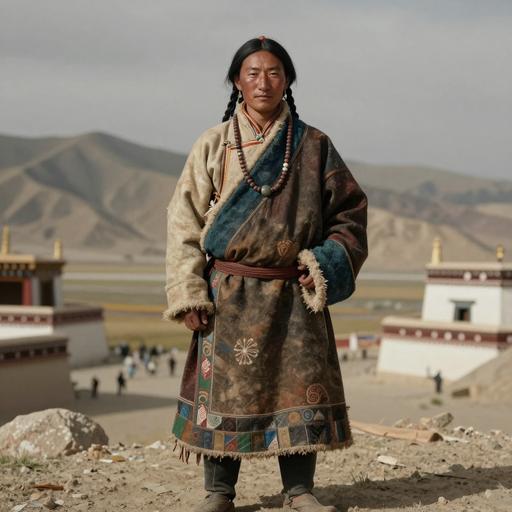
- Nepal and Himalayan-adjacent groups, including some Tibetan-edge and Himalayan highland populations, where gene flow and shared maternal ancestries blur regional boundaries.
- Pakistan (Sindhi, Punjabi and other groups) and Sri Lanka where low-to-moderate occurrences are reported in population surveys.
- Bengal and eastern South Asia (Bangladesh, eastern India) show occasional instances consistent with eastward spread or shared ancestry.
- Myanmar and Southeast Asia, and select Central Asian samples contain sparse, sporadic occurrences, suggesting limited dispersal or long-distance migration events.
A small number of Holocene ancient DNA samples from South Asia have included M4a-lineage representatives; M4a4 itself has been identified only rarely in archaeological contexts to date, consistent with its lower modern frequency.
Historical and Cultural Significance
Because M4a4 is primarily a regional, maternally inherited lineage, its significance is largely in reconstructing population history, maternal continuity, and local demographic events in South Asia rather than linking to a single archaeological culture. Its presence among tribal and indigenous groups makes it useful for studies of:
- Local continuity and isolation: High frequencies in particular groups may reflect long-term residence, drift, or founder events.
- Holocene demographic processes: The emergence and spread of M4a4 likely postdate initial Late Pleistocene settlement of South Asia and may correlate with local Neolithic and post-Neolithic demographic changes (population growth, mobility, and cultural transitions).
Archaeological culture associations are indirect: M4a4 is most plausibly connected to Neolithic and later Holocene populations of the Indian subcontinent, and may be found among descendants of groups that interacted with or were part of urban Bronze Age societies (e.g., the downstream maternal pool during the Indus-related and subsequent periods), though direct, consistent association with a single archaeological horizon is not established.
Conclusion
M4a4 is a regional South Asian maternal lineage nested within M4a, representing Holocene diversification of the maternal gene pool in the Indian subcontinent. It is most informative for fine-scale studies of local population structure, tribal and regional maternal ancestry, and the demographic history of South Asia. Broader sampling and more whole-mtDNA sequencing (including additional ancient specimens) will clarify its internal branching, geographic micro-distributions, and exact time-depth.
Key Points
- Origins and Evolution
- Subclades
- Geographical Distribution
- Historical and Cultural Significance
- Conclusion