Menu
mtDNA Haplogroup • Maternal Lineage

M7A

mtDNA Haplogroup M7A

~20,000 years ago
East Asia (southern/coastal China to Japan)
1 subclades
3 ancient samples
Scroll to explore
Chapter I

The Story

The journey of mtDNA haplogroup M7A

Origins and Evolution

mtDNA haplogroup M7a is a branch of haplogroup M7, a lineage that derives from macro-haplogroup M. Based on phylogenetic relationships and molecular clock estimates, M7a most likely split from other M7 lineages during the Late Pleistocene (roughly around ~20 kya, with uncertainty across studies). The parent clade M7 appears to have arisen in southern/coastal East Asia, and M7a represents one of the sublineages that expanded within East Asia and into island East Asia during the terminal Pleistocene and Holocene.

Subclades (if applicable)

M7a contains several downstream subclades (for example, M7a1, M7a2 and further derivatives described variably across studies). Some subbranches show geographic structure: certain M7a subclades are concentrated in the Japanese archipelago (including Ryukyu and Hokkaido/Ainu contexts), while others have been detected at low frequencies in mainland East Asia and parts of Southeast Asia. Subclade resolution and nomenclature vary between studies as additional full mitochondrial genomes refine the phylogeny.

Geographical Distribution

M7a is most frequent and distinctive in the Japanese archipelago (modern Japanese, Ryukyuan and Ainu populations), where it is considered an important component of the maternal gene pool and is often interpreted as reflecting pre-Neolithic/Jomon and later demographic histories. Outside Japan, M7a appears at lower frequencies among Han Chinese (more often in southern and eastern China), Koreans, and in several Austronesian-speaking groups of Taiwan, the Philippines and parts of island Southeast Asia. Scattered low-frequency occurrences have been reported in mainland Southeast Asia (Vietnam, Thailand, Laos), Malay populations and among some southern Chinese minorities (e.g., Zhuang, Dai), consistent with past coastal dispersals and later population movements.

Historical and Cultural Significance

In population-genetic and archaeogenetic studies, M7a is notable for its association with the Japanese archipelago: multiple modern and ancient samples link M7a lineages to Jomon-associated contexts, and its persistence in Ainu and Ryukyuan groups points to deep continuity of some maternal lineages in northern and southwestern Japan. The presence of M7a in Austronesian-speaking and other Southeast Asian groups at lower frequencies likely reflects complex processes including late Pleistocene coastal expansions, Holocene demic movements, and later interactions (for example, Neolithic and post-Neolithic migrations and trade networks across maritime East Asia). As with many mtDNA markers, M7a on its own does not map neatly onto single archaeological cultures but serves as a useful marker of maternal ancestry and regional continuity/interaction.

Conclusion

M7a is an East Asian maternal lineage that emerged as a differentiated branch of M7 in the Late Pleistocene and shows a strong geographic signal in the Japanese archipelago with broader, lower-frequency distributions across mainland and island Southeast Asia. Ongoing sequencing of complete mitochondrial genomes and increased ancient DNA sampling continue to refine M7a's substructure and its role in reconstructing East Asian maternal demographic history.

Key Points

  • Origins and Evolution
  • Subclades (if applicable)
  • Geographical Distribution
  • Historical and Cultural Significance
  • Conclusion
Chapter II

Tree & Relationships

Phylogenetic context and subclades

Evolution Path

This haplogroup's evolutionary journey from its earliest ancestor to the present.

Steps Haplogroup Age Estimate Archaeology Era Time Passed Immediate Descendants Tested Modern Descendants Ancient Connections
1 M7A Current ~20,000 years ago 🏹 Mesolithic 20,000 years 1 0 3
2 M7 ~30,000 years ago 🦴 Paleolithic 30,000 years 9 105 0
3 M ~60,000 years ago 🦴 Paleolithic 60,000 years 11 1,200 41
4 L3 ~70,000 years ago 🦴 Paleolithic 70,000 years 11 17,621 6
5 L ~160,000 years ago 🦴 Paleolithic 160,000 years 7 18,987 5

Siblings (8)

Other branches from the same parent haplogroup

Chapter III

Where in the World

Geographic distribution and modern presence

Place of Origin

East Asia (southern/coastal China to Japan)

Modern Distribution

The populations where mtDNA haplogroup M7a is found include:

  1. Han Chinese (southern and eastern regions)
  2. Japanese populations (including Jomon-descended groups)
  3. Koreans
  4. Ryukyuan and other Japanese island populations
  5. Indigenous Taiwanese (Austronesian-speaking groups)
  6. Filipino / Austronesian-speaking populations
  7. Vietnamese and other mainland Southeast Asian populations (Thai, Lao, Khmer)
  8. Malay populations (Peninsular and some island groups)
  9. Southern Chinese minority groups (e.g., Zhuang, Dai) and other East Asian minorities
  10. Low-frequency occurrences in some Tibeto-Burman and inland East Asian groups
CHAPTER IV

When in Time

Your haplogroup in the context of human history

~20k years ago

Last Glacial Maximum

Peak of the last ice age, populations isolated

~20k years ago

Haplogroup M7A

Your mtDNA haplogroup emerged in East Asia (southern/coastal China to Japan)

East Asia (southern/coastal China to Japan)
~10k years ago

Neolithic Revolution

Agriculture begins, settled communities form

~5k years ago

Bronze Age

Metalworking, writing, and early civilizations

~3k years ago

Iron Age

Iron tools, expanded trade networks

~2k years ago

Classical Antiquity

Greek and Roman civilizations flourish

Present

Present Day

Modern era

Your Haplogroup
Historical Era
Chapter IV-B

Linked Cultures

Ancient cultures associated with mtDNA haplogroup M7A

Cultural Heritage

These ancient cultures have been linked to haplogroup M7A based on matching ancient DNA samples from archaeological excavations. The presence of this haplogroup in these cultures provides insights into the migrations and population movements of populations carrying this haplogroup.

Baojianshan Culture British Neolithic Early Jomon Goyet Cave Gravettian Longlin Culture Ostuni Culture Spanish Gravettian
Culture assignments are based on archaeological context of ancient DNA samples and may represent regional associations during specific time periods.
Chapter V

Sample Catalog

Top 3 ancient DNA samples directly related to haplogroup M7A or parent clades

3 / 3 samples
Portrait Sample Country Era Date Culture mtDNA Match
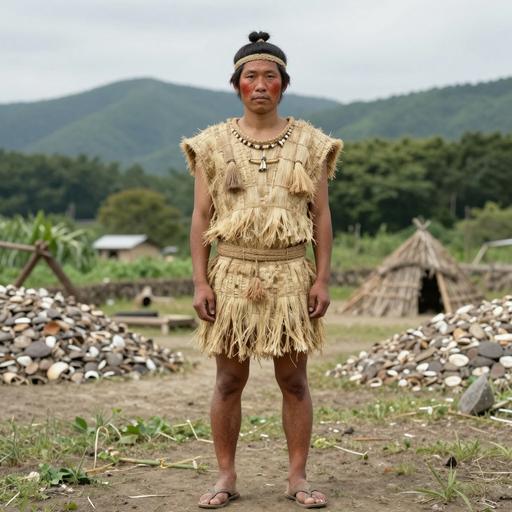
Portrait of ancient individual JpFu1 from Japan, dated 3640 BCE - 3528 BCE
JpFu1
Japan Early Jomon Period Japan 3640 BCE - 3528 BCE Early Jomon M7a1 Direct
Portrait of ancient individual JpOd282 from Japan, dated 3952 BCE - 3787 BCE
JpOd282
Japan Early Jomon Period Japan 3952 BCE - 3787 BCE Early Jomon M7a1 Direct
Portrait of ancient individual JpOd274 from Japan, dated 4339 BCE - 4169 BCE
JpOd274
Japan Early Jomon Period Japan 4339 BCE - 4169 BCE Early Jomon M7a Direct
Chapter VI

Carrier Distribution Map

Geographic distribution of 3 ancient DNA samples carrying haplogroup M7A

Time Period Filter
All Time Periods
Showing all samples
Each marker represents an ancient individual
Chapter VII

Temporal Distribution

Distribution of carriers across archaeological periods

Chapter VIII

Geographic Distribution

Distribution of carriers by country of origin

Chapter IX

Country × Era Distribution

Cross-tabulation of carrier countries and archaeological periods

Data

Data & Provenance

Source information and data quality

Last Updated 2026-02-16
Confidence Score 50/100
Coverage Low
Data Source

We use the latest phylotree for MTDNA haplogroup classification and data.