The Story
The journey of mtDNA haplogroup M9A1A1C1B1
Origins and Evolution
M9A1A1C1B1 is a shallow, recently derived subclade of M9A1A1C1B, itself nested within the broader East Asian M9 macro-haplogroup. The M9 lineage is a well-established East Asian maternal clade; downstream substructure such as M9A1A1C1 and its descendants represent localized diversification that occurred during the late Holocene. Given the parent clade's estimated age (~0.8 kya) and the shallow phylogenetic position of M9A1A1C1B1, a plausible origin for this subclade is within the last millennium (on the order of several hundred years), reflecting recent population dynamics, localized founder events, or historical-period mobility across East and adjacent Central Asia.
Subclades
As of current phylogenetic resolution, M9A1A1C1B1 appears to be a terminal or very shallow branch with limited documented downstream diversification. Where deeper sampling or high-resolution mitogenomes are available, small private branches or micro-subclades can be detected in specific regional or ethnic groups, but no widely distributed, well-differentiated child clades have been robustly defined for M9A1A1C1B1 in published public phylogenies. Continued mitogenome sequencing in under-sampled populations may reveal further substructure.
Geographical Distribution
The distribution of M9A1A1C1B1 mirrors that of its parent clade, concentrated in East and Northeast Asia with scattered presence in adjacent Central and northern Southeast Asia. It is typically found at low to moderate frequency in diverse groups including Han Chinese, Japanese, Korean, Tibetan and Tibetan‑adjacent highland groups, Mongolic and Inner Asian populations, some Central Asian groups (e.g., Kazakh, Uyghur at low frequency), northern Southeast Asian populations, and occasionally among Siberian and northeastern Eurasian hunter‑gatherer groups. The pattern suggests localized diversification with episodic gene flow tied to historical migrations and regional demographic processes rather than a single deep prehistoric expansion.
Historical and Cultural Significance
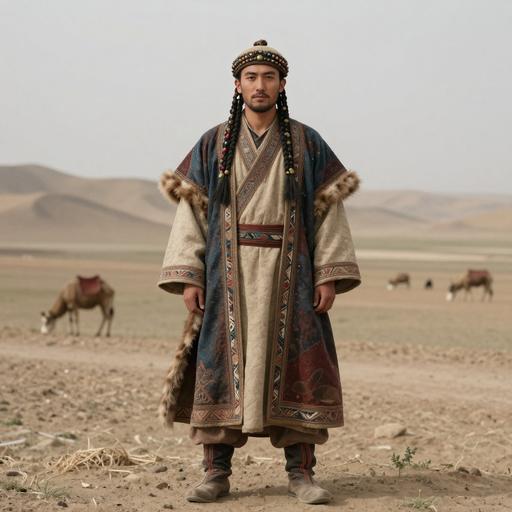
Because M9A1A1C1B1 likely arose in the last millennium, its presence in multiple East Asian and adjacent Central Asian populations is best interpreted in the context of historic-period population movements, trade networks, and imperial expansions (for example, medieval Chinese state expansion, steppe-based polities such as the Mongol Empire, and later regional migrations). Its low-to-moderate frequency and patchy distribution are consistent with founder effects, maternal line survival in specific families or clans, and recent admixture events rather than association with a single prehistoric archaeological culture.
Conclusion
M9A1A1C1B1 exemplifies a recent, regionally restricted mtDNA lineage within the East Asian M9 phylogeny. It is informative for high-resolution regional maternal lineage studies and can help trace recent maternal ancestry and historical gene flow across East, Northeast and adjacent Central Asia. As mitogenome sampling increases, especially from under-represented minority groups and historical-period contexts, the finer-scale phylogeny and distribution of M9A1A1C1B1 may become clearer.
Key Points
- Origins and Evolution
- Subclades
- Geographical Distribution
- Historical and Cultural Significance
- Conclusion