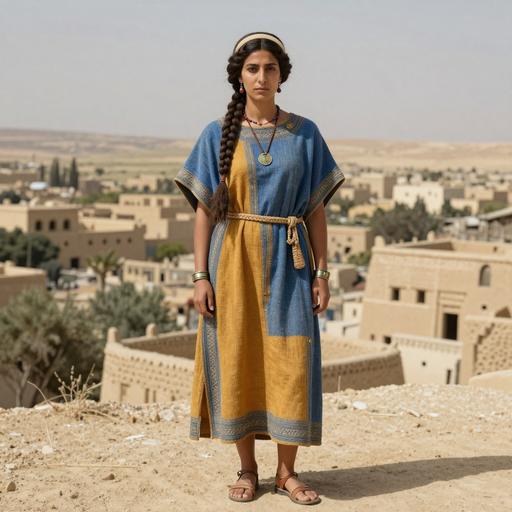
The Story
The journey of mtDNA haplogroup N1B1B
Origins and Evolution
mtDNA haplogroup N1B1B is a downstream subclade of N1B1, itself part of the wider macro-haplogroup N. Based on its phylogenetic position and the time depth of its parent clade, N1B1B most plausibly arose in the Near East / Caucasus region during the early Holocene (roughly the early to mid-Holocene transition, on the order of ~9 kya). As a derived branch of a lineage that expanded regionally after the Last Glacial Maximum, N1B1B likely diversified locally and remained at low to moderate frequency in several neighbouring populations rather than producing a major continent-wide expansion.
Subclades (if applicable)
At present N1B1B is known as a relatively restricted branch of N1B1 with limited documented internal substructure in published mtDNA phylogenies. A small number of downstream variants may exist in full mitogenome datasets, but comprehensive resolution of subclades within N1B1B requires additional high-coverage whole mitogenome sequencing from diverse Near Eastern and adjacent populations. Because of its scarcity in many datasets, many reported N1B1B samples are currently reported as the basal N1B1B motif rather than as well-differentiated subclades.
Geographical Distribution
Modern and ancient DNA evidence places N1B1B primarily across the Near East, eastern Mediterranean and adjoining regions. Present-day detections are most frequent in Levantine groups (including Druze and other Levantine communities), Anatolian populations, and the peoples of the Caucasus; lower-frequency occurrences are recorded along North African Mediterranean coasts, the Horn of Africa, the Arabian Peninsula and in scattered southern European Mediterranean contexts (Italy, Greece, Sardinia). Its pattern is consistent with a Near Eastern origin followed by localized dispersals via overland routes across Anatolia and the Levant and by maritime connections in the Mediterranean and Red Sea corridors.
A small number of ancient individuals carrying N1B1-related lineages (including N1B1B) have been reported in archaeological contexts spanning the Neolithic to Bronze Age in the eastern Mediterranean and Near East, supporting continuity and episodic movement of this maternal lineage through the Holocene.
Historical and Cultural Significance
Although N1B1B is not a high-frequency haplogroup, its distribution overlaps with several important archaeological horizons and historical migratory spheres. The timing and geography of the lineage are compatible with involvement in post-glacial recolonization of the Near East and with Neolithic demographic processes associated with early farming communities in the Levant and Anatolia. Later, low-frequency spread into North Africa, the Horn of Africa and Mediterranean Europe can be attributed to millennia of trade, coastal migration and historical population movements (including Phoenician-era maritime networks and later historical diasporas). Occasional presence in Jewish community lineages reflects the broader Near Eastern background of some maternal lineages within these populations rather than a population-specific founder effect.
Conclusion
N1B1B is a geographically informative but low-frequency mtDNA clade that reflects Near Eastern maternal ancestry and localized Holocene dispersals into neighboring regions. Continued mitogenome sequencing and denser sampling in the Caucasus, Anatolia, the Levant, North Africa and the Horn of Africa will refine its internal structure, age estimates and the relative timing of its regional movements, improving its utility for fine-scale maternal ancestry inference in the eastern Mediterranean and adjacent zones.
Key Points
- Origins and Evolution
- Subclades (if applicable)
- Geographical Distribution
- Historical and Cultural Significance
- Conclusion