The Story
The journey of mtDNA haplogroup ND1B1A1B1
Origins and Evolution
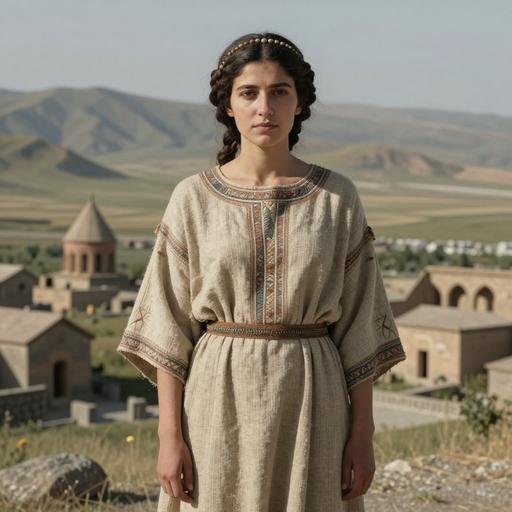
mtDNA haplogroup ND1B1A1B1 (here interpreted as a fine-scale subclade within the broader N1b portion of macro-haplogroup N) is best understood as a Holocene-descended branch of Near Eastern maternal diversity. The parent lineage N1b is an offshoot of haplogroup N, which arose soon after the Out-of-Africa dispersals; N1b itself shows deep roots in Western Asia and the Levant with a mix of Pleistocene and early Holocene diversification. Given its deep nesting within N1b-style variation and the available single ancient DNA observation, ND1B1A1B1 most plausibly originated in the Near East during the early to mid-Holocene (several thousand years ago) and represents a relatively young, rare local branch.
Subclades
Because ND1B1A1B1 is a very deep-level label (four to five internal nodes from more common N1b subclades) and is currently represented by a single archaeological sample in the database, defined downstream subclades are either absent or extremely rare in published datasets. If further samples carrying the same motif are found, they would clarify internal structure; at present we treat ND1B1A1B1 as a terminal or near-terminal branch that derives from larger N1b substructure.
Geographical Distribution
The best supported geographic inference for this lineage is the Near East / Levant, consistent with the broader distribution of N1b and related subclades. Secondary, low-frequency occurrences of related N1b branches are known in the Caucasus, parts of the eastern Mediterranean and southern Europe (commonly reflecting Holocene population movements). ND1B1A1B1 itself has so far been detected in one ancient individual from an archaeological context; modern occurrences, if present, are expected to be very rare and patchy, reflecting bottlenecking of small subclades and later demographic shifts.
Historical and Cultural Significance
Lineages derived from N1b have been associated with populations participating in early Holocene agricultural expansions in the Near East and subsequent movements into neighboring regions. Although ND1B1A1B1 is currently represented by a single ancient sample and cannot be linked decisively to a specific archaeological culture, its pattern fits a model in which some rare maternal haplotypes persisted locally through the Neolithic and Bronze Age demographic processes (local continuity, founder effects, or small-scale migrations). If future finds place this haplogroup in dated archaeological contexts (Neolithic, Chalcolithic, Bronze Age), it would help tie the lineage to particular cultural horizons; at present the evidence only allows cautious regional and temporal inference.
Conclusion
ND1B1A1B1 appears to be a rare, likely Holocene-aged maternal sublineage nested within the N1b spectrum, with a probable origin in the Near East/Levant and limited downstream survival visible in the archaeological record so far. Its rarity underlines the value of continued ancient DNA sampling across the Near East and Mediterranean to reveal the finer structure of maternal lineages and the demographic processes that shaped them.
Key Points
- Origins and Evolution
- Subclades
- Geographical Distribution
- Historical and Cultural Significance
- Conclusion