The Story
The journey of mtDNA haplogroup P1D1
Origins and Evolution
mtDNA haplogroup P1D1 is a downstream branch of the broader P1 lineage (itself a subclade of haplogroup P), which is characteristic of populations tied to the ancient peopling of Sahul (the combined landmass of Australia and New Guinea during lower sea levels). As a subclade of P1D, P1D1 is inferred to have arisen in Near Oceania/Island Southeast Asia during the Late Pleistocene, plausibly between ~20 and 25 thousand years ago based on the depth of branching beneath P1D and geographic patterning of related lineages. P1D1 is defined by additional private mutations that place it downstream of P1D and mark a regional maternal lineage with deep continuity in New Guinea and adjacent islands.
Subclades (if applicable)
Detailed internal structure of P1D1 remains incompletely resolved in published datasets compared with some higher-level P subclades, owing to limited sampling and sequencing from some parts of Near Oceania. Where deeper whole-mitochondrial sequencing has been performed, P1D1 may split into minor internal branches with restricted local distributions (for example, short-range island-specific variants in the Bismarcks or Solomon Islands). Continued targeted ancient DNA sampling and high-coverage mitogenomes from Papuan, Melanesian and Aboriginal Australian contexts are likely to reveal additional substructure.
Geographical Distribution
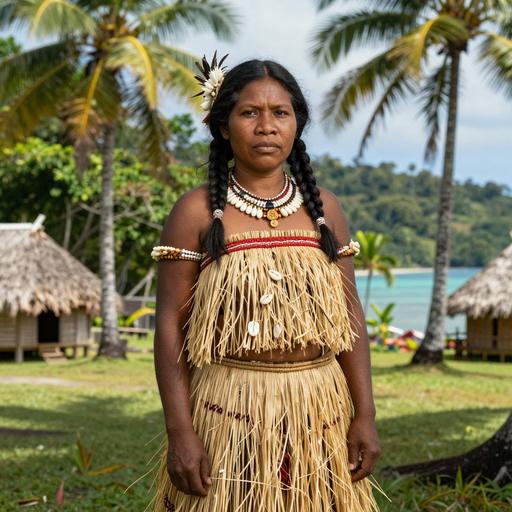
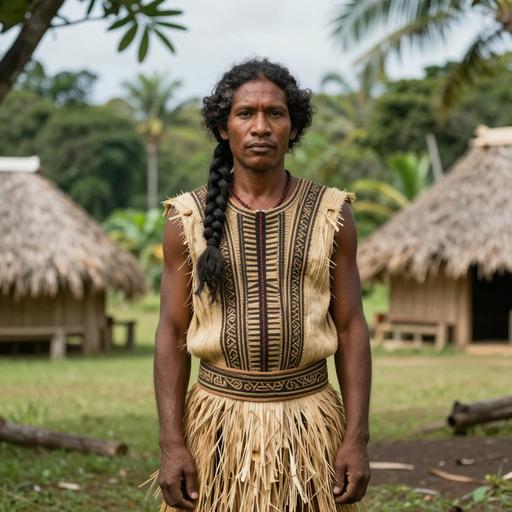
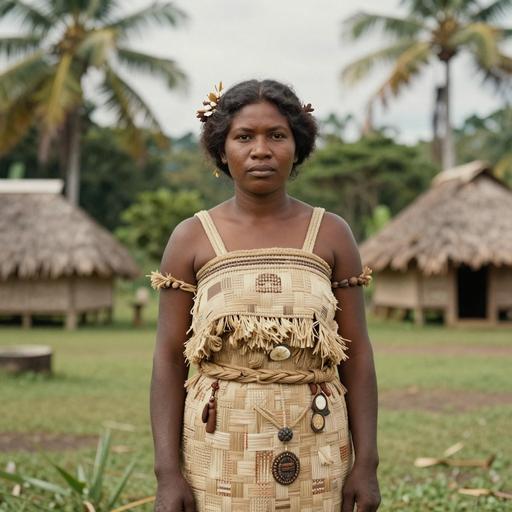
P1D1 today is concentrated in Near Oceania, with the highest frequencies and the greatest variety of internal lineages observed in Papuan populations of New Guinea and in neighboring Melanesian archipelagos. It is also present, at lower but notable frequencies, among some Indigenous Australian populations and in Wallacean islands (Moluccas, Timor) and eastern Indonesian/Philippine coastal communities where Papuan-derived maternal lineages occur. Rare occurrences have been reported in Remote Oceanic/Polynesian populations that carry Papuan-related ancestry through historical or prehistoric admixture events (for example, in some populations influenced by Lapita-descended and later contact networks).
Historical and Cultural Significance
The distribution of P1D1 supports a model of long-term maternal continuity in Near Oceania following initial colonization of Sahul and subsequent island-hopping dispersals into adjacent Wallacea and Melanesia. Its presence among both highland and coastal Papuan groups and in Melanesian islanders indicates persistence through major environmental and cultural transitions (Last Glacial Maximum, post-glacial sea-level rise) rather than being primarily associated with later Austronesian farmer expansions. Instances of P1D1 in contexts influenced by Austronesian/Lapita movements reflect admixture between incoming Austronesian-speaking groups and resident Papuan-speaking populations, illustrating how deep P-lineage maternal ancestry contributed to the maternal genetic landscape of Island Southeast Asia and Remote Oceania.
Conclusion
P1D1 is a regionally informative maternal marker of the ancient populations of Sahul and Near Oceania. Its phylogenetic position as a subclade of P1D, coupled with its present-day concentration in Papua and Melanesia and presence in Indigenous Australian and Wallacean groups, makes it valuable for reconstructing prehistoric coastal and island dispersals, long-term population continuity, and points of interaction between Papuan peoples and later incoming groups. Increasing whole-mitogenome sampling and ancient DNA recovery in Near Oceania will refine the timing and internal branching of P1D1 and clarify its role in the region's demographic history.
Key Points
- Origins and Evolution
- Subclades (if applicable)
- Geographical Distribution
- Historical and Cultural Significance
- Conclusion