Menu
mtDNA Haplogroup • Maternal Lineage

P

mtDNA Haplogroup P

~50,000 years ago
Near Oceania (Sahul) / Island Southeast Asia
3 subclades
4 ancient samples
Scroll to explore
Chapter I

The Story

The journey of mtDNA haplogroup P

Origins and Evolution

mtDNA haplogroup P is a descendant of macro-haplogroup R and represents one of the deep maternal lineages associated with the early peopling of Island Southeast Asia and Near Oceania (Sahul: the combined Pleistocene landmass of Australia-New Guinea). Genetic and phylogenetic evidence places the coalescence of P in the Upper Paleolithic, shortly after the diversification of R, consistent with an origin around the time of the initial human settlement of Sahul (~50 kya) although point estimates vary and confidence intervals span tens of thousands of years. P likely formed as populations expanding out of Southeast Asia reached Wallacea and the Sahul shelf, and it subsequently diversified in relative isolation within Near Oceania.

Subclades

Haplogroup P has multiple subclades that show strong geographic structuring due to long-term local differentiation. Subclades of P are observed across New Guinea, the Bismarck Archipelago, the Solomon Islands, parts of Wallacea (e.g., the Moluccas and Timor region) and among Aboriginal Australians. Different P sublineages show deep internal branching, indicating an early split and in-situ diversification after the initial settlement of Sahul. While the specific subclade nomenclature (P1, P2, P3, etc.) varies among papers and database releases, the pattern is consistent: several ancient branches remained largely confined to Near Oceania and adjacent islands, with only limited downstream spread beyond this region.

Geographical Distribution

Today P is most frequent in Near Oceania and parts of Island Southeast Asia, with the highest frequencies in Papuan-speaking populations and many Melanesian groups. It is also present among Aboriginal Australian populations, where distinct P lineages indicate very early separation and long-term continuity. In Wallacea and some parts of eastern Indonesia and the Philippines, P occurs at lower to moderate frequencies, reflecting both ancient connections and later population movements. Rare occurrences of P (or derived lineages) can also be detected in some Pacific island populations, usually as a result of local continuity or later admixture with Papuan-related groups rather than as a signature of Austronesian agricultural expansions.

Historical and Cultural Significance

Haplogroup P is a genetic marker of the Pleistocene colonization of Sahul and provides evidence for the antiquity and isolation of maternal lineages in Near Oceania. Its distribution documents the deep ancestry of Papuan and Aboriginal Australian peoples and supports archaeological models of early maritime capability and long-term regional continuity. During later prehistory, the Austronesian expansions (Neolithic and later) introduced new maternal lineages (e.g., B4a1a) into many Pacific regions; however, P frequently persisted in indigenous or admixed groups, marking the persistence of pre-Austronesian populations in many islands.

Conclusion

mtDNA haplogroup P is an important marker of early human settlement in Island Southeast Asia and Near Oceania. Its antiquity, regional structure, and strong association with Papuan, Melanesian and Aboriginal Australian populations make it a key lineage for reconstructing the demographic history of Sahul and adjacent islands. Continued ancient DNA sampling and finer-resolution phylogenies of P subclades refine the timing and routes of these early migrations, but the broad picture indicates deep local diversification following an Upper Paleolithic origin linked to the spread of R-derived lineages into Oceania.

Key Points

  • Origins and Evolution
  • Subclades
  • Geographical Distribution
  • Historical and Cultural Significance
  • Conclusion
Chapter II

Tree & Relationships

Phylogenetic context and subclades

Evolution Path

This haplogroup's evolutionary journey from its earliest ancestor to the present.

Steps Haplogroup Age Estimate Archaeology Era Time Passed Immediate Descendants Tested Modern Descendants Ancient Connections
1 P Current ~50,000 years ago 🦴 Paleolithic 50,000 years 3 7 4
2 R ~60,000 years ago 🦴 Paleolithic 60,000 years 12 10,987 57
3 N ~60,000 years ago 🦴 Paleolithic 60,000 years 15 15,452 13
4 L3 ~70,000 years ago 🦴 Paleolithic 70,000 years 11 17,621 6
5 L ~160,000 years ago 🦴 Paleolithic 160,000 years 7 18,987 5

Siblings (11)

Other branches from the same parent haplogroup

Chapter III

Where in the World

Geographic distribution and modern presence

Place of Origin

Near Oceania (Sahul) / Island Southeast Asia

Modern Distribution

The populations where mtDNA haplogroup P is found include:

  1. Papuan peoples of New Guinea (highlanders and coastal groups)
  2. Indigenous Australian (Aboriginal Australian) populations
  3. Melanesian populations (Solomon Islands, Vanuatu, Bismarck Archipelago)
  4. Wallacean populations (Moluccas, Timor, Sulawesi-adjacent islands)
  5. Some Indonesian and Philippine island groups
  6. Select Polynesian and Remote Oceanic populations (at low frequency, generally via admixture)
CHAPTER IV

When in Time

Your haplogroup in the context of human history

~70k years ago

Out of Africa

Major migration of modern humans out of Africa

~50k years ago

Upper Paleolithic

Advanced tool-making, art, and cultural explosion

~50k years ago

Haplogroup P

Your mtDNA haplogroup emerged in Near Oceania (Sahul) / Island Southeast Asia

Near Oceania (Sahul) / Island Southeast Asia
~20k years ago

Last Glacial Maximum

Peak of the last ice age, populations isolated

~10k years ago

Neolithic Revolution

Agriculture begins, settled communities form

~5k years ago

Bronze Age

Metalworking, writing, and early civilizations

~3k years ago

Iron Age

Iron tools, expanded trade networks

~2k years ago

Classical Antiquity

Greek and Roman civilizations flourish

Present

Present Day

Modern era

Your Haplogroup
Historical Era
Chapter IV-B

Linked Cultures

Ancient cultures associated with mtDNA haplogroup P

Cultural Heritage

These ancient cultures have been linked to haplogroup P based on matching ancient DNA samples from archaeological excavations. The presence of this haplogroup in these cultures provides insights into the migrations and population movements of populations carrying this haplogroup.

Late Vanuatu Queensland Aboriginal Vanuatu Ancient Vanuatu Colonial Vanuatu Historical
Culture assignments are based on archaeological context of ancient DNA samples and may represent regional associations during specific time periods.
Chapter V

Sample Catalog

Top 4 ancient DNA samples directly related to haplogroup P or parent clades

4 / 4 samples
Portrait Sample Country Era Date Culture mtDNA Match
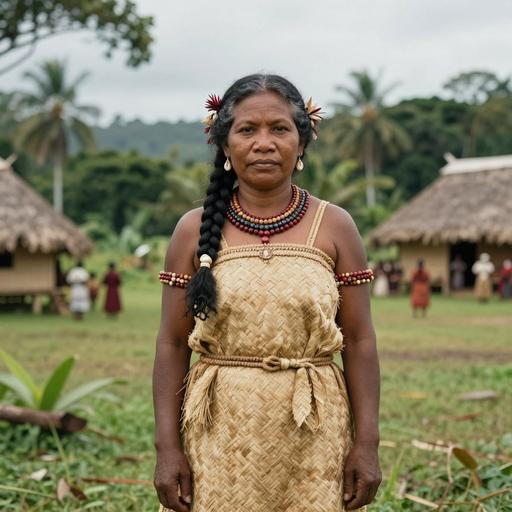
Portrait of ancient individual I10969 from Vanuatu, dated 1450 CE - 1650 CE
I10969
Vanuatu Vanuatu 400 Years Ago 1450 CE - 1650 CE Late Vanuatu P2 Direct
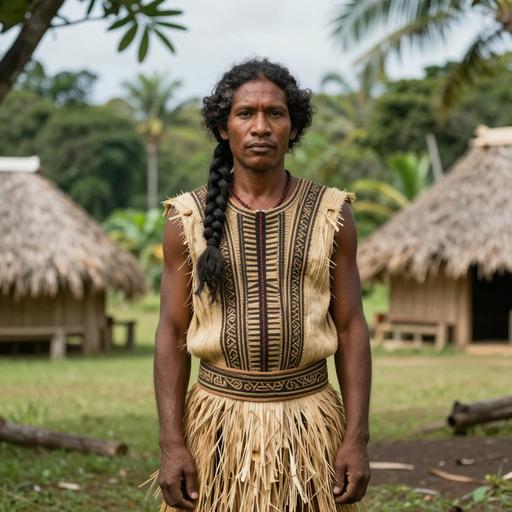
Portrait of ancient individual I14493 from Vanuatu, dated 1502 CE - 1643 CE
I14493
Vanuatu Vanuatu 400 Years Ago 1502 CE - 1643 CE Late Vanuatu P2 Direct
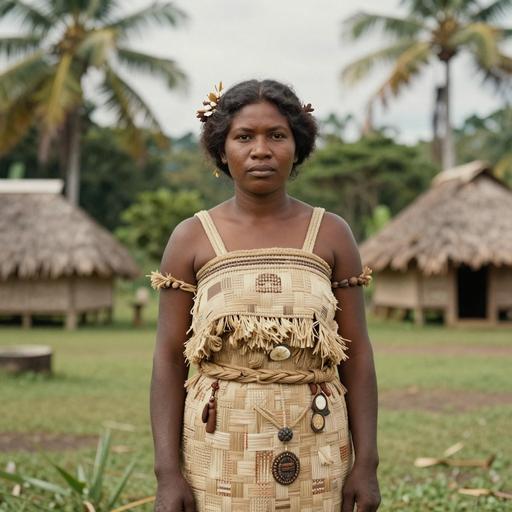
Portrait of ancient individual I4425 from Vanuatu, dated 1680 CE - 1950 CE
I4425
Vanuatu Vanuatu 150 Years Ago 1680 CE - 1950 CE Vanuatu Colonial P2 Direct
Portrait of ancient individual I4425 from Vanuatu, dated 1680 CE - 1950 CE
I4425
Vanuatu The First Peoples of Vanuatu 1680 CE - 1950 CE P2 Direct
Chapter VI

Carrier Distribution Map

Geographic distribution of 4 ancient DNA samples carrying haplogroup P

Time Period Filter
All Time Periods
Showing all samples
Each marker represents an ancient individual
Chapter VII

Temporal Distribution

Distribution of carriers across archaeological periods

Chapter VIII

Geographic Distribution

Distribution of carriers by country of origin

Chapter IX

Country × Era Distribution

Cross-tabulation of carrier countries and archaeological periods

Data

Data & Provenance

Source information and data quality

Last Updated 2026-02-09
Data Source

We use the latest phylotree for MTDNA haplogroup classification and data.