Menu
mtDNA Haplogroup • Maternal Lineage

R0A

mtDNA Haplogroup R0A

~20,000 years ago
Southern Arabia (Arabian Peninsula)
3 subclades
15 ancient samples
Scroll to explore
Chapter I

The Story

The journey of mtDNA haplogroup R0A

Origins and Evolution

Haplogroup R0a is a daughter clade of R0 and therefore sits within macro-haplogroup R, one of the major maternal lineages derived from haplogroup N. Coalescence-date estimates and phylogeographic evidence place the origin of R0a in the southern Arabian/Near Eastern region during the Late Pleistocene (roughly ~20 kya, with uncertainty). The pattern of diversity — deeper branches in southern Arabia and shared, derived subclades across the Red Sea — supports an origin either in southern Arabia itself or in an adjacent portion of the Near East, followed by survival through the Last Glacial Maximum and expansion during the Early Holocene.

Genetic diversity and molecular-clock analyses show that R0a underwent population growth after the LGM, consistent with post-glacial climatic amelioration and the spread of populations exploiting coastal, lacustrine and oasis habitats. The distribution and subclade structure suggest both local continuity in Arabia and repeated gene flow across the Red Sea into eastern Africa.

Subclades (if applicable)

R0a contains several recognized subclades (commonly labelled in the literature as R0a1, R0a2, and further downstream branches such as R0a1a and R0a2b, though nomenclature varies between studies). Some subclades show strong geographic localization — for example, particular R0a1 lineages are frequently observed in southern Arabian populations and in the Horn of Africa, whereas other branches are more common in the Levant and Mediterranean at low frequencies. The internal branching pattern and ages suggest an early diversification in the Arabian region, with later, region-specific expansions.

Geographical Distribution

R0a is today most frequent and diverse in the Arabian Peninsula (Yemen, Oman, southern Saudi Arabia), where multiple basal and derived lineages are present. It is also found at appreciable frequencies in the Horn of Africa (Ethiopia, Somalia, Eritrea), reflecting ancient maritime and coastal connections across the southern Red Sea. Lower but notable frequencies occur in North Africa and southern Mediterranean Europe (coastal Italy, Sicily, parts of Greece), as well as scattered occurrences in the Levant, the Caucasus and parts of Central Asia. These peripheral presences are consistent with episodic gene flow, trading networks and Holocene demographic events linking the Near East with North Africa and the Mediterranean.

Ancient DNA studies have recovered R0a lineages in multiple Holocene contexts across the Near East and adjacent regions, supporting its presence in archaeological populations from the terminal Pleistocene through the Neolithic and later periods.

Historical and Cultural Significance

The phylogeographic signature of R0a ties it to population processes characteristic of the Late Pleistocene and Early Holocene in southwestern Asia: refugial persistence during the LGM in southern Arabia or nearby refugia, followed by post-glacial expansions and the spread of early food-producing or coastal-foraging communities. In eastern Africa, R0a lineages are often interpreted as evidence of ancient gene flow across the Red Sea, linked to prehistorical maritime contacts and later Afro-Asiatic language dispersals.

Because R0a is concentrated in the Arabian Peninsula and Horn of Africa, it has been used in studies of Arabian demographic history, the peopling of the Horn, and Holocene connectivity in the Red Sea / Gulf of Aden region. Its comparatively low frequency in Europe and North Africa typically reflects secondary dispersals or historical admixture rather than primary origins there.

Conclusion

R0a is a distinctive maternal lineage with a probable southern Arabian origin in the Late Pleistocene and a demographic expansion during the Early Holocene. Its modern distribution — concentrated in the Arabian Peninsula and present in the Horn of Africa, North Africa and pockets of the Mediterranean — reflects a combination of regional continuity, prehistoric maritime connections, and later gene-flow events. R0a therefore provides useful information about maternal ancestry in the Near East and adjacent regions and about prehistoric population movements across the Red Sea and into the Mediterranean basin.

Key Points

  • Origins and Evolution
  • Subclades (if applicable)
  • Geographical Distribution
  • Historical and Cultural Significance
  • Conclusion
Chapter II

Tree & Relationships

Phylogenetic context and subclades

Evolution Path

This haplogroup's evolutionary journey from its earliest ancestor to the present.

Steps Haplogroup Age Estimate Archaeology Era Time Passed Immediate Descendants Tested Modern Descendants Ancient Connections
1 R0A Current ~20,000 years ago 🏹 Mesolithic 20,000 years 3 67 15
2 R0 ~15,000 years ago 🏹 Mesolithic 15,000 years 1 132 4
3 R ~60,000 years ago 🦴 Paleolithic 60,000 years 12 10,987 57
4 N ~60,000 years ago 🦴 Paleolithic 60,000 years 15 15,452 13
5 L3 ~70,000 years ago 🦴 Paleolithic 70,000 years 11 17,621 6
6 L ~160,000 years ago 🦴 Paleolithic 160,000 years 7 18,987 5
Chapter III

Where in the World

Geographic distribution and modern presence

Place of Origin

Southern Arabia (Arabian Peninsula)

Modern Distribution

The populations where mtDNA haplogroup R0A is found include:

  1. Arabian Peninsula populations (e.g., Yemen, Oman, southern Saudi Arabia)
  2. Horn of Africa populations (e.g., Ethiopia, Somalia, Eritrea)
  3. North African populations (e.g., Morocco, Algeria, Tunisia) at low-to-moderate frequency
  4. Southern European Mediterranean populations (e.g., Sicily, southern Italy, Greece) at low frequency
  5. Levantine populations (e.g., Lebanon, Jordan, Palestine)
  6. Caucasus and parts of Central Asia (scattered occurrences)
  7. Diaspora and admixed populations in the broader Mediterranean basin
CHAPTER IV

When in Time

Your haplogroup in the context of human history

~20k years ago

Last Glacial Maximum

Peak of the last ice age, populations isolated

~20k years ago

Haplogroup R0A

Your mtDNA haplogroup emerged in Southern Arabia (Arabian Peninsula)

Southern Arabia (Arabian Peninsula)
~10k years ago

Neolithic Revolution

Agriculture begins, settled communities form

~5k years ago

Bronze Age

Metalworking, writing, and early civilizations

~3k years ago

Iron Age

Iron tools, expanded trade networks

~2k years ago

Classical Antiquity

Greek and Roman civilizations flourish

Present

Present Day

Modern era

Your Haplogroup
Historical Era
Chapter IV-B

Linked Cultures

Ancient cultures associated with mtDNA haplogroup R0A

Cultural Heritage

These ancient cultures have been linked to haplogroup R0A based on matching ancient DNA samples from archaeological excavations. The presence of this haplogroup in these cultures provides insights into the migrations and population movements of populations carrying this haplogroup.

Armenian LBA-EIA Bell Beaker Bustan Culture Byzantine Anatolia Canaanite El Argar Ghassulian Late Antique Middle Iron Age British PPNB PPNC Saxon Culture Yamnaya Culture
Culture assignments are based on archaeological context of ancient DNA samples and may represent regional associations during specific time periods.
Chapter V

Sample Catalog

Top 15 ancient DNA samples directly related to haplogroup R0A or parent clades

15 / 15 samples
Portrait Sample Country Era Date Culture mtDNA Match
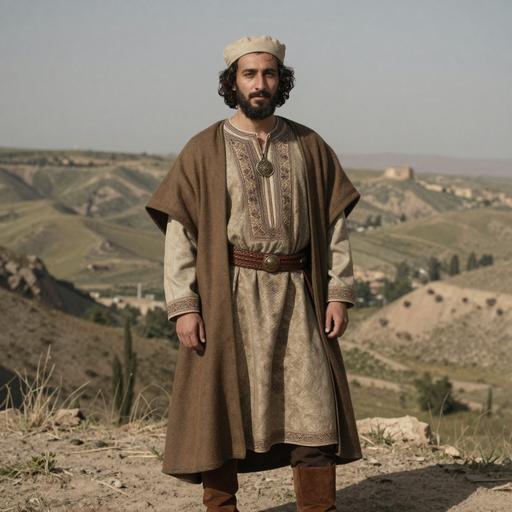
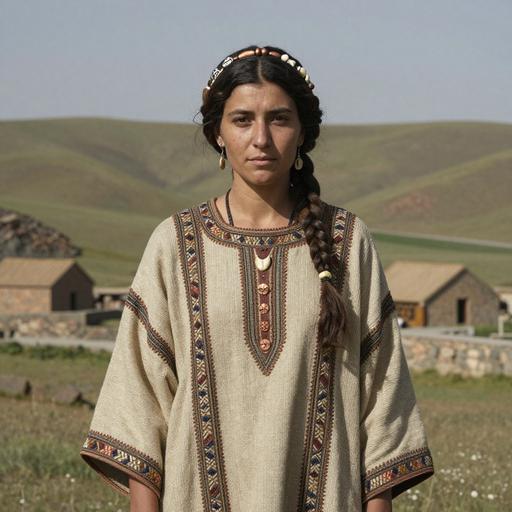
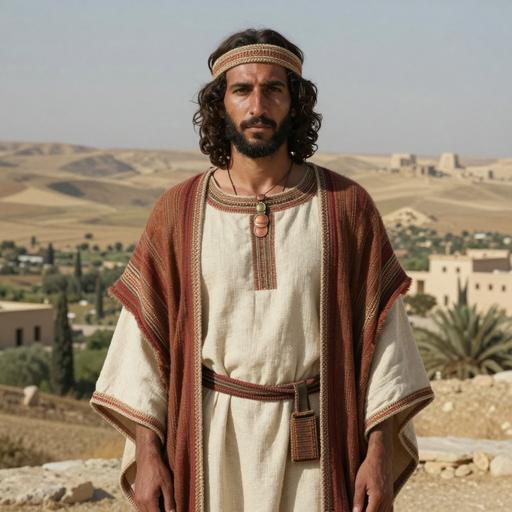
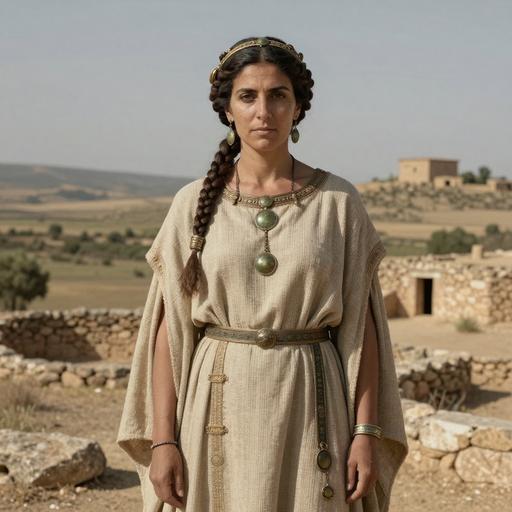
Portrait of ancient individual I33890 from Croatia, dated 300 CE - 500 CE
I33890
Croatia Late Antique Croatia 300 CE - 500 CE Late Antique R0a Direct
Portrait of ancient individual I17261 from United Kingdom, dated 372 BCE - 175 BCE
I17261
United Kingdom Middle Iron Age England 372 BCE - 175 BCE Middle Iron Age British R0a Direct
Portrait of ancient individual syr013 from Syria, dated 665 CE - 766 CE
syr013
Syria The Umayyad Caliphate 665 CE - 766 CE Umayyad R0a2 Direct
Portrait of ancient individual PCA0201 from Poland, dated 1000 CE - 1200 CE
PCA0201
Poland Iron Age Lusatian culture of Poland 1000 CE - 1200 CE Lusatian Culture R0a2 Direct
Portrait of ancient individual I20147 from Turkey, dated 1200 CE - 1400 CE
I20147
Turkey Byzantine Turkey 1200 CE - 1400 CE Byzantine Anatolia R0a Direct
Portrait of ancient individual I4540 from Turkey, dated 1457 CE - 1631 CE
I4540
Turkey Medieval Turkey 1457 CE - 1631 CE Medieval Anatolia R0a2 Direct
Portrait of ancient individual I18487 from Armenia, dated 1500 BCE - 1380 BCE
I18487
Armenia Late Bronze Age to Early Iron Age Armenia 1500 BCE - 1380 BCE Armenian LBA-EIA R0a3 Direct
Portrait of ancient individual I3966 from Israel, dated 1800 BCE - 1600 BCE
I3966
Israel Middle to Late Bronze Age Israel 1800 BCE - 1600 BCE Canaanite R0a2 Direct
Portrait of ancient individual ALM018 from Spain, dated 2000 BCE - 1750 BCE
ALM018
Spain The Argaric Culture of Spain 2000 BCE - 1750 BCE El Argar R0a Direct
Portrait of ancient individual I4933 from Italy, dated 2500 BCE - 1900 BCE
I4933
Italy Bell Beaker Culture Sicily, Italy 2500 BCE - 1900 BCE Bell Beaker R0a Direct
Chapter VI

Carrier Distribution Map

Geographic distribution of 15 ancient DNA samples carrying haplogroup R0A

Time Period Filter
All Time Periods
Showing all samples
Each marker represents an ancient individual
Chapter VII

Temporal Distribution

Distribution of carriers across archaeological periods

Chapter VIII

Geographic Distribution

Distribution of carriers by country of origin

Chapter IX

Country × Era Distribution

Cross-tabulation of carrier countries and archaeological periods

Data

Data & Provenance

Source information and data quality

Last Updated 2026-02-16
Confidence Score 50/100
Coverage Low
Data Source

We use the latest phylotree for MTDNA haplogroup classification and data.