Menu
mtDNA Haplogroup • Maternal Lineage

R0A2

mtDNA Haplogroup R0A2

~11,000 years ago
Southern Arabian Peninsula
3 subclades
Scroll to explore
Chapter I

The Story

The journey of mtDNA haplogroup R0A2

Origins and Evolution

mtDNA haplogroup R0A2 is a downstream lineage of R0a (itself derived from R0/HV) and sits within the broader macro-haplogroup R. Phylogenetically, R0a split from R0 in the Late Pleistocene and R0A2 represents one of the sublineages that diversified around the transition from the Pleistocene to the Holocene. Based on coalescence estimates for R0a subclades and geographic patterns of diversity, R0A2 most plausibly arose on the southern Arabian Peninsula (the modern-day Yemen/Oman/southern Saudi Arabia region) roughly around 11 kya (early Holocene), although confidence intervals allow for somewhat older or younger dates depending on mutation-rate calibration.

Subclades (if applicable)

Genetic surveys and phylogenetic reconstructions identify R0A2 as a coherent clade with downstream branches observed in population screens; studies have reported further subdivisions within R0A2 (often labelled with additional suffixes such as R0A2a in different databases). Those downstream lineages tend to show geographically structured distributions, with some sublineages concentrated in southern Arabia and others found across the Red Sea into the Horn of Africa. The internal branching pattern indicates an initial diversification in Arabia followed by dispersal events.

Geographical Distribution

R0A2 shows its highest frequencies and haplotype diversity in southern Arabian populations (Yemen, Oman, southern Saudi Arabia), consistent with an origin and long-term presence there. The lineage is also found at moderate frequencies in the Horn of Africa (Ethiopia, Somalia, Eritrea), where its presence is best explained by late Pleistocene/Holocene maritime and cross-Red Sea gene flow from Arabia into East Africa. Lower-frequency occurrences are recorded in the Levant and North Africa and sporadically in southern Mediterranean Europe (Sicily, southern Italy, parts of Greece), likely reflecting Holocene-era movements, historic trade networks and later gene flow around the Mediterranean basin.

Historical and Cultural Significance

Because R0A2 dates to the early Holocene and shows an Arabian center of diversity, it is associated with demographic processes that include the post-glacial expansions of human groups across Southwest Asia and the rise of Neolithic economies in the region. The haplogroup's movement into the Horn of Africa is consistent with prehistoric maritime exchanges across the Bab-el-Mandeb and later historical links (trade, migration) between southern Arabia and eastern Africa. In historical times, continuing South Arabian connections and Semitic-language expansions likely contributed to the distribution of R0A2, while Mediterranean occurrences are plausibly downstream results of Phoenician, Greek, Roman and medieval-era mobility as well as more recent admixture.

Conclusion

R0A2 is a regional mtDNA lineage that preserves a signature of southern Arabian maternal ancestry with measurable impacts in the Horn of Africa and lower-level presence across the broader Near East and Mediterranean. It is informative for reconstructing Holocene demographic processes centered on southern Arabia and the Red Sea corridor, and for distinguishing maternal inputs associated with Arabian and East African population histories.

Key Points

  • Origins and Evolution
  • Subclades (if applicable)
  • Geographical Distribution
  • Historical and Cultural Significance
  • Conclusion

Chapter II

Tree & Relationships

Phylogenetic context and subclades

Evolution Path

This haplogroup's evolutionary journey from its earliest ancestor to the present.

Steps Haplogroup Age Estimate Archaeology Era Time Passed Immediate Descendants Tested Modern Descendants Ancient Connections
1 R0A2 Current ~11,000 years ago 🌾 Neolithic 11,000 years 3 24 0
2 R0A ~20,000 years ago 🏹 Mesolithic 20,000 years 3 67 15
3 R0 ~15,000 years ago 🏹 Mesolithic 15,000 years 1 132 4
4 R ~60,000 years ago 🦴 Paleolithic 60,000 years 12 10,987 57
5 N ~60,000 years ago 🦴 Paleolithic 60,000 years 15 15,452 13
6 L3 ~70,000 years ago 🦴 Paleolithic 70,000 years 11 17,621 6
7 L ~160,000 years ago 🦴 Paleolithic 160,000 years 7 18,987 5

Siblings (2)

Other branches from the same parent haplogroup

Chapter III

Where in the World

Geographic distribution and modern presence
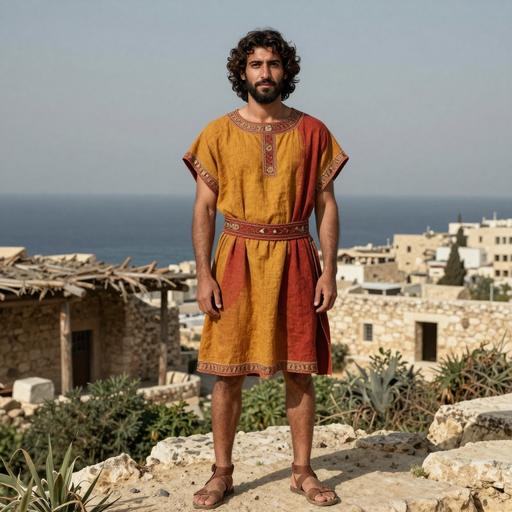

Place of Origin

Southern Arabian Peninsula

Modern Distribution

The populations where mtDNA haplogroup R0A2 is found include:

  1. Arabian Peninsula populations (e.g., Yemen, Oman, southern Saudi Arabia)
  2. Horn of Africa populations (e.g., Ethiopia, Somalia, Eritrea)
  3. Levantine populations (e.g., Lebanon, Jordan, Palestine)
  4. North African populations (e.g., Morocco, Algeria, Tunisia) at low-to-moderate frequency
  5. Southern European Mediterranean populations (e.g., Sicily, southern Italy, parts of Greece) at low frequency
  6. Diaspora and admixed populations across the Mediterranean and Indian Ocean trading networks
CHAPTER IV

When in Time

Your haplogroup in the context of human history

~11k years ago

Haplogroup R0A2

Your mtDNA haplogroup emerged in Southern Arabian Peninsula

Southern Arabian Peninsula
~10k years ago

Neolithic Revolution

Agriculture begins, settled communities form

~5k years ago

Bronze Age

Metalworking, writing, and early civilizations

~3k years ago

Iron Age

Iron tools, expanded trade networks

~2k years ago

Classical Antiquity

Greek and Roman civilizations flourish

Present

Present Day

Modern era

Your Haplogroup
Historical Era
Chapter IV-B

Linked Cultures

Ancient cultures associated with mtDNA haplogroup R0A2

Cultural Heritage

These ancient cultures have been linked to haplogroup R0A2 based on matching ancient DNA samples from archaeological excavations. The presence of this haplogroup in these cultures provides insights into the migrations and population movements of populations carrying this haplogroup.

Bell Beaker Byzantine Anatolia Canaanite El Argar Ghassulian Lusatian Culture Medieval Anatolia PPNB PPNC Saxon Culture Umayyad Viking Denmark
Culture assignments are based on archaeological context of ancient DNA samples and may represent regional associations during specific time periods.
Chapter V

Sample Catalog

Top 50 ancient DNA samples directly related to haplogroup R0A2 or parent clades

50 / 50 samples
Portrait Sample Country Era Date Culture mtDNA Match
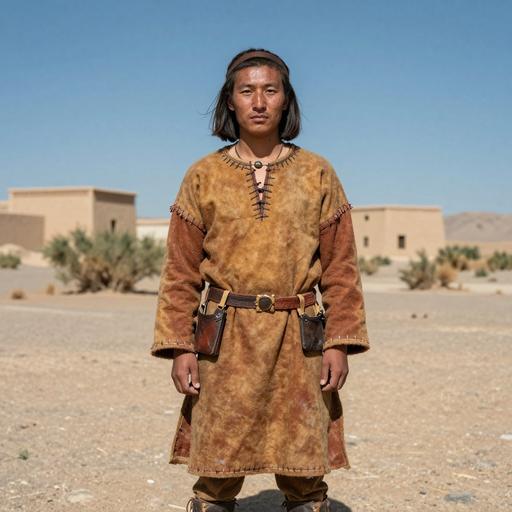
Portrait of ancient individual I3614 from Taiwan, dated 1 CE - 800 CE
I3614
Taiwan Iron Age Taiwan 1 CE - 800 CE Taiwanese Iron R Direct
Portrait of ancient individual I3618 from Taiwan, dated 1 CE - 800 CE
I3618
Taiwan Iron Age Taiwan 1 CE - 800 CE Taiwanese Iron R Direct
Portrait of ancient individual I8071 from Taiwan, dated 1 CE - 800 CE
I8071
Taiwan Iron Age Taiwan 1 CE - 800 CE Taiwanese Iron R Direct
Portrait of ancient individual I8076 from Taiwan, dated 1 CE - 800 CE
I8076
Taiwan Iron Age Taiwan 1 CE - 800 CE Taiwanese Iron R30 Direct
Portrait of ancient individual I13697 from Taiwan, dated 1 CE - 800 CE
I13697
Taiwan Iron Age Taiwan 1 CE - 800 CE Taiwanese Iron R Direct
Portrait of ancient individual I3620 from Taiwan, dated 22 CE - 201 CE
I3620
Taiwan Iron Age Taiwan 22 CE - 201 CE Taiwanese Iron R Direct
Portrait of ancient individual I3615 from Taiwan, dated 32 CE - 206 CE
I3615
Taiwan Iron Age Taiwan 32 CE - 206 CE Taiwanese Iron R Direct
Portrait of ancient individual I7714 from Pakistan, dated 45 BCE - 66 CE
I7714
Pakistan Historic Barikot 45 BCE - 66 CE Barikot R30b1 Direct
Portrait of ancient individual I1680 from Cambodia, dated 78 CE - 234 CE
I1680
Cambodia Iron Age Cambodia 78 CE - 234 CE Cambodian Iron Age R30 Direct
Portrait of ancient individual I15519 from Serbia, dated 100 CE - 300 CE
I15519
Serbia Roman Serbia 100 CE - 300 CE Roman Provincial R0a2d Direct
Chapter VI

Carrier Distribution Map

Geographic distribution of 100 ancient DNA samples carrying haplogroup R0A2

Time Period Filter
All Time Periods
Showing all samples
Each marker represents an ancient individual
Chapter VII

Temporal Distribution

Distribution of carriers across archaeological periods

Chapter VIII

Geographic Distribution

Distribution of carriers by country of origin

Chapter IX

Country × Era Distribution

Cross-tabulation of carrier countries and archaeological periods

Data

Data & Provenance

Source information and data quality

Last Updated 2026-02-16
Confidence Score 50/100
Coverage Low
Data Source

We use the latest phylotree for MTDNA haplogroup classification and data.