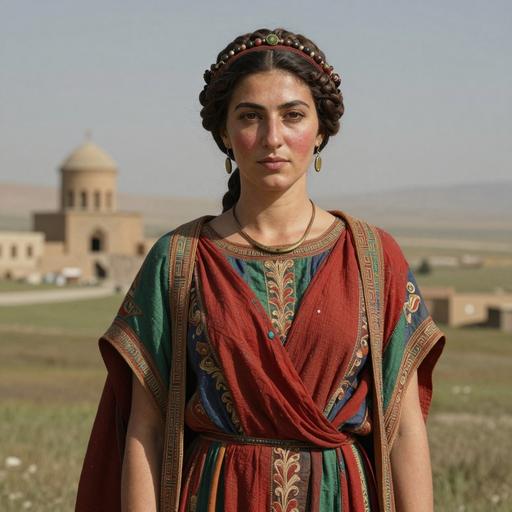
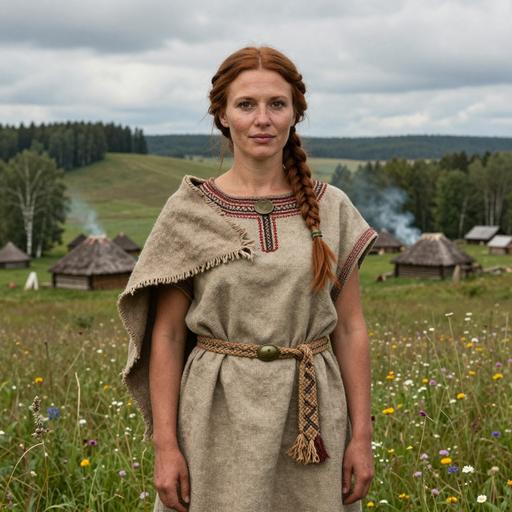
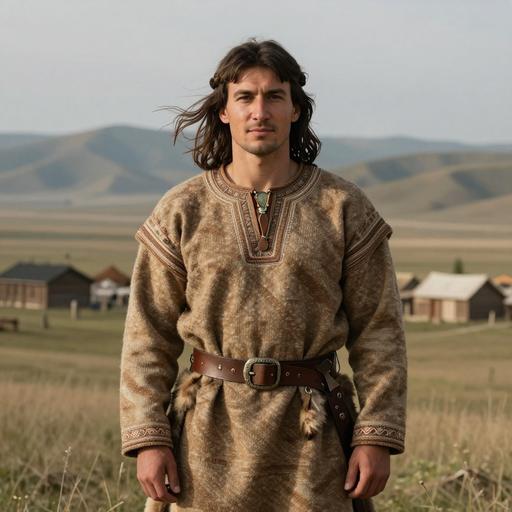
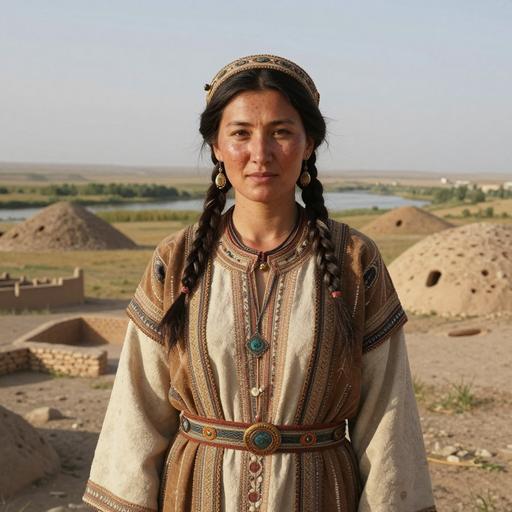
The Story
The journey of mtDNA haplogroup T2A1B2
Origins and Evolution
mtDNA haplogroup T2A1B2 is a subclade of T2A1B, itself nested within the broader T2 branch of haplogroup T. The broader T2 lineage has long been associated with early Holocene maternal lineages that expanded from the Near East and Anatolia into Europe with the spread of agriculture. Based on the phylogenetic position of T2A1B2 beneath T2A1B (which is estimated to have arisen around ~7 kya), and on patterns seen in related T2 subclades, a plausible formation date for T2A1B2 is in the early to mid-Holocene (roughly 5–6 kya). This timing is consistent with later Neolithic and post-Neolithic demographic processes in Anatolia and southeastern Europe.
Mitochondrial phylogenies and ancient DNA show that T2 lineages were present in early Anatolian farmers and proliferated into Europe with both early Neolithic Cardial and Linearbandkeramik (LBK) expansions; more derived subclades such as T2A1B2 represent localized diversification during or after those dispersals.
Subclades (if applicable)
As an intermediate downstream clade, T2A1B2 may contain a small number of further derived lineages in modern and ancient samples, but it is not one of the largest branches of T2. Where present, child lineages of T2A1B2 are typically rare and geographically patchy, reflecting localized founder effects and later population movements. The exact internal branching and the distribution of any micro-subclades will depend on continued high-resolution mitogenome sequencing and targeted ancient DNA recovery.
Geographical Distribution
Modern and ancient sample data indicate that T2A1B2 is most commonly found at low to moderate frequencies across Southern Europe (Italy, Greece, Iberia), with detectable presence in Central Europe (Germany, Austria, the Balkans) and parts of Eastern Europe. Lower-frequency occurrences are found in the Near East/Anatolia, the Caucasus, North Africa and sporadically in Central Asia. The pattern is consistent with a Near Eastern origin followed by Neolithic dispersal into Europe and later diffusion and admixture events.
Ancient DNA studies documenting T2 lineages in early Neolithic farmer burials in Anatolia, the Aegean and early European Neolithic contexts provide a plausible route for T2A1B2 into Europe. Later historical demographic processes (Bronze Age population movements, Roman period mobility, medieval trade and migration) likely redistributed T2A1B2 at low frequencies across wider regions.
Historical and Cultural Significance
Because of its phylogenetic placement and geographic patterning, T2A1B2 is primarily associated with the maternal genetic legacy of Neolithic farming populations that originated in Anatolia and spread into Europe. It is therefore useful as a marker for tracing Neolithic ancestry in modern and ancient samples, although its low frequency means it is only one of many maternal lineages contributing to that signal.
T2A1B2 has also been observed in some Jewish communities (both Ashkenazi and Sephardi lineages in a minority of cases) and in populations along historic Mediterranean corridors; these occurrences reflect both deep Neolithic ancestry and later historical gene flow and founder events.
Conclusion
mtDNA haplogroup T2A1B2 represents a localized, Holocene-age maternal lineage that fits the wider pattern of T2 lineages expanding from the Near East/Anatolia into Europe with Neolithic farmers. It is observed today at low-to-moderate frequencies in Southern and parts of Central and Eastern Europe, and at lower frequencies in the Near East, Caucasus and North Africa. Its distribution and age make it a useful marker for studies of Neolithic demography, regional founder effects, and post-Neolithic population interactions, but its relative rarity means large sample sizes and complete mitogenomes are often necessary to resolve its internal structure and history.
Key Points
- Origins and Evolution
- Subclades (if applicable)
- Geographical Distribution
- Historical and Cultural Significance
- Conclusion