The Story
The journey of mtDNA haplogroup T2B11
Origins and Evolution
mtDNA haplogroup T2B11 is a downstream subclade nested within T2B1, itself part of the broader T2 lineage. The T2 clade is generally associated with post-glacial and early Neolithic maternal lineages that expanded from the Near East and adjacent Mediterranean regions into Europe during the early Holocene. Based on its phylogenetic position beneath T2B1, T2B11 most likely arose after the primary T2B1 diversification, during the Neolithic or shortly thereafter (a reasonable estimate is on the order of several thousand years after the ~11 kya origin of T2B1), and thus reflects regional differentiation of farmer-associated mitochondrial diversity on the Mediterranean fringe.
Subclades
At present, T2B11 appears to be a relatively low-diversity subclade with few deeply branching named sublineages reported in public mtDNA phylogenies; many identifications are singletons or small clusters within population surveys and ancient DNA datasets. Its primary phylogenetic context is as a branch of T2B1, and further internal resolution will depend on denser full mitogenome sampling and targeted ancient DNA recovery.
Geographical Distribution
T2B11 is rare but detectable in regions historically linked to Neolithic dispersals and subsequent Mediterranean interactions. Modern and ancient samples indicate presence at low-to-moderate frequencies in Southern Europe (Italy, Iberia, the Balkans), sporadic occurrences in Central and Eastern Europe, and occurrences in the Near East (Anatolia, Levant). Lower-frequency occurrences are reported in North Africa, the Caucasus, and Central Asia, reflecting either prehistoric gene flow across the Mediterranean and Near East or later movements. In some population surveys and genealogical datasets, T2B11 also appears sporadically among Jewish maternal lineages, consistent with broader T2B/T2B1 occurrences in these communities.
Historical and Cultural Significance
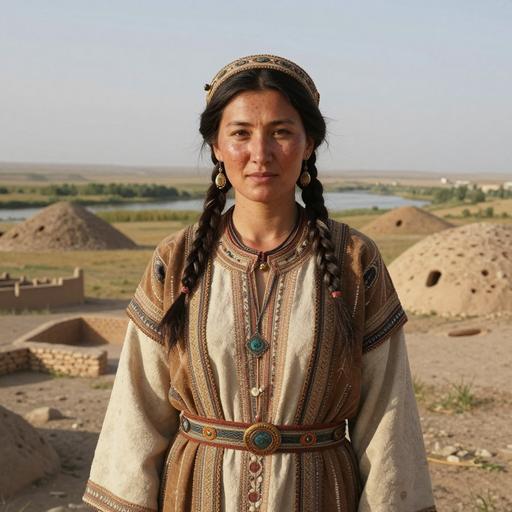
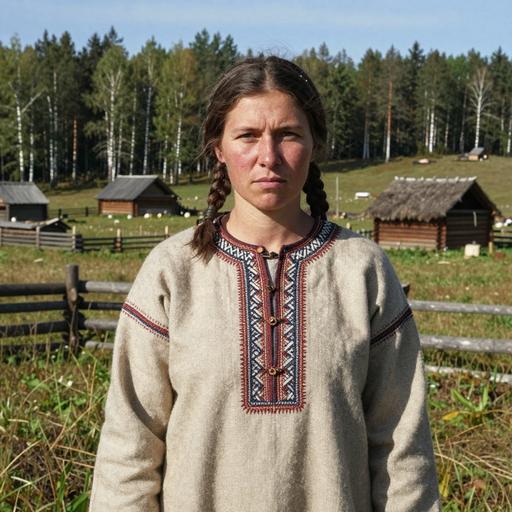
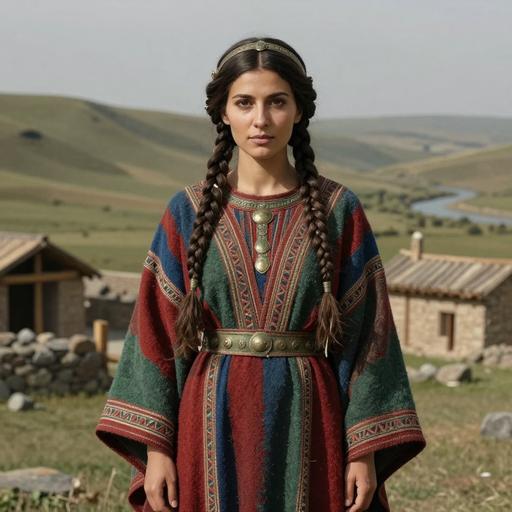
Because of its placement within the T2B1/T2 maternal complex, T2B11 is best interpreted as part of the maternal genetic signal carried by early farmers who spread agriculture into Europe from Anatolia and adjacent Mediterranean regions. Its pattern — concentrated in Mediterranean and Southern European contexts with lower frequencies inland — fits scenarios of coastal and inland Neolithic dispersal (for example, Cardial/Impressed Ware maritime expansions and overland Anatolian-derived Neolithic streams). The haplogroup's persistence into later periods and occasional presence in Bronze Age and historical-era samples indicates continuity and local differentiation rather than a single transient event.
Ancient DNA and Modern Studies
T2B11 has been observed in limited numbers in both modern population surveys and a small number of ancient DNA samples; these occurrences help anchor the clade geographically to the Mediterranean-Near Eastern corridor across the Holocene. Additional full mitogenome sequences from archaeological contexts would be valuable to refine its time-depth and migration history.
Conclusion
In summary, T2B11 is a relatively rare, regionally focused subclade of T2B1 that likely emerged on the Near Eastern / Mediterranean fringe in the early-to-middle Holocene and reflects the maternal diversity of Neolithic farmers and their descendants across Southern Europe and the adjacent Near East. Ongoing mitogenome sequencing and ancient DNA recovery will clarify its internal structure and finer-scale dispersal history.
Key Points
- Origins and Evolution
- Subclades
- Geographical Distribution
- Historical and Cultural Significance
- Ancient DNA and Modern Studies