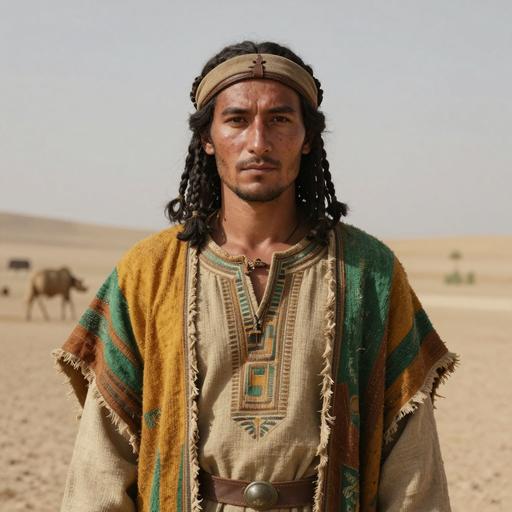
The Story
The journey of mtDNA haplogroup U1A1C
Origins and Evolution
mtDNA haplogroup U1A1C is a downstream subclade of U1A1, itself a branch of the broader haplogroup U1. Based on the phylogenetic position of U1A1 and the intra-clade diversity observed in modern population screens, U1A1C most plausibly arose in the early Holocene (roughly ~10 kya) in the Near East or Caucasus region. This timing places its origin in the period of post-glacial re-expansion and the early phases of the Neolithic transition in West Asia. As a relatively derived and low-frequency lineage within U1, U1A1C likely represents a localized maternal founder event or limited expansion from a Near Eastern/Caucasus source population.
Subclades (if applicable)
U1A1C is itself a terminal or near-terminal subclade within the U1A1 branch in many phylogenies available from population screens. Because published datasets for deep sequencing of U1 substructure remain limited, fine-scale subdivision within U1A1C is often sparse; when higher-resolution mitogenomes are available, small, geographically localized sub-branches can be resolved that reflect regional founder effects in the Caucasus and adjacent parts of West Asia. Future full mitogenome sequencing studies are likely to reveal additional micro‑subclades that document local population structure and recent maternal lineage drift.
Geographical Distribution
U1A1C is best characterized as a West Asian/Caucasus lineage with low-to-moderate presence in neighboring regions. Modern population surveys and targeted community studies indicate the highest relative concentrations in parts of Iran, eastern Anatolia, the southern Caucasus (Armenia, Georgia), and nearby Levantine areas. From these core areas, U1A1C appears sporadically in South Asia (India, Pakistan) at low frequencies, consistent with millennia of west↔east gene flow across Iran and the northwest South Asian corridor. Occasional occurrences in North Africa and southern/eastern Europe are consistent with historical contacts, Neolithic/Bronze Age movements, and later trade or diaspora events.
Historical and Cultural Significance
Haplogroup U1 lineages (including U1A1 and its subclades) are often interpreted as part of a maternal substrate in West Asia that predates, accompanies, or integrates with early farming expansions. The chronology and distribution of U1A1C fit with Neolithic-era population continuity in the Near East/Caucasus and subsequent localized expansions during the Chalcolithic and Bronze Age. In some modern community studies, rare occurrences of U1A1-derived lineages have been reported in Jewish populations and in North African Berber groups, reflecting complex historical mobility rather than a single demographic event. Overall, U1A1C is more indicative of regional continuity and micro‑founder events than of a large continent‑wide migration.
Conclusion
U1A1C is a relatively rare, regionally focused maternal lineage whose phylogenetic placement and geographic pattern point to a Near Eastern/Caucasus origin in the early Holocene followed by long‑term local persistence and limited dispersal into adjacent regions. Its rarity in broad surveys makes it a useful marker for refined regional studies when high-resolution mitogenome data are available, and further ancient DNA sampling in the Near East and Caucasus will help clarify its deeper prehistory and any connections to documented archaeological cultures.
Key Points
- Origins and Evolution
- Subclades (if applicable)
- Geographical Distribution
- Historical and Cultural Significance
- Conclusion