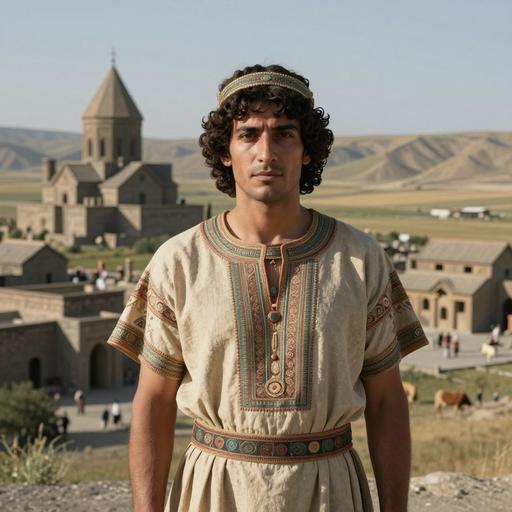
The Story
The journey of mtDNA haplogroup U1A1A
Origins and Evolution
mtDNA haplogroup U1A1A is a subclade of U1A1 and therefore sits within the broader U1 branch of haplogroup U, a maternal lineage with deep roots in West Eurasia. Given the estimated age of its parent clade U1A1 (~12 kya) and the phylogenetic placement of U1A1A as a downstream branch, a reasonable molecular‑clock estimate places the origin of U1A1A in the early Holocene (roughly ~9 kya). This timing and topology are consistent with a lineage that diversified in the Near East/Caucasus region following the Last Glacial Maximum and that participated in localized population continuity and demographic shifts associated with the onset of the Neolithic.
Like other U subclades in West Asia, U1A1A likely emerged after a period of post‑LGM refugial survival in the Near East/Caucasus and then expanded in small, regionally confined demes rather than in a single sweeping migration event. The lineage is defined by specific mitochondrial mutations downstream of the U1A1 motif (see specialized phylogenies for exact diagnostic mutations); as with many low‑frequency maternal clades, its internal diversity and geographic substructure suggest localized demographic processes rather than a broad pan‑regional expansion.
Subclades (if applicable)
U1A1A itself may contain limited internal substructure in well‑sampled datasets, but compared with larger mtDNA clades its number of distinct downstream branches is small and often geographically restricted. Where higher‑resolution full mitogenome sequencing has been applied, researchers sometimes identify shallow subbranches within U1A1A that reflect recent population structure (multimillennial but often Holocene or later). Because sampling remains sparse in many parts of the Near East and the Caucasus, further mitogenome surveys and ancient DNA recovery are likely to refine the internal topology and timing of U1A1A subclades.
Geographical Distribution
Today U1A1A is best characterized as a West Asian/Caucasus maternal lineage with secondary, low‑frequency occurrences beyond that core area. Modern and ancient DNA finds indicate the following pattern:
- Concentration in the Near East and the Caucasus: The highest relative densities of U1A1A occur in populations from Iran, eastern Turkey, the Levant, and among some Caucasus groups (e.g., Armenian and Georgian samples), consistent with an origin and long‑term presence in this region.
- Low to moderate presence in South Asia: Sporadic occurrences in India and Pakistan are consistent with prehistoric and historic gene flow between West Asia and South Asia, including Neolithic and later movements.
- Scattered occurrences in North Africa and Southern/Eastern Europe: Low‑frequency detections in North African Berber groups and in parts of the Mediterranean reflect episodic westward gene flow and historical contacts rather than broad colonization by this specific maternal lineage.
Ancient DNA hits assigned to U1A1 and closely related subclades show Holocene presence in West Asia and adjacent regions, reinforcing the interpretation of long‑term regional continuity with occasional outward dispersals.
Historical and Cultural Significance
Because U1A1A is a relatively low‑frequency lineage, its signal is best interpreted at the level of regional maternal continuity rather than as the marker of any single large prehistoric migration. Its presence in early Holocene and Neolithic contexts in West Asia and the Caucasus ties it to the broader story of sedentary transition, local population persistence after the LGM, and the mosaic demography of Neolithic expansion. In some fine‑scale studies, U1A1A appears in communities that participated in localized trade and cultural exchange networks connecting the Near East, the Caucasus and South Asia, but it is not a defining lineage of major pan‑regional archaeological complexes like the Anatolian Neolithic or the large steppe pastoralist groups.
Conclusion
U1A1A is a Holocene maternal subclade rooted in the Near East/Caucasus that exemplifies how many mtDNA lineages document regional continuity and modest local expansions rather than broad demographic turnovers. Continued mitogenome sequencing of both modern populations and archaeological remains in under‑sampled regions will clarify its finer phylogeography and whether presently rare subbranches were once more widespread during particular Holocene intervals.
Key Points
- Origins and Evolution
- Subclades (if applicable)
- Geographical Distribution
- Historical and Cultural Significance
- Conclusion