Menu
mtDNA Haplogroup • Maternal Lineage

U2E2A1A2

mtDNA Haplogroup U2E2A1A2

~6,000 years ago
South Asia
0 subclades
Scroll to explore
Chapter I

The Story

The journey of mtDNA haplogroup U2E2A1A2

Origins and Evolution

mtDNA haplogroup U2E2A1A2 is a deep-branching, Holocene-era subclade nested within the broader U2 lineage and specifically within U2E2A1A. The parent U2 haplogroup has a wide West Eurasian distribution, but the U2E2A1A1/A2-style substructure represents a regional diversification that occurred on the Indian subcontinent during the mid-Holocene (approximately 6 thousand years ago). Its pattern of variation and phylogenetic placement indicate local mutation and expansion after an initial arrival or in situ continuity of U2-derived maternal lineages in South Asia.

Genetically, U2E2A1A2 is characterized by the defining set of mutations that place it as a downstream branch of U2E2A1A; its emergence is consistent with post-glacial Holocene demographic processes (sedentary agriculture, village formation and regional interactions) that produced high local differentiation of maternal lineages in South Asia.

Subclades

U2E2A1A2 itself is a downstream terminal lineage within U2E2A1A and may contain micro-branches detectable only by full mitogenome sequencing. Because the clade is relatively young and regionally concentrated, many reported matches come from control-region or partial mitogenome data; higher-resolution sequencing frequently reveals additional private variants and very recent splits among regional populations.

Geographical Distribution

The primary geographic focus of U2E2A1A2 is South Asia, where it is most frequently found among various indigenous caste and tribal groups. Secondary occurrences appear in neighboring regions due to historical gene flow and long-range mobility:

  • Pakistan (Punjabi, Sindhi, Pashtun, Baloch and other groups) shows low-to-moderate frequencies reflecting cross-border continuity with north-western India.
  • Central Asia (Kazakh, Uzbek, Tajik and related groups) contains scattered detections consistent with medieval and earlier east–west contacts, trade routes and population movements.
  • The Iranian Plateau and adjacent Near Eastern areas show low-frequency occurrences, likely from long-term westward gene flow across Iran and through trans-regional networks.
  • Sporadic, very low-frequency detections are reported in parts of Eastern and Central Europe and in North Africa (Berber-adjacent samples), generally interpreted as rare long-distance dispersals or recent historical movements rather than signals of a large prehistoric expansion.

To date, U2E2A1A2 (and immediate sister lineages) have been identified in a small but notable number of ancient DNA specimens (approximately 10 samples in aggregated databases), demonstrating that the lineage has been present in archaeological contexts in the Holocene and corroborating its antiquity in the region.

Historical and Cultural Significance

Because U2E2A1A2 is concentrated among indigenous South Asian populations and shows persistence through the Holocene, it likely reflects local maternal continuity through major cultural transitions in the subcontinent rather than being primarily associated with large-scale incoming demic events. Its emergence around 6 kya places it before or contemporaneous with the Chalcolithic/early agricultural expansions in South Asia (Mehrgarh-related and other regional Neolithic traditions), and prior to the rise of Bronze Age urban systems such as the Indus Valley Civilization.

The haplogroup's low-frequency presence in Central Asia and the Iranian Plateau is consistent with documented prehistoric and historic east–west interactions (trade, pastoralist movements and later cultural linkages) that transferred small numbers of maternal lineages beyond South Asia. The concentration in tribal and some caste groups today suggests relative matrilineal continuity and limited replacement of maternal lineages in many local communities.

Conclusion

U2E2A1A2 is best interpreted as a South Asian Holocene maternal lineage that diversified locally and remained geographically concentrated, with limited but measurable spread into neighboring regions. It provides useful phylogeographic information about maternal continuity in the Indian subcontinent and about low-frequency long-distance dispersal events that occasionally placed South Asian-specific mtDNA lineages into Central Asia, the Iranian Plateau and farther west in later periods.

Key Points

  • Origins and Evolution
  • Subclades
  • Geographical Distribution
  • Historical and Cultural Significance
  • Conclusion

Chapter II

Tree & Relationships

Phylogenetic context and subclades

Evolution Path

This haplogroup's evolutionary journey from its earliest ancestor to the present.

Steps Haplogroup Age Estimate Archaeology Era Time Passed Immediate Descendants Tested Modern Descendants Ancient Connections
1 U2E2A1A2 Current ~6,000 years ago 🪨 Chalcolithic 6,000 years 0 0 0
2 U2E2A1A ~6,000 years ago 🪨 Chalcolithic 6,000 years 2 8 18
3 U2E2A1 ~9,000 years ago 🌾 Neolithic 9,000 years 3 28 0
4 U2E2A ~12,000 years ago 🌾 Neolithic 12,000 years 1 28 19
5 U2E2 ~18,000 years ago 🏹 Mesolithic 18,000 years 1 38 0
6 U2E ~18,000 years ago 🏹 Mesolithic 18,000 years 3 194 45
7 U2 ~38,000 years ago 🦴 Paleolithic 38,000 years 5 757 37
8 U ~46,000 years ago 🦴 Paleolithic 46,000 years 12 2,835 110
9 R ~60,000 years ago 🦴 Paleolithic 60,000 years 12 10,987 57
10 N ~60,000 years ago 🦴 Paleolithic 60,000 years 15 15,452 13
11 L3 ~70,000 years ago 🦴 Paleolithic 70,000 years 11 17,621 6
12 L ~160,000 years ago 🦴 Paleolithic 160,000 years 7 18,987 5

Subclades (0)

Terminal branch - no known subclades

Siblings (1)

Other branches from the same parent haplogroup

Chapter III

Where in the World

Geographic distribution and modern presence


Place of Origin

South Asia

Modern Distribution

The populations where mtDNA haplogroup U2E2A1A2 is found include:

  1. Various Indian caste and tribal groups (India)
  2. Pakistani populations (Punjabi, Sindhi, Pashtun, Baloch groups)
  3. Central Asian populations (Kazakh, Uzbek, Tajik and related groups)
  4. Near Eastern populations on the Iranian Plateau and adjacent areas
  5. European populations at very low frequency (sporadic detections in Eastern/Central Europe)
  6. North African groups at low frequency (reported in some Berber-adjacent samples)
  7. Indigenous northern European groups in rare cases (reported in limited studies)
  8. Ancient Holocene archaeological samples from South Asia and adjacent West Asian contexts (sporadic ancient DNA detections)
CHAPTER IV

When in Time

Your haplogroup in the context of human history

~10k years ago

Neolithic Revolution

Agriculture begins, settled communities form

~6k years ago

Haplogroup U2E2A1A2

Your mtDNA haplogroup emerged in South Asia

South Asia
~5k years ago

Bronze Age

Metalworking, writing, and early civilizations

~3k years ago

Iron Age

Iron tools, expanded trade networks

~2k years ago

Classical Antiquity

Greek and Roman civilizations flourish

Present

Present Day

Modern era

Your Haplogroup
Historical Era
Chapter IV-B

Linked Cultures

Ancient cultures associated with mtDNA haplogroup U2E2A1A2

Cultural Heritage

These ancient cultures have been linked to haplogroup U2E2A1A2 based on matching ancient DNA samples from archaeological excavations. The presence of this haplogroup in these cultures provides insights into the migrations and population movements of populations carrying this haplogroup.

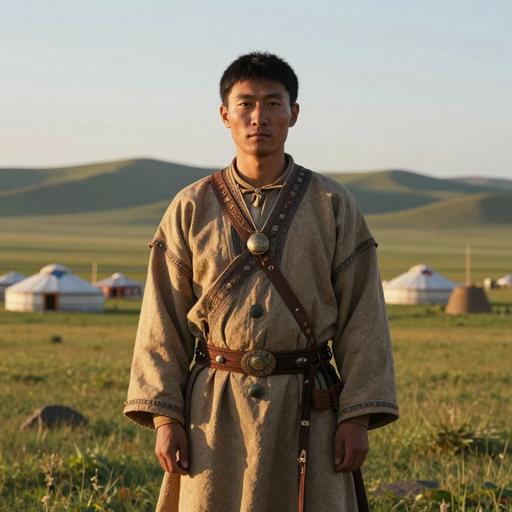
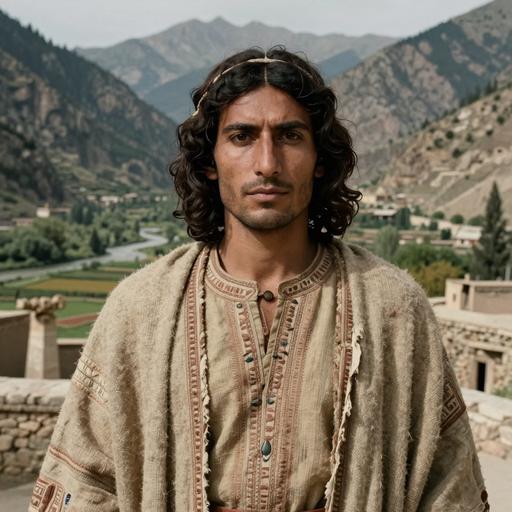
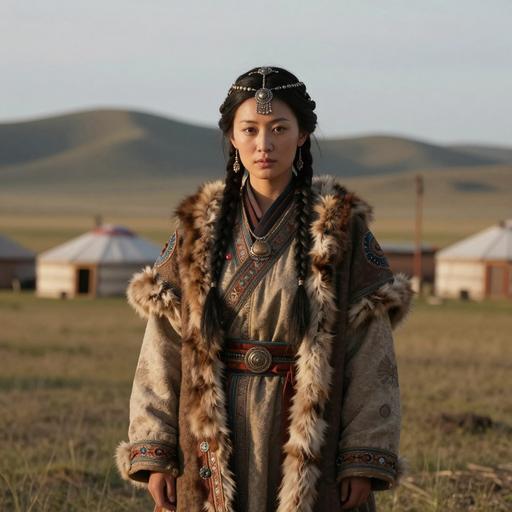
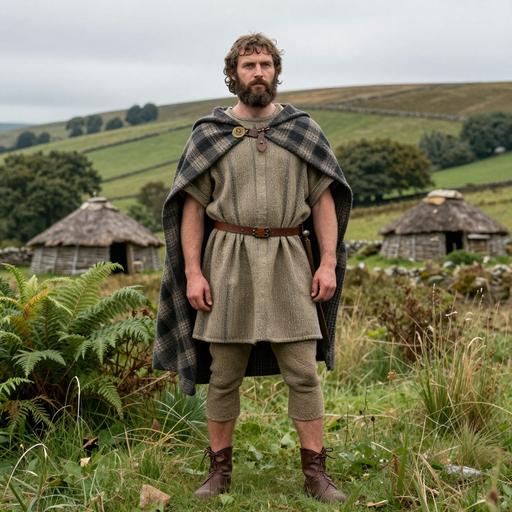
Anglo-Saxon Bulgarian Medieval Mixed TRB-CWC Mongun-Taiga Culture Poznań Środka Culture Saxon Dunum Srubnaya-Alakul Tollense Culture Unetice Culture
Culture assignments are based on archaeological context of ancient DNA samples and may represent regional associations during specific time periods.
Chapter V

Sample Catalog

Top 50 ancient DNA samples directly related to haplogroup U2E2A1A2 or parent clades

50 / 50 samples
Portrait Sample Country Era Date Culture mtDNA Match
Portrait of ancient individual R114 from Italy, dated 1 CE - 200 CE
R114
Italy Imperial Rome 1 CE - 200 CE Roman Empire U1b1 Direct
Portrait of ancient individual R115 from Italy, dated 1 CE - 200 CE
R115
Italy Imperial Rome 1 CE - 200 CE Roman Empire U4 Direct
Portrait of ancient individual R116 from Italy, dated 1 CE - 200 CE
R116
Italy Imperial Rome 1 CE - 200 CE Roman Empire U3a2c* Direct
Portrait of ancient individual R436 from Italy, dated 1 CE - 200 CE
R436
Italy Imperial Rome 1 CE - 200 CE Roman Empire U5b3a Direct
Portrait of ancient individual R45 from Italy, dated 1 CE - 400 CE
R45
Italy Imperial Rome 1 CE - 400 CE Roman Empire U3b1 Direct
Portrait of ancient individual R51 from Italy, dated 1 CE - 400 CE
R51
Italy Imperial Rome 1 CE - 400 CE Roman Empire U3b1 Direct
Portrait of ancient individual KD042 from United Kingdom, dated 1 CE - 250 CE
KD042
United Kingdom Iron Age Orkney, Scotland 1 CE - 250 CE Orcadian Iron Age U5a1b1a Direct
Portrait of ancient individual VK532 from Denmark, dated 1 CE - 200 CE
VK532
Denmark Iron Age Denmark 1 CE - 200 CE Danish Iron Age U2e2a1 Direct
Portrait of ancient individual I15514 from Serbia, dated 1 CE - 400 CE
I15514
Serbia Roman Serbia 1 CE - 400 CE Roman Provincial U4a2a Direct
Portrait of ancient individual I15536 from Serbia, dated 1 CE - 400 CE
I15536
Serbia Roman Serbia 1 CE - 400 CE Roman Provincial U5a1j Direct
Chapter VI

Carrier Distribution Map

Geographic distribution of 100 ancient DNA samples carrying haplogroup U2E2A1A2

Time Period Filter
All Time Periods
Showing all samples
Each marker represents an ancient individual
Chapter VII

Temporal Distribution

Distribution of carriers across archaeological periods

Chapter VIII

Geographic Distribution

Distribution of carriers by country of origin

Chapter IX

Country × Era Distribution

Cross-tabulation of carrier countries and archaeological periods

Data

Data & Provenance

Source information and data quality

Last Updated 2026-02-16
Confidence Score 50/100
Coverage Low
Data Source

We use the latest phylotree for MTDNA haplogroup classification and data.