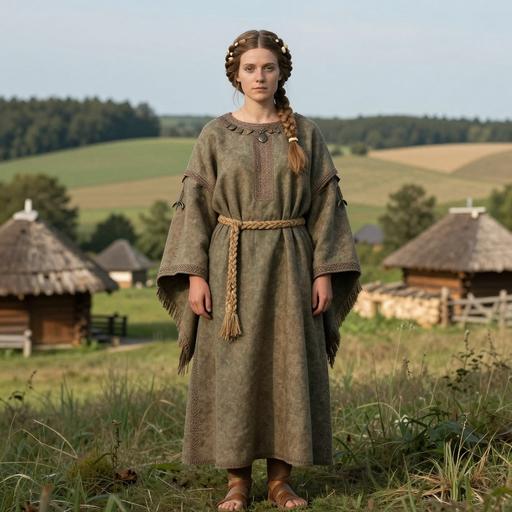
The Story
The journey of mtDNA haplogroup U4A2A1
Origins and Evolution
U4A2A1 is a terminal branch within the U4 maternal lineage, deriving from U4A2A and ultimately from U4 — a clade long associated with post-glacial re-expansion in northern Eurasia. Based on its phylogenetic position below U4A2A (itself estimated to have formed in the Early Holocene), U4A2A1 most likely arose after the Last Glacial Maximum as human groups recolonized high-latitude landscapes. The mutation accumulation and phylogeographic pattern suggest a northern Eurasian origin, probably linked to Mesolithic and Early Neolithic hunter-gatherer populations. Molecular-clock based age estimates for such downstream U4 subclades are subject to uncertainty (depending on calibration and mutation-rate model), but a mid-Holocene origin (~7–8 kya) is a reasonable inference given available parent-clade dates.
Subclades
At present, U4A2A1 is treated as a relatively narrowly defined terminal subclade with limited reported downstream structure in public and academic mitogenome catalogs. Published and database-sourced mitogenomes show occasional private variants branching under U4A2A1, but no widely distributed, deeply divergent sub-branches have been robustly documented. Ancient DNA (aDNA) occurrences are few (two identified in the referenced dataset), which constrains confident inference of finer subclade phylogeny and temporal dynamics. As more whole mitogenomes are sequenced from northern Eurasian archaeological contexts, additional substructure may be revealed.
Geographical Distribution
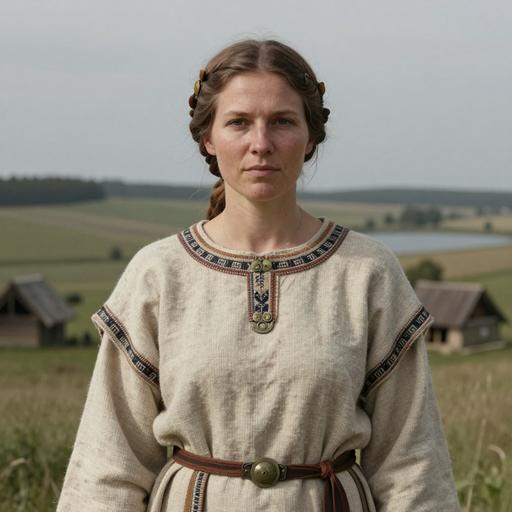
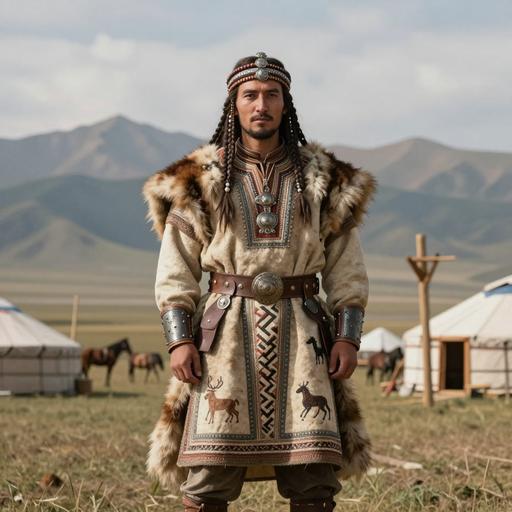
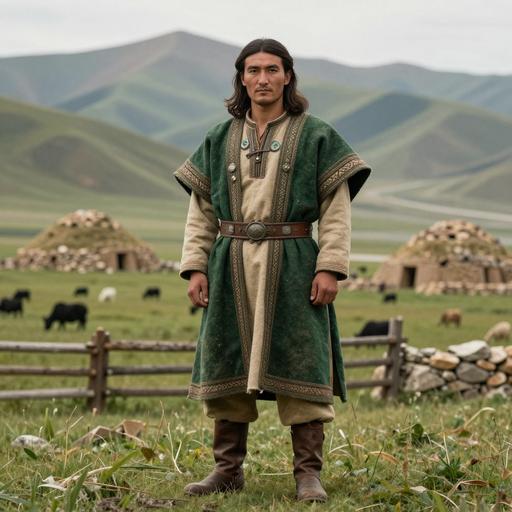
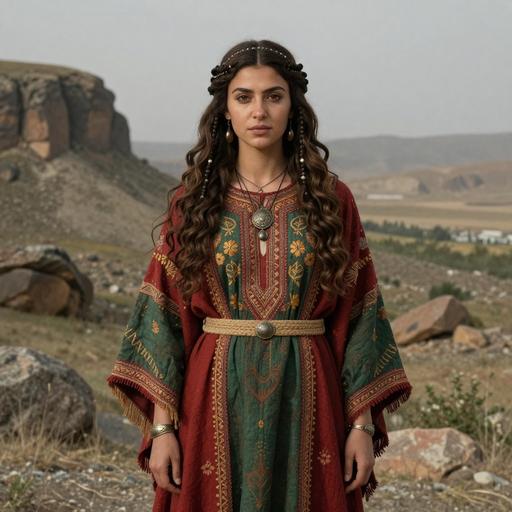
Modern distribution: U4A2A1 is observed at low-to-moderate frequencies in populations across northern and eastern Europe (notably Scandinavia, Finland and parts of Russia), and among several indigenous Siberian groups (for example Nenets and Evenks). It also appears sporadically in Central Asian populations (Altai region and surrounding areas), at very low frequencies in the Caucasus, and in isolated occurrences reported from South Asia. The clade's distribution is consistent with a northern Eurasian origin followed by differential persistence and local drift in high-latitude and eastern Eurasian hunter-gatherer-descended groups.
Ancient DNA: The detection of U4A2A1 in archaeological samples (two in the referenced database) is consistent with continuity from Mesolithic or later prehistoric northern Eurasian populations into some modern groups, but the small ancient sample size limits detailed reconstruction of migration or continuity dynamics.
Historical and Cultural Significance
U4 lineages, including U4A2A1, are frequently interpreted in population genetic studies as markers of maternal ancestry tied to post-glacial hunter-gatherer populations of northern and eastern Europe and parts of Siberia. In archaeological contexts, matrilineal continuity of U4-derived haplogroups can signal survival of local hunter-gatherer maternal lineages through the Neolithic and into later periods, even where paternal lineages and autosomal ancestry were substantially influenced by migrating farmers or steppe pastoralists.
U4A2A1 specifically appears to reflect this pattern: a relatively deep northern origin, followed by local persistence and low-frequency survival in modern northern Eurasian populations. Its presence alongside both farmer-associated mtDNAs (e.g., H, J) and other hunter-gatherer mtDNAs (e.g., U5, U2) in modern and ancient samples illustrates the complex maternal admixture processes that shaped post-glacial and Holocene northern Eurasia.
Conclusion
U4A2A1 is a geographically informative, low-frequency mtDNA lineage rooted in northern Eurasia with probable Mesolithic/Early Holocene origins. Although currently a minor component of modern mtDNA pools, it is valuable for reconstructing regional maternal continuity and post-glacial demographic processes; expanding mitogenome sampling in northern Eurasia and the Siberian steppe will clarify its substructure, antiquity, and specific migration histories.
Key Points
- Origins and Evolution
- Subclades
- Geographical Distribution
- Historical and Cultural Significance
- Conclusion