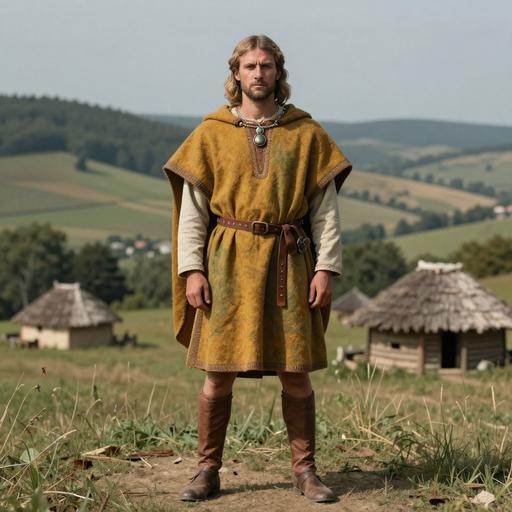
The Story
The journey of mtDNA haplogroup U4C2A
Origins and Evolution
Haplogroup U4C2A is a subclade of mtDNA haplogroup U4C2, itself a branch of the broader U4 lineage. The parent clade U4C2 likely arose in Northern Eurasia after the Last Glacial Maximum (LGM), and U4C2A represents a downstream diversification that probably occurred during the Mesolithic period as human groups re-expanded into formerly glaciated or marginal northern landscapes. Based on the phylogenetic position beneath U4C2 and the temporal framework for many U4 sublineages, a conservative age estimate for U4C2A is in the range of ~7–8 kya (thousands of years ago), consistent with post-glacial demographic processes in Eastern Europe and Western Siberia.
Subclades
U4C2A is by definition a downstream branch of U4C2. Depending on sequencing resolution, U4C2A may itself split into further minor sublineages defined by private mutations in the coding region or control region; however, those sub-branches are low-frequency and often appear as geographically localized variants in modern and ancient datasets. High-resolution mitogenomes are required to resolve internal structure reliably. Because U4 lineages generally show deep coalescence, many subclades (including U4C2A) are retained at low-to-moderate frequencies rather than sweeping to high population-wide prevalence.
Geographical Distribution
The modern distribution of U4C2A mirrors that of its parent clade: it is most commonly observed at low-to-moderate frequencies in Northern and Eastern Europe (including Finnish, Russian and Baltic populations), as well as among some Indigenous Siberian groups (for example populations of the Russian North and western Siberia). Low-frequency occurrences have been reported in parts of Central Asia (Kazakh, Kyrgyz and neighbouring groups in population surveys) and sporadically in the Caucasus and South Asia; such peripheral sightings likely reflect layered gene flow and long-distance connections across Eurasia. Ancient DNA evidence (small number of ancient samples) places U4C2-derived lineages in Mesolithic and later contexts in northern Eurasia, supporting continuity from post-glacial hunter-gatherers into later regional populations.
Historical and Cultural Significance
Haplogroup U4 and its subclades—including U4C2A—are often interpreted in population genetics as markers of Mesolithic and post-glacial hunter-gatherer ancestries in northern and eastern Europe and adjacent Siberia. Their persistence into Neolithic and Bronze Age contexts in varying frequencies indicates admixture and survival of maternal hunter-gatherer lineages even as farming and steppe pastoralist cultures spread. U4C2A itself is not associated with any major continent-wide demographic replacement; rather, it contributes to the patchwork of maternal lineages that document local continuity, microregional structure, and occasional long-distance connections across Eurasia.
Conclusion
U4C2A is a geographically northern Eurasian mtDNA lineage that illustrates post-LGM diversification of hunter-gatherer maternal lineages. It is best detected and interpreted through full mitogenome sequencing and incorporation of both modern population surveys and ancient DNA, where it helps reconstruct patterns of continuity and interaction in Northern Europe, Western Siberia and adjacent regions.
Key Points
- Origins and Evolution
- Subclades
- Geographical Distribution
- Historical and Cultural Significance
- Conclusion