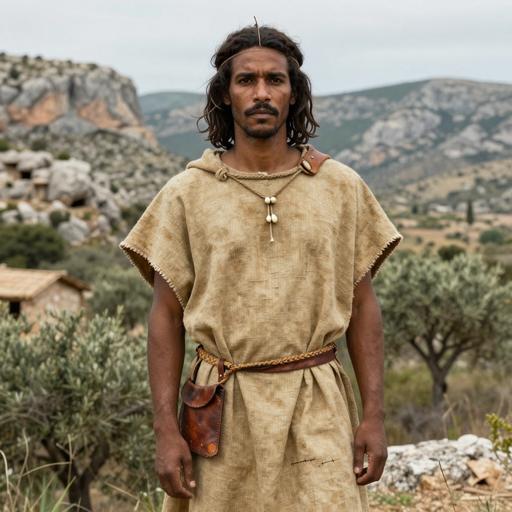
The Story
The journey of mtDNA haplogroup U5A1C1A
Origins and Evolution
mtDNA haplogroup U5A1C1A is a downstream subclade of U5A1C1 and therefore sits within the broader U5a1 branch—one of the principal European hunter‑gatherer maternal lineages. Based on its phylogenetic position beneath U5A1C1 (which is estimated to have arisen around the post‑glacial period ~11 kya), U5A1C1A likely diversified slightly later, in the early Holocene (roughly 8–10 kya), as Mesolithic populations expanded and reoccupied northern latitudes after the Last Glacial Maximum. Its emergence is consistent with a scenario of local survival in glacial refugia or rapid post‑glacial recolonization of northern and northeastern Europe.
Subclades (if applicable)
At present, U5A1C1A appears to be a relatively fine‑scale terminal or near‑terminal subclade with limited internal diversity documented in published and public sequence databases. A small number of private mutations distinguish U5A1C1A carriers from other U5A1C1 branches; additional sequencing of complete mitogenomes from under‑sampled northern populations could reveal further substructure. Because this lineage is nested within U5a1 → U5A1C1, it should be interpreted as a local post‑glacial diversification rather than a deep continental founder lineage.
Geographical Distribution
Modern observations and limited ancient DNA evidence place U5A1C1A primarily in northern Europe, with its highest relative frequencies among indigenous northern Scandinavian peoples (notably the Sámi) and elevated presence in nearby Baltic and Fennoscandian populations. It is found at reduced frequencies further south and east into broader Scandinavian, Baltic, and parts of northeastern and central Europe. Occasional low‑frequency reports beyond Europe (e.g., isolated findings in the Caucasus or North Africa) likely reflect later gene flow or rare long‑distance movements rather than primary distribution centers.
Historical and Cultural Significance
Because U5A1C1A is nested within the U5a line strongly associated with European Mesolithic hunter‑gatherers, it is informative for reconstructing post‑glacial demographic processes in northern Europe. The haplogroup's persistence at higher frequencies among Sámi and some other northern groups suggests continuity of maternal lineages from hunter‑gatherer populations through the Holocene, despite subsequent admixture with Neolithic farmers and later Bronze Age movements. In population genetic studies, U5A1C1A (like other U5a subclades) is used as a marker of hunter‑gatherer ancestry and local continuity in high‑latitude environments.
Conclusion
U5A1C1A represents a geographically concentrated, post‑glacial maternal lineage of northern/northeastern Europe that likely arose in the early Holocene and has been maintained—particularly among Sámi and neighboring populations—through a combination of local continuity and restricted gene flow. Its limited representation in ancient DNA samples to date means that further sampling of ancient and modern complete mitogenomes will improve resolution of its age, internal structure, and precise migration history.
Key Points
- Origins and Evolution
- Subclades (if applicable)
- Geographical Distribution
- Historical and Cultural Significance
- Conclusion