The Story
The journey of mtDNA haplogroup U5A1F1A1
Origins and Evolution
U5A1F1A1 is a downstream branch of mtDNA haplogroup U5A1F1A, itself nested within the broader U5a lineage associated primarily with European Late Pleistocene and Mesolithic hunter‑gatherer populations. The U5 root is one of the oldest well‑documented European maternal lineages, expanding in Europe after the Last Glacial Maximum (LGM). U5A1F1A1 most likely arose regionally in Northern or Northeastern Europe during the mid‑to‑late Holocene (several thousand years after the initial U5 expansions), representing a localized diversification of an already established hunter‑gatherer maternal stock.
Subclades
As a fine‑scale subclade of U5A1F1A, U5A1F1A1 is defined by additional private mutations relative to its parent. It is a relatively rare terminal branch in modern and ancient databases; only a small number of further downstream lineages (if any) have been reported, reflecting either limited expansion or undersampling. Because U5 lineages are deep and structurally complex, identification of further subclades typically depends on full mitogenome sequencing and expanding ancient DNA sampling from northern Eurasia.
Geographical Distribution
The modern distribution of U5A1F1A1 is concentrated in Northern and Northeastern Europe with spillover at low frequency into adjacent regions: Scandinavia (Norway, Sweden), Sámi communities of northern Scandinavia, Baltic populations (Estonia, Latvia, Lithuania), and parts of Eastern and Central Europe (Russia, Ukraine, Poland, Germany). Very occasional occurrences have been reported at very low frequency in the Caucasus and sporadically even in North Africa, consistent with rare drift, migration, or historical movements. Ancient DNA matches (currently limited but present in databases) place U5A1F1A1 in archaeological contexts consistent with post‑Mesolithic continuity in northern Europe.
Historical and Cultural Significance
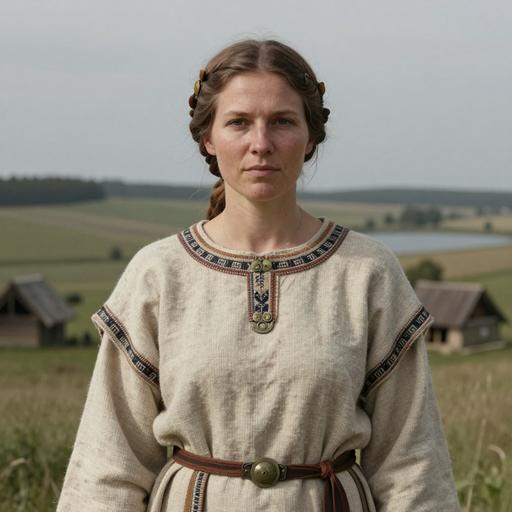
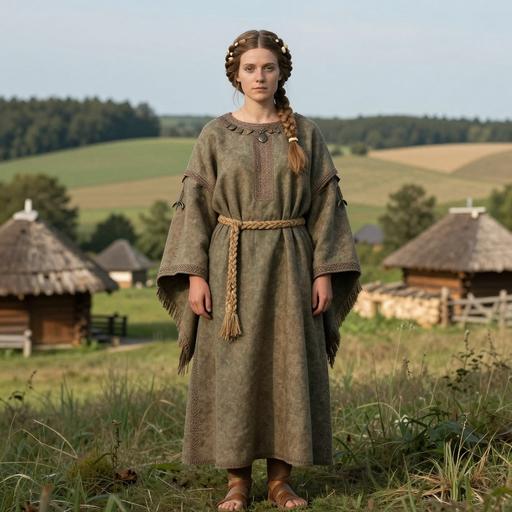
Because U5 lineages are strongly associated with European hunter‑gatherers, the presence of U5A1F1A1 in northern populations is often interpreted as evidence for regional maternal continuity from Mesolithic substrates into later prehistoric and historic populations, rather than large‑scale replacement by incoming Neolithic farmers. The haplogroup's concentration in Scandinavia and the Baltic — and its occurrence among Sámi individuals — makes it informative for studies of population persistence, local demographic processes, and the genetic makeup of northern European groups through the Neolithic, Bronze Age and into historical times. It is not associated with major continental expansions (e.g., Anatolian Neolithic farmers or steppe pastoralist movements) as a driver of high frequency, but rather with local survival and limited demographic growth.
Conclusion
U5A1F1A1 is a geographically localized, low‑frequency maternal lineage that refines our understanding of post‑glacial mtDNA diversity in northern Europe. Its detection in both modern and a small number of ancient samples strengthens interpretations of Mesolithic continuity in Scandinavia and the Baltic and underscores the value of high‑resolution mitogenome data for reconstructing fine‑scale maternal population history.
Key Points
- Origins and Evolution
- Subclades
- Geographical Distribution
- Historical and Cultural Significance
- Conclusion