The Story
The journey of mtDNA haplogroup U6A7B
Origins and Evolution
Haplogroup U6A7B is a downstream branch of U6A7, itself a Holocene diversification of the broader North African mtDNA clade U6. U6 has deep roots in North Africa dating to the Late Pleistocene, while U6A7 likely arose in the Maghreb during the mid-Holocene (~5.5 kya). U6A7B represents a later split within this regional radiation, and coalescent age estimates for this subclade are consistent with a Late Bronze Age to Iron Age origin (on the order of ~3–4 kya), reflecting continued local maternal diversification in the Maghreb after the establishment of U6A7.
Genetically, U6A7B carries the defining mutations that place it within the U6A7 branch and additional private mutations that distinguish it from sibling lineages. Its phylogenetic position implies a Maghrebi origin with limited downstream expansion compared with older U6 subclades.
Subclades (if applicable)
As a named subclade (U6A7B), this lineage may contain further rare private branches observed in high-resolution mtDNA datasets and full mitogenome sequencing. Published mtDNA surveys and ancient DNA reports indicate a small number of derived haplotypes attributable to U6A7B; continued mitogenome sequencing in North Africa and adjacent regions is required to resolve any finer substructure.
Geographical Distribution
U6A7B is concentrated in the western Mediterranean margin with a clear North African (Maghreb) focus. Modern and ancient DNA records show its highest frequencies in Berber-speaking and indigenous coastal populations of Morocco, Algeria, and Tunisia. Secondary low-frequency occurrences are documented in the Canary Islands among Guanche-descended lineages, and scattered occurrences appear in the southwestern Iberian Peninsula (southern Spain and Portugal). There are also sporadic low-frequency detections in parts of the Near East and in East Africa (e.g., Ethiopia, Somalia), consistent with historical maritime and trans-Saharan connections and the long-term mobility of maternal lineages in the Mediterranean and Saharan corridors.
The haplogroup has been observed in a small number (six) of ancient DNA samples in available databases, reinforcing its Holocene antiquity and association with regional archaeological contexts in the western Mediterranean and North Africa.
Historical and Cultural Significance
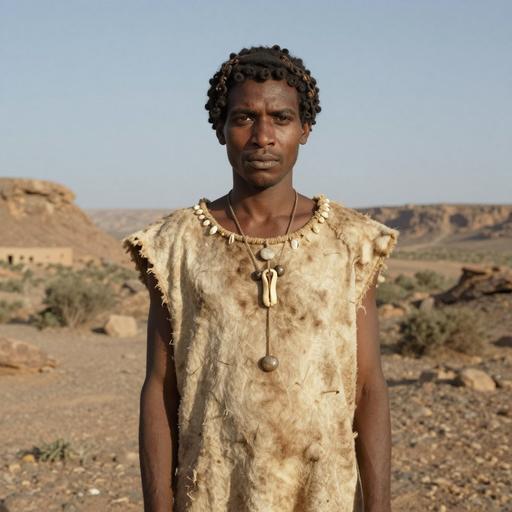
U6A7B is best interpreted as part of the maternal genetic substrate of Maghrebi populations, including groups historically labeled as Berber. Its presence in the Canary Islands links it to the pre-European Guanche population, reflecting prehistoric seafaring or coastal migrations from North Africa to the islands. Low-frequency Iberian occurrences likely reflect prehistoric and historic cross-Mediterranean gene flow (coastal migrations, trading networks, or later movements during antiquity and the medieval period). The lineage’s pattern — high local retention in the Maghreb with scattered peripheral occurrences — mirrors other maternal haplogroups that document local continuity combined with episodic outward dispersal.
Conclusion
U6A7B is a regionally restricted, Holocene-age mtDNA subclade that captures a component of Maghrebi maternal ancestry. Its phylogenetic placement as a sublineage of U6A7 and its distribution — concentrated in North Africa with secondary low-frequency presence in the Canary Islands, Iberia, the Near East, and East Africa — make it useful for studies of North African population history, local Neolithic–Bronze/Iron Age diversification, and the prehistoric peopling of adjacent Mediterranean islands and coasts. Further full mitogenome sampling across North Africa and archaeological sampling will refine its exact age, internal structure, and migratory episodes.
Key Points
- Origins and Evolution
- Subclades (if applicable)
- Geographical Distribution
- Historical and Cultural Significance
- Conclusion