Menu
mtDNA Haplogroup • Maternal Lineage

U6A7D

mtDNA Haplogroup U6A7D

~6,000 years ago
North Africa (Maghreb)
0 subclades
4 ancient samples
Scroll to explore
Chapter I

The Story

The journey of mtDNA haplogroup U6A7D

Origins and Evolution

mtDNA haplogroup U6A7D is a downstream subclade of U6A7, itself a branch of the broader North African-centered haplogroup U6. Based on its phylogenetic position and coalescent estimates for U6A7, U6A7D most likely arose in the Maghreb during the Holocene (approximately 5.5 kya), a period of local demographic change and continued maternal diversification following the arrival and establishment of Neolithic and post-Neolithic cultural complexes in North Africa. The restricted and coastal-mediterranean distribution of U6A7D suggests a local origin followed by limited regional expansion rather than a widespread Paleolithic dispersal.

Subclades (if applicable)

U6A7D is itself a terminal or near-terminal subclade in many published phylogenies; if further internal diversity exists it is at low diversity and geographically localized. Sub-branching within U6A7D, where observed, tends to be private to specific populations or islands (for example within the Canary Islands or particular Berber groups), indicating recent local founder effects or drift. Because U6A7 is already a relatively young Holocene lineage, U6A7D typically shows few private mutations beyond the defining markers for the clade.

Geographical Distribution

The highest frequencies of U6A7D are recorded in North African populations — primarily among Berber-speaking groups in Morocco, Algeria and Tunisia — consistent with the Maghrebi origin of the parent clade. Secondary, lower-frequency occurrences appear in the Canary Islands (linked to indigenous Guanche ancestry) and in southwestern parts of the Iberian Peninsula (southwest Spain and Portugal), likely reflecting prehistoric or historical gene flow across the western Mediterranean. Scattered low-frequency reports from East Africa (e.g., Ethiopia, Somalia) and parts of the Near East, as well as rare occurrences in southern France and Sicily, are best interpreted as the result of long-range maritime contacts, later historic movements, or low-level gene flow rather than primary centers of diversification. Ancient DNA evidence (several archaeogenetic hits in curated databases) corroborates the presence of U6A7D in archaeological contexts, reinforcing a Holocene presence in the region.

Historical and Cultural Significance

U6A7D is informative for studies of North African maternal history because it mirrors local Holocene demographic processes rather than large-scale Paleolithic migrations. Its association with Berber-associated populations and with the Guanche maternal pool in the Canary Islands supports archaeological and historical inferences of a Maghrebi source for the peopling of the Canaries. Low-frequency Iberian occurrences may record prehistoric maritime contacts (Late Neolithic / Chalcolithic and later periods) or historical flows across the western Mediterranean, including periods of Fenno-Maghrebine exchange during the Bronze Age, Phoenician-Punic movements, or historic Islamic-era interactions; however, the strongest signal remains regional continuity in the Maghreb.

Conclusion

U6A7D is a Holocene-age, Maghreb-centered maternal lineage whose restricted distribution and presence in both continental North Africa and the Canary Islands provide a useful genetic marker for local maternal continuity and island colonization from North African sources. Its low frequency outside North Africa implies limited outward dispersal, making it valuable for reconstructing regional population structure, founder events, and historical maritime connections within the western Mediterranean.

Key Points

  • Origins and Evolution
  • Subclades (if applicable)
  • Geographical Distribution
  • Historical and Cultural Significance
  • Conclusion
Chapter II

Tree & Relationships

Phylogenetic context and subclades

Evolution Path

This haplogroup's evolutionary journey from its earliest ancestor to the present.

Steps Haplogroup Age Estimate Archaeology Era Time Passed Immediate Descendants Tested Modern Descendants Ancient Connections
1 U6A7D Current ~6,000 years ago 🪨 Chalcolithic 5,500 years 0 0 4
2 U6A7 ~6,000 years ago 🪨 Chalcolithic 5,500 years 4 23 0
3 U6A ~22,000 years ago 🏹 Mesolithic 22,000 years 6 76 5
4 U6 ~35,000 years ago 🦴 Paleolithic 35,000 years 4 117 10
5 U ~46,000 years ago 🦴 Paleolithic 46,000 years 12 2,835 110
6 R ~60,000 years ago 🦴 Paleolithic 60,000 years 12 10,987 57
7 N ~60,000 years ago 🦴 Paleolithic 60,000 years 15 15,452 13
8 L3 ~70,000 years ago 🦴 Paleolithic 70,000 years 11 17,621 6
9 L ~160,000 years ago 🦴 Paleolithic 160,000 years 7 18,987 5

Subclades (0)

Terminal branch - no known subclades

Siblings (3)

Other branches from the same parent haplogroup

Chapter III

Where in the World

Geographic distribution and modern presence

Place of Origin

North Africa (Maghreb)

Modern Distribution

The populations where mtDNA haplogroup U6A7D is found include:

  1. North African Berber populations (Morocco, Algeria, Tunisia)
  2. Indigenous Guanche-descended groups in the Canary Islands
  3. Iberian Peninsula (southwest Spain and Portugal)
  4. East African populations (Ethiopia, Somalia) at low frequencies
  5. Near Eastern populations at low frequencies
  6. Sporadic presence in southern France, Sicily and other Mediterranean coastal populations
CHAPTER IV

When in Time

Your haplogroup in the context of human history

~10k years ago

Neolithic Revolution

Agriculture begins, settled communities form

~5k years ago

Haplogroup U6A7D

Your mtDNA haplogroup emerged in North Africa (Maghreb)

North Africa (Maghreb)
~5k years ago

Bronze Age

Metalworking, writing, and early civilizations

~3k years ago

Iron Age

Iron tools, expanded trade networks

~2k years ago

Classical Antiquity

Greek and Roman civilizations flourish

Present

Present Day

Modern era

Your Haplogroup
Historical Era
Chapter IV-B

Linked Cultures

Ancient cultures associated with mtDNA haplogroup U6A7D

Cultural Heritage

These ancient cultures have been linked to haplogroup U6A7D based on matching ancient DNA samples from archaeological excavations. The presence of this haplogroup in these cultures provides insights into the migrations and population movements of populations carrying this haplogroup.

Iberomaurusian Ifri n'Amr Moroccan Transitional Peștera Muierii Roman Sardinian
Culture assignments are based on archaeological context of ancient DNA samples and may represent regional associations during specific time periods.
Chapter V

Sample Catalog

Top 4 ancient DNA samples directly related to haplogroup U6A7D or parent clades

4 / 4 samples
Portrait Sample Country Era Date Culture mtDNA Match
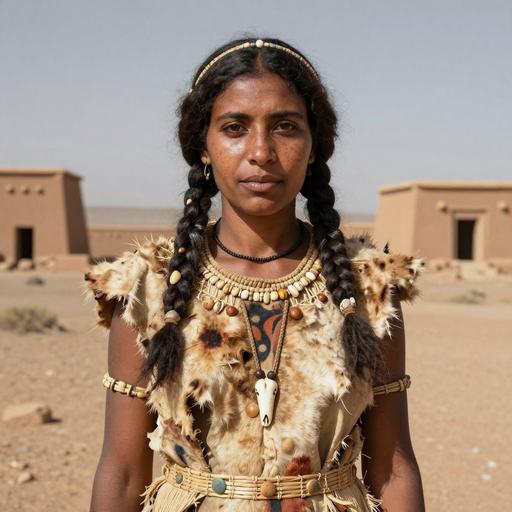
Portrait of ancient individual TAF012 from Morocco, dated 12888 BCE - 12175 BCE
TAF012
Morocco Iberomaurusian Era in Morocco 12888 BCE - 12175 BCE Iberomaurusian U6a7d Direct
Portrait of ancient individual TAF012 from Morocco, dated 12888 BCE - 12175 BCE
TAF012
Morocco The Iberomaurusian Culture 12888 BCE - 12175 BCE U6a7d Direct
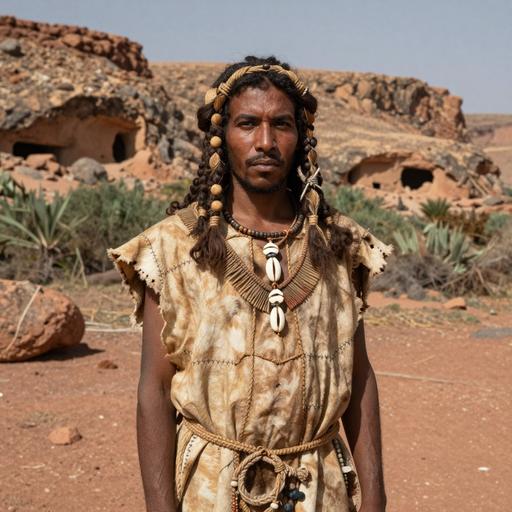
Portrait of ancient individual TAF011 from Morocco, dated 12900 BCE - 12100 BCE
TAF011
Morocco Iberomaurusian Era in Morocco 12900 BCE - 12100 BCE Iberomaurusian U6a7d Direct
Portrait of ancient individual TAF011 from Morocco, dated 12900 BCE - 12100 BCE
TAF011
Morocco The Iberomaurusian Culture 12900 BCE - 12100 BCE U6a7d Direct
Chapter VI

Carrier Distribution Map

Geographic distribution of 4 ancient DNA samples carrying haplogroup U6A7D

Time Period Filter
All Time Periods
Showing all samples
Each marker represents an ancient individual
Chapter VII

Temporal Distribution

Distribution of carriers across archaeological periods

Chapter VIII

Geographic Distribution

Distribution of carriers by country of origin

Chapter IX

Country × Era Distribution

Cross-tabulation of carrier countries and archaeological periods

Data

Data & Provenance

Source information and data quality

Last Updated 2026-02-16
Confidence Score 50/100
Coverage Low
Data Source

We use the latest phylotree for MTDNA haplogroup classification and data.