Menu
mtDNA Haplogroup • Maternal Lineage

U7B

mtDNA Haplogroup U7B

~10,000 years ago
Near East / South Asia
0 subclades
15 ancient samples
Scroll to explore
Chapter I

The Story

The journey of mtDNA haplogroup U7B

Origins and Evolution

mtDNA haplogroup U7B is a downstream branch of haplogroup U7, itself a member of the broader haplogroup U clade. While the parent clade U7 has a deep time-depth (commonly estimated around ~30 kya) and a primary association with the Near East and South Asia, U7B likely emerged substantially later as a regional sublineage during the postglacial period or early Holocene (a plausible time estimate for U7B's most recent common ancestor is on the order of ~8–12 kya). The emergence of U7B is consistent with demographic events in West and South Asia after the Last Glacial Maximum, including localized population expansions and movements connected with the spread of food production and increasing regional connectivity.

Genetically, U7B carries the defining control-region and coding-region mutations that distinguish it from sister subclades of U7; its pattern of diversity and geographic localization supports a Near Eastern/Caucasus origin with subsequent dispersals into neighboring areas.

Subclades (if applicable)

U7B itself contains internal diversity identifiable by further coding-region SNPs and control-region motifs recognized in high-resolution mitogenome studies. Where complete mitochondrial genomes are available, researchers can resolve multiple sub-branches within U7B that show subtle geographic structure (for example, lineages more typical of the Iranian plateau and Caucasus versus those sampled in South Asia). Because U7B is less common than some major maternal lineages, many of its internal subclades remain incompletely sampled in modern and ancient datasets, and additional mitogenomes continue to refine its internal topology.

Geographical Distribution

The modern distribution of U7B is concentrated in West Asia and adjacent regions, with measurable presence in: the Iranian plateau, the Caucasus (Armenia, Georgia), parts of the Levant, pockets of South Asia (northwestern India, Pakistan), and low-frequency detections in southern and eastern Europe. Frequencies tend to be highest in Iran and nearby West Asian populations, moderate in some Caucasus and South Asian groups, and low but detectable in Mediterranean Europe, reflecting long-range, low-frequency gene flow or older Neolithic/Chalcolithic contacts. Ancient DNA identifications (including the 15 samples referenced in the dataset you provided) show U7-affiliated lineages in archaeological contexts spanning the Holocene in West and South Asia, supporting continuity and episodic dispersal.

Historical and Cultural Significance

U7B's spatiotemporal pattern aligns it with demographic processes central to the Holocene in West and South Asia. It is plausibly linked to:

  • Postglacial re-expansions and localized population growth following the Last Glacial Maximum.
  • Neolithic and early farming-associated movements originating in the Fertile Crescent and adjacent regions that moved both people and maternal lineages into the Iranian plateau, the Caucasus, and beyond.
  • Bronze Age regional networks that connected the Near East, Iran, the Caucasus and South Asia, which would have facilitated additional low-frequency movement of maternal lines such as U7B.

Culturally, U7B is therefore most often interpreted as part of the maternal substrate of West Asian and South Asian populations rather than a marker of any single archaeological culture. In regions such as Iran and the Caucasus, U7B contributes to the genetic signatures observed in both modern populations and a number of ancient individuals recovered from Holocene contexts.

Conclusion

mtDNA haplogroup U7B represents a regional maternal lineage that arose from U7 during the early Holocene and has been maintained at variable frequencies in West Asia, the Caucasus and parts of South Asia, with occasional presence in southern Europe. Its distribution and age are consistent with postglacial and Neolithic-era demographic processes centered on the Near East and adjoining regions; continued mitogenome sequencing and ancient DNA sampling will further clarify its internal structure and detailed migration history.

Key Points

  • Origins and Evolution
  • Subclades (if applicable)
  • Geographical Distribution
  • Historical and Cultural Significance
  • Conclusion
Chapter II

Tree & Relationships

Phylogenetic context and subclades

Evolution Path

This haplogroup's evolutionary journey from its earliest ancestor to the present.

Steps Haplogroup Age Estimate Archaeology Era Time Passed Immediate Descendants Tested Modern Descendants Ancient Connections
1 U7B Current ~10,000 years ago 🌾 Neolithic 10,000 years 0 2 15
2 U7 ~30,000 years ago 🦴 Paleolithic 30,000 years 2 126 1
3 U ~46,000 years ago 🦴 Paleolithic 46,000 years 12 2,835 110
4 R ~60,000 years ago 🦴 Paleolithic 60,000 years 12 10,987 57
5 N ~60,000 years ago 🦴 Paleolithic 60,000 years 15 15,452 13
6 L3 ~70,000 years ago 🦴 Paleolithic 70,000 years 11 17,621 6
7 L ~160,000 years ago 🦴 Paleolithic 160,000 years 7 18,987 5

Subclades (0)

Terminal branch - no known subclades

Siblings (1)

Other branches from the same parent haplogroup

Chapter III

Where in the World

Geographic distribution and modern presence

Place of Origin

Near East / South Asia

Modern Distribution

The populations where MTDNA haplogroup U7B is found include:

  1. Iranians (various ethnic groups on the Iranian plateau)
  2. Populations of the Caucasus (Armenians, Georgians and neighboring groups)
  3. South Asian populations (northwestern India, Pakistan)
  4. Levantine populations and other Near Eastern groups
  5. Some Central Asian groups (low to moderate frequencies)
  6. Southern and Eastern European populations (low-frequency occurrences)
CHAPTER IV

When in Time

Your haplogroup in the context of human history

~10k years ago

Neolithic Revolution

Agriculture begins, settled communities form

~10k years ago

Haplogroup U7B

Your mtDNA haplogroup emerged in Near East / South Asia

Near East / South Asia
~5k years ago

Bronze Age

Metalworking, writing, and early civilizations

~3k years ago

Iron Age

Iron tools, expanded trade networks

~2k years ago

Classical Antiquity

Greek and Roman civilizations flourish

Present

Present Day

Modern era

Your Haplogroup
Historical Era
Chapter IV-B

Linked Cultures

Ancient cultures associated with mtDNA haplogroup U7B

Cultural Heritage

These ancient cultures have been linked to haplogroup U7B based on matching ancient DNA samples from archaeological excavations. The presence of this haplogroup in these cultures provides insights into the migrations and population movements of populations carrying this haplogroup.

Ancient Armenian Avar Culture Axile Culture Bulgarian EBA Didnauri Early Bronze Age Armenian Early Roman Anatolia Hagios Charalambos Culture Katelai Culture La Tène Culture Maikop Culture Saxon Culture
Culture assignments are based on archaeological context of ancient DNA samples and may represent regional associations during specific time periods.
Chapter V

Sample Catalog

Top 15 ancient DNA samples directly related to haplogroup U7B or parent clades

15 / 15 samples
Portrait Sample Country Era Date Culture mtDNA Match
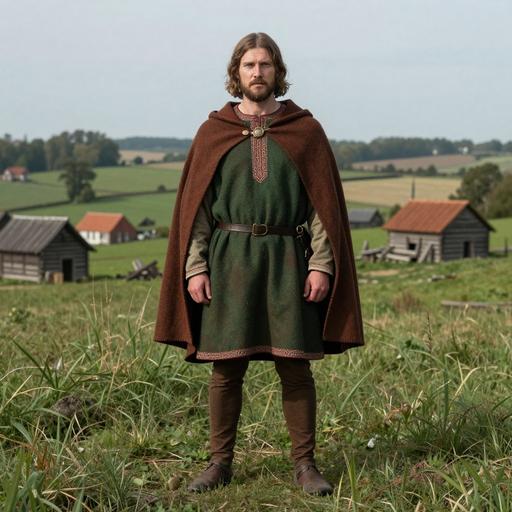
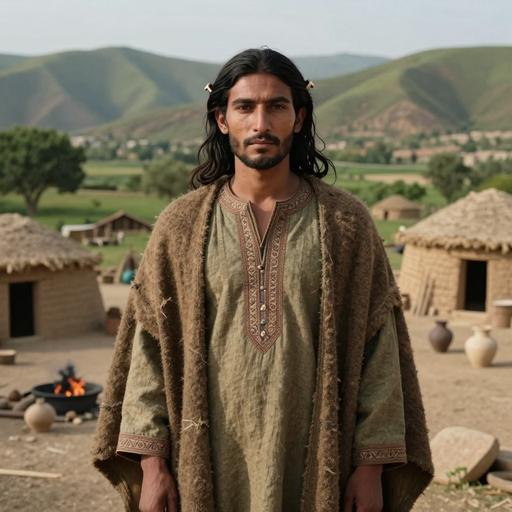
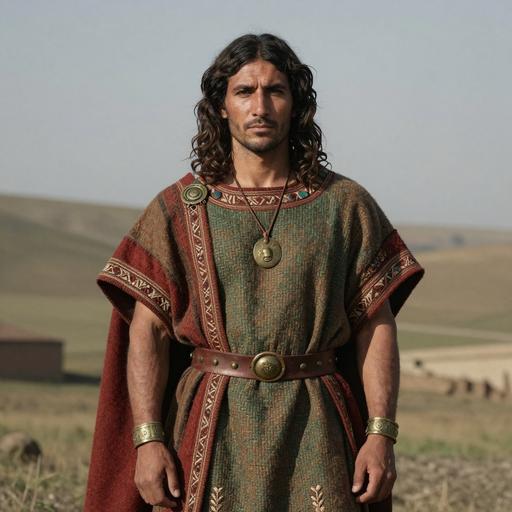
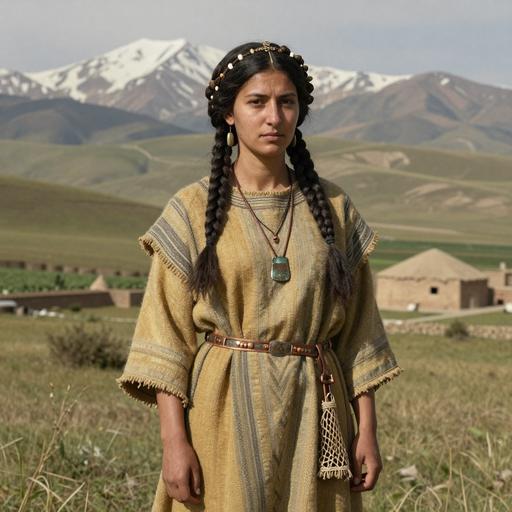
Portrait of ancient individual I10252 from Armenia, dated 100 BCE - 300 CE
I10252
Armenia Ancient Armenia 100 BCE - 300 CE Ancient Armenian U7b Direct
Portrait of ancient individual I10252 from Armenia, dated 100 BCE - 300 CE
I10252
Armenia Ancient Armenia 100 BCE - 300 CE Ancient Armenian U7b Direct
Portrait of ancient individual I4531 from Turkey, dated 227 CE - 337 CE
I4531
Turkey Roman Period 1 Turkey 227 CE - 337 CE Early Roman Anatolia U7b Direct
Portrait of ancient individual C3362 from China, dated 390 BCE - 206 BCE
C3362
China Iron Age Axile, Xinjiang, China 390 BCE - 206 BCE Axile Culture U7b Direct
Portrait of ancient individual I11708 from Austria, dated 500 BCE - 200 BCE
I11708
Austria Iron Age La Tène Culture, Austria 500 BCE - 200 BCE La Tène Culture U7b Direct
Portrait of ancient individual HNJ004 from Hungary, dated 650 CE - 750 CE
HNJ004
Hungary Middle Avar Period Hungary 650 CE - 750 CE Avar Culture U7b Direct
Portrait of ancient individual GRO007 from Netherlands, dated 900 CE - 1100 CE
GRO007
Netherlands Saxon Medieval Groningen, Netherlands 900 CE - 1100 CE Saxon Culture U7b Direct
Portrait of ancient individual I12465 from Pakistan, dated 1000 BCE - 800 BCE
I12465
Pakistan The Pakistan Katelai Iron Age Culture 1000 BCE - 800 BCE Katelai Culture U7b Direct
Portrait of ancient individual I12147 from Pakistan, dated 1203 BCE - 1014 BCE
I12147
Pakistan The Pakistan Katelai Iron Age Culture 1203 BCE - 1014 BCE Katelai Culture U7b Direct
Portrait of ancient individual geo005 from Georgia, dated 1260 BCE - 1051 BCE
geo005
Georgia Didnauri Culture of Georgia 1260 BCE - 1051 BCE Didnauri U7b Direct
Chapter VI

Carrier Distribution Map

Geographic distribution of 15 ancient DNA samples carrying haplogroup U7B

Time Period Filter
All Time Periods
Showing all samples
Each marker represents an ancient individual
Chapter VII

Temporal Distribution

Distribution of carriers across archaeological periods

Chapter VIII

Geographic Distribution

Distribution of carriers by country of origin

Chapter IX

Country × Era Distribution

Cross-tabulation of carrier countries and archaeological periods

Data

Data & Provenance

Source information and data quality

Last Updated 2026-02-16
Confidence Score 50/100
Coverage Low
Data Source

We use the latest phylotree for MTDNA haplogroup classification and data.