Menu
mtDNA Haplogroup • Maternal Lineage

U8A

mtDNA Haplogroup U8A

~45,000 years ago
Near East (with dispersal into South Asia)
2 subclades
20 ancient samples
Scroll to explore
Chapter I

The Story

The journey of mtDNA haplogroup U8A

Origins and Evolution

Haplogroup U8a is a subclade of mitochondrial haplogroup U8, itself a branch of the broader haplogroup U. U8 likely arose during the Upper Paleolithic after the major Out-of-Africa dispersals and shows an early Near Eastern connection before splitting into sublineages. U8a represents one of these early offshoots that reached or differentiated within South Asia and nearby regions. Based on its phylogenetic position and comparative molecular-clock estimates for U and U8 lineages, a plausible time depth for U8a's origin is in the range of the Late Upper Paleolithic (~40–50 kya), with subsequent local diversification and persistence into the Holocene.

Subclades

U8a itself is a defined sub-branch under U8. Its closest relatives within the U8 clade include U8b (which gave rise to well-known downstream branches such as haplogroup K) and other minor U8-derived lineages. Compared with U8b—which is better represented in early European contexts—U8a shows a distribution skewed toward South Asia and western Asia. The internal diversity of U8a is relatively limited in modern datasets, consistent with a small effective population size or localized demographic history after its initial spread.

Geographical Distribution

Although haplogroup U8 (the parent clade) has a broad footprint across Europe, the Near East, the Caucasus, and North Africa, U8a is most frequently reported from South Asian populations and some Near Eastern and Caucasus samples. Low-frequency occurrences are documented in southern European populations (including parts of the Iberian Peninsula) and in North Africa, reflecting prehistoric and historic gene flow across Eurasia and along Mediterranean/Near Eastern corridors. Ancient DNA identifications (including the 14 aDNA samples referenced) indicate U8 lineages have appeared intermittently in archaeological contexts, confirming U8's long-standing presence across these regions.

Historical and Cultural Significance

U8a contributes to the picture of maternal lineages that accompanied Paleolithic and later Holocene population movements between the Near East, South Asia, and parts of Europe. While not a hallmark lineage of major Bronze Age steppe migrations (which are more often associated with other mtDNA markers), U8a can be found in contexts reflecting local continuity and the survival of Paleolithic–Mesolithic maternal ancestries into Neolithic and later periods. In South Asia, U8a's presence is often interpreted as part of the deep indigenous maternal pool supplemented by Near Eastern interactions during the Late Pleistocene and Holocene.

Conclusion

U8a is an old, geographically informative mtDNA subclade that helps illuminate maternal connections between the Near East and South Asia, and to a lesser extent into Europe and North Africa. Its relatively low frequency but deep time depth make it useful for studies of ancient population structure, regional continuity, and long-range prehistoric dispersals. Continued ancient DNA sampling, especially in South Asia and the Near East, will refine the chronology and migration pathways associated with U8a.

Key Points

  • Origins and Evolution
  • Subclades
  • Geographical Distribution
  • Historical and Cultural Significance
  • Conclusion
Chapter II

Tree & Relationships

Phylogenetic context and subclades

Evolution Path

This haplogroup's evolutionary journey from its earliest ancestor to the present.

Steps Haplogroup Age Estimate Archaeology Era Time Passed Immediate Descendants Tested Modern Descendants Ancient Connections
1 U8A Current ~45,000 years ago 🦴 Paleolithic 45,000 years 2 23 20
2 U8 ~50,000 years ago 🦴 Paleolithic 50,000 years 3 58 5
3 U ~46,000 years ago 🦴 Paleolithic 46,000 years 12 2,835 110
4 R ~60,000 years ago 🦴 Paleolithic 60,000 years 12 10,987 57
5 N ~60,000 years ago 🦴 Paleolithic 60,000 years 15 15,452 13
6 L3 ~70,000 years ago 🦴 Paleolithic 70,000 years 11 17,621 6
7 L ~160,000 years ago 🦴 Paleolithic 160,000 years 7 18,987 5

Siblings (2)

Other branches from the same parent haplogroup

Chapter III

Where in the World

Geographic distribution and modern presence

Place of Origin

Near East (with dispersal into South Asia)

Modern Distribution

The populations where mtDNA haplogroup U8a is found include:

  1. South Asian populations (India, Pakistan, Sri Lanka)
  2. Near Eastern populations (Anatolia, Levant)
  3. Caucasus populations (Armenia, Georgia, Azerbaijan)
  4. Southern European populations (Iberian Peninsula and Mediterranean Europe) at low frequencies
  5. North African populations (coastal groups) at low frequencies
CHAPTER IV

When in Time

Your haplogroup in the context of human history

~50k years ago

Upper Paleolithic

Advanced tool-making, art, and cultural explosion

~45k years ago

Haplogroup U8A

Your mtDNA haplogroup emerged in Near East (with dispersal into South Asia)

Near East (with dispersal into South Asia)
~20k years ago

Last Glacial Maximum

Peak of the last ice age, populations isolated

~10k years ago

Neolithic Revolution

Agriculture begins, settled communities form

~5k years ago

Bronze Age

Metalworking, writing, and early civilizations

~3k years ago

Iron Age

Iron tools, expanded trade networks

~2k years ago

Classical Antiquity

Greek and Roman civilizations flourish

Present

Present Day

Modern era

Your Haplogroup
Historical Era
Chapter IV-B

Linked Cultures

Ancient cultures associated with mtDNA haplogroup U8A

Cultural Heritage

These ancient cultures have been linked to haplogroup U8A based on matching ancient DNA samples from archaeological excavations. The presence of this haplogroup in these cultures provides insights into the migrations and population movements of populations carrying this haplogroup.

Brillenhohle Burkhardtshohle Hohle Fels Magdalenian Portuguese Neolithic Solutrean
Culture assignments are based on archaeological context of ancient DNA samples and may represent regional associations during specific time periods.
Chapter V

Sample Catalog

Top 20 ancient DNA samples directly related to haplogroup U8A or parent clades

20 / 20 samples
Portrait Sample Country Era Date Culture mtDNA Match
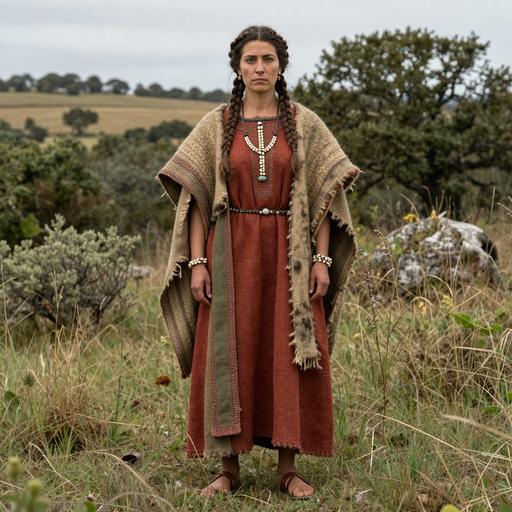
Portrait of ancient individual GLN29-A from France, dated 300 BCE - 100 BCE
GLN29-A
France Iron Age Culture of Yonne 300 BCE - 100 BCE Yonne Culture U8a1 Direct
Portrait of ancient individual VK365 from Denmark, dated 900 CE - 1000 CE
VK365
Denmark Viking Age Denmark 900 CE - 1000 CE Viking Denmark U8a2 Direct
Portrait of ancient individual VK365 from Denmark, dated 900 CE - 1000 CE
VK365
Denmark The Viking Age 900 CE - 1000 CE U8a2 Direct
Portrait of ancient individual I2448 from United Kingdom, dated 1500 BCE - 1000 BCE
I2448
United Kingdom Middle Bronze Age England 1500 BCE - 1000 BCE British Middle Bronze Age U8a2 Direct
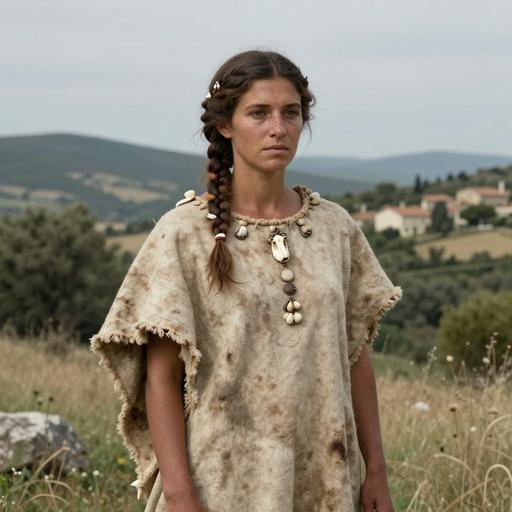
Portrait of ancient individual LD270 from Portugal, dated 2566 BCE - 2305 BCE
LD270
Portugal Middle Neolithic Portugal 2566 BCE - 2305 BCE Portuguese Neolithic U8a Direct
Portrait of ancient individual LD270 from Portugal, dated 2566 BCE - 2305 BCE
LD270
Portugal Chalcolithic Iberia 2566 BCE - 2305 BCE U8a Direct
Portrait of ancient individual FLR012 from France, dated 3985 BCE - 3801 BCE
FLR012
France Neolithic Normandy, France 3985 BCE - 3801 BCE Normandy Neolithic U8a1 Direct
Portrait of ancient individual LBR004 from France, dated 4984 BCE - 4722 BCE
LBR004
France Early to Middle Neolithic France 4984 BCE - 4722 BCE Linear Pottery Culture U8a1 Direct
Portrait of ancient individual HohleFels79 from Germany, dated 13101 BCE - 12356 BCE
HohleFels79
Germany Hohle Fels 79 Site, Germany 13101 BCE - 12356 BCE Hohle Fels U8a Direct
Portrait of ancient individual HohleFels79 from Germany, dated 13101 BCE - 12356 BCE
HohleFels79
Germany Magdalenian Paleolithic 13101 BCE - 12356 BCE U8a Direct
Chapter VI

Carrier Distribution Map

Geographic distribution of 20 ancient DNA samples carrying haplogroup U8A

Time Period Filter
All Time Periods
Showing all samples
Each marker represents an ancient individual
Chapter VII

Temporal Distribution

Distribution of carriers across archaeological periods

Chapter VIII

Geographic Distribution

Distribution of carriers by country of origin

Chapter IX

Country × Era Distribution

Cross-tabulation of carrier countries and archaeological periods

Data

Data & Provenance

Source information and data quality

Last Updated 2026-02-16
Confidence Score 50/100
Coverage Low
Data Source

We use the latest phylotree for MTDNA haplogroup classification and data.