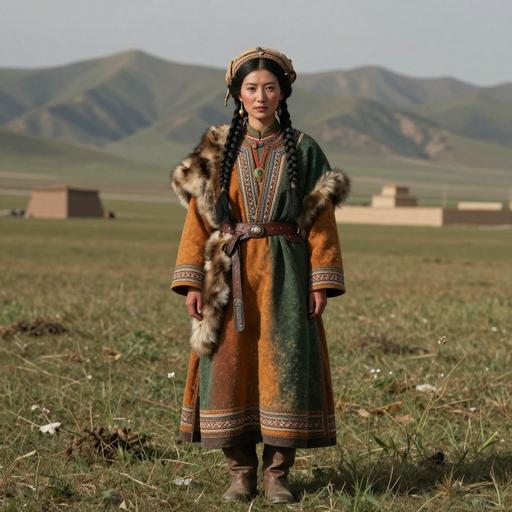
The Story
The journey of mtDNA haplogroup U8A1
Origins and Evolution
Haplogroup U8a1 is a downstream branch of mtDNA haplogroup U8a, itself derived from U8 and ultimately from macro-haplogroup U. The parent clade U8a is generally dated to the Upper Paleolithic (around 40–50 kya) with a likely Near Eastern origin and subsequent dispersal into South Asia. U8a1 represents a later diversification within this lineage, plausibly arising during the Late Upper Paleolithic to the Last Glacial Maximum (roughly ~25 kya in our estimate), when human populations in West Eurasia and South Asia underwent regional differentiation.
Phylogenetically, U8a1 sits as a defined subclade beneath U8a and retains many of the deep-rooted characteristics of U lineages (low overall mutation rates relative to some other mitochondrial branches and long-term persistence in relict populations). Because U8a1 is uncommon and sparsely sampled in ancient DNA datasets, estimates of its time depth and early geographic movements come primarily from phylogeographic inference and patterns seen in related U subclades.
Subclades (if applicable)
At present U8a1 appears to be a narrowly defined subclade with limited downstream diversity reported in public databases and literature. Where additional mutational branches have been observed, they are often at very low frequency and confined to localized populations in South Asia or the Near East. Continued targeted sequencing of modern and ancient samples may reveal further internal structure (e.g., U8a1a, U8a1b) but current evidence indicates U8a1 is a relatively deep, low-diversity lineage.
Geographical Distribution
Modern distribution: U8a1 is most frequently observed in South Asian populations (India, Pakistan, Sri Lanka) and in parts of the Near East and the Caucasus at low-to-moderate frequencies. It also occurs at low frequencies in southern European Mediterranean populations (including parts of Iberia) and in coastal North Africa. The pattern suggests an origin in the Near East with early dispersal into South Asia and occasional westward movements into Europe and North Africa.
Ancient DNA: U8a1 has been reported in a small number of ancient samples (three in the database referenced), indicating that the haplogroup was present in past populations across at least some of these regions. However, the sparse ancient record limits precise reconstructions: U8a1 appears to have been present in the Late Pleistocene/Epipaleolithic and persisted through Holocene transitions in certain local populations.
Historical and Cultural Significance
Because U8a1 is a low-frequency lineage, its historical signature is subtle compared with more common maternal haplogroups. Nevertheless, U8a1 can serve as a marker for deep maternal continuity linking the Near East and South Asia. Its presence in the Caucasus and Mediterranean fringe suggests interaction or movement along coastal and overland corridors connecting these regions.
Associations with archaeological cultures are tentative given limited ancient DNA points, but phylogeographic inference supports that U8a1-bearing lineages were present in populations affected by major episodes such as post-glacial re-expansions, Early Holocene contact between Near Eastern and South Asian groups, and later Neolithic and Bronze Age demographic events that redistributed maternal lineages across West Eurasia.
Conclusion
U8a1 is an informative, low-frequency maternal lineage descended from U8a, reflecting deep Upper Paleolithic roots in the Near East with subsequent dispersal into South Asia and sporadic presence in the Caucasus, southern Europe, and North Africa. Its scarcity in modern and ancient datasets makes it a valuable marker for studies of rare-lineage persistence and long-range Paleolithic–Holocene connections, but also means conclusions must remain cautious until more sequences from targeted regions and time periods become available.
Key Points
- Origins and Evolution
- Subclades (if applicable)
- Geographical Distribution
- Historical and Cultural Significance
- Conclusion