Menu
mtDNA Haplogroup • Maternal Lineage

U8B1B

mtDNA Haplogroup U8B1B

~18,000 years ago
Near East / West Asia
3 subclades
40 ancient samples
Scroll to explore
Chapter I

The Story

The journey of mtDNA haplogroup U8B1B

Origins and Evolution

mtDNA haplogroup U8B1B is a subclade within the broader U8/U phylogeny, deriving from U8B1, a lineage that likely formed in the Upper Paleolithic in the Near East / West Asia. Given its position as a sublineage of U8B1 (parent estimated ~25 kya), U8B1B likely coalesced in the Late Upper Paleolithic to the early post-glacial period (estimated here around ~18 kya) as populations moved and restructured after the Last Glacial Maximum.

The formation of U8B1B fits the general pattern of many West Eurasian maternal lineages: an origin in the Near East or adjacent regions followed by dispersal into southern and western Europe. Because U8B1 and its derivatives are relatively rare compared with major European haplogroups (e.g., H, J, K), U8B1B is best characterized as a low-frequency lineage that persisted in refugial or coastal populations and was carried forward into later prehistoric societies.

Subclades

As a named subclade (U8B1B) it sits beneath U8B1 in the mtDNA tree. The internal topology and any further sub-branches of U8B1B are sparsely represented in public phylogenies and ancient DNA datasets, implying either a relatively limited number of downstream branches or under-sampling in modern and ancient sequencing projects. Where available, high-resolution mitogenomes are required to resolve internal diversity and to test for geographically restricted sub-branches (for example, island-specific lineages in Sardinia or localized Iberian variants).

Geographical Distribution

Modern and ancient occurrences of U8B1B (inferred from its parental pattern and available detections) concentrate on:

  • Iberian Peninsula (Spain and Portugal), including some insular contexts, where U8B1-derived lineages are more frequently observed among modern and ancient samples.
  • Italy, including Sardinia and southern Italy, where rare U8B1 derivatives persist at low to moderate frequencies in modern populations and occasionally appear in archaeological contexts.
  • Southern and parts of Western Europe more broadly (e.g., southern France and some Balkan localities) at low frequencies.
  • Near East / Anatolia and the Caucasus, where the deeper U8/U8B diversity indicates a likely source region and sporadic low-frequency persistence.
  • North Africa (Maghreb) at low frequencies, plausibly reflecting prehistoric gene flow across the Mediterranean and later historic contacts.

Ancient DNA finds assign U8B1 and related lineages to Mesolithic and early post-glacial hunter-gatherer contexts in Europe, with occasional continuities into Neolithic and later prehistoric contexts. For U8B1B specifically, detections are comparatively rare in public aDNA databases, consistent with a low-frequency but persistent maternal legacy.

Historical and Cultural Significance

Because U8B1B is relatively uncommon, it rarely defines whole archaeological cultures, but its distribution pattern offers clues to population history:

  • The lineage is consistent with a Near Eastern/West Asian origin and subsequent westward dispersal into southern Europe during post-glacial recolonization or through later movements (Neolithic and post-Neolithic gene flow).
  • Its presence in Iberia and Sardinia can reflect survival in refugial populations during the Late Pleistocene and/or incorporation into early farming and later prehistoric communities in those regions.
  • In archaeological terms, U8B1B may appear sporadically in Mesolithic hunter-gatherer remains and then persist at low frequency through Neolithic farmer contexts and Bronze Age populations in southern Europe, indicating continuity and admixture rather than a sweeping demographic replacement.

Conclusion

U8B1B is a low-frequency but informative maternal lineage whose phylogenetic position beneath U8B1 ties it to a Near Eastern / West Asian origin in the Upper Paleolithic with subsequent establishment in southern and parts of western Europe. It exemplifies the patchy geographic persistence of some Paleolithic-derived mtDNA lineages: rare today but preserved in pockets (Iberia, Italy, Sardinia, parts of the Near East and Caucasus) and occasionally recovered in ancient DNA, where it contributes to understanding regional continuity and complex prehistoric admixture.

Key Points

  • Origins and Evolution
  • Subclades
  • Geographical Distribution
  • Historical and Cultural Significance
  • Conclusion
Chapter II

Tree & Relationships

Phylogenetic context and subclades

Evolution Path

This haplogroup's evolutionary journey from its earliest ancestor to the present.

Steps Haplogroup Age Estimate Archaeology Era Time Passed Immediate Descendants Tested Modern Descendants Ancient Connections
1 U8B1B Current ~18,000 years ago 🏹 Mesolithic 18,000 years 3 7 40
2 U8B1 ~25,000 years ago 🦴 Paleolithic 25,000 years 2 33 0
3 U8B ~50,000 years ago 🦴 Paleolithic 50,000 years 1 33 1
4 U8 ~50,000 years ago 🦴 Paleolithic 50,000 years 3 58 5
5 U ~46,000 years ago 🦴 Paleolithic 46,000 years 12 2,835 110
6 R ~60,000 years ago 🦴 Paleolithic 60,000 years 12 10,987 57
7 N ~60,000 years ago 🦴 Paleolithic 60,000 years 15 15,452 13
8 L3 ~70,000 years ago 🦴 Paleolithic 70,000 years 11 17,621 6
9 L ~160,000 years ago 🦴 Paleolithic 160,000 years 7 18,987 5

Siblings (1)

Other branches from the same parent haplogroup

Chapter III

Where in the World

Geographic distribution and modern presence

Place of Origin

Near East / West Asia

Modern Distribution

The populations where mtDNA haplogroup U8B1B is found include:

  1. Iberian Peninsula (Spain, Portugal)
  2. Italy (including Sardinia and southern mainland Italy)
  3. Southern and parts of Western Europe (southern France, some Balkan localities)
  4. Near East / Anatolia (Turkey, Levantine zones)
  5. Caucasus populations (Armenia, Georgia, Azerbaijan)
  6. North Africa (Morocco, Algeria, Tunisia) at low frequencies
  7. Ancient European hunter-gatherer and early post-glacial contexts (sparse aDNA detections)
CHAPTER IV

When in Time

Your haplogroup in the context of human history

~20k years ago

Last Glacial Maximum

Peak of the last ice age, populations isolated

~18k years ago

Haplogroup U8B1B

Your mtDNA haplogroup emerged in Near East / West Asia

Near East / West Asia
~10k years ago

Neolithic Revolution

Agriculture begins, settled communities form

~5k years ago

Bronze Age

Metalworking, writing, and early civilizations

~3k years ago

Iron Age

Iron tools, expanded trade networks

~2k years ago

Classical Antiquity

Greek and Roman civilizations flourish

Present

Present Day

Modern era

Your Haplogroup
Historical Era
Chapter IV-B

Linked Cultures

Ancient cultures associated with mtDNA haplogroup U8B1B

Cultural Heritage

These ancient cultures have been linked to haplogroup U8B1B based on matching ancient DNA samples from archaeological excavations. The presence of this haplogroup in these cultures provides insights into the migrations and population movements of populations carrying this haplogroup.

British Megalithic French Neolithic Iron Gates Culture Italian Neolithic Linear Pottery Culture Middle Neolithic French Sopot Culture Szatmár Group Tiszadob Group Trypillia Culture
Culture assignments are based on archaeological context of ancient DNA samples and may represent regional associations during specific time periods.
Chapter V

Sample Catalog

Top 40 ancient DNA samples directly related to haplogroup U8B1B or parent clades

40 / 40 samples
Portrait Sample Country Era Date Culture mtDNA Match
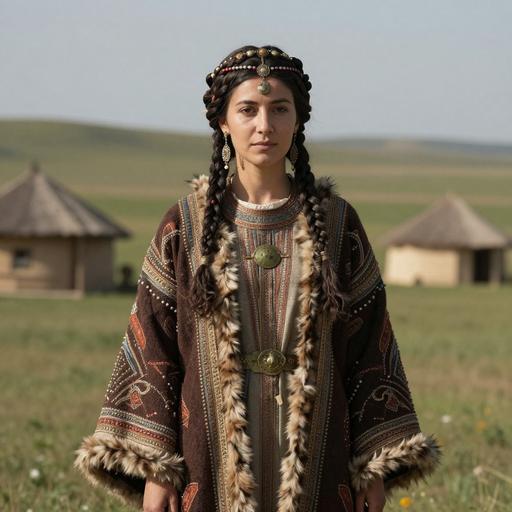
Portrait of ancient individual I18833 from Hungary, dated 320 BCE - 200 BCE
I18833
Hungary The La Tene Culture in Hungary 320 BCE - 200 BCE La Tene Culture U8b1b2 Direct
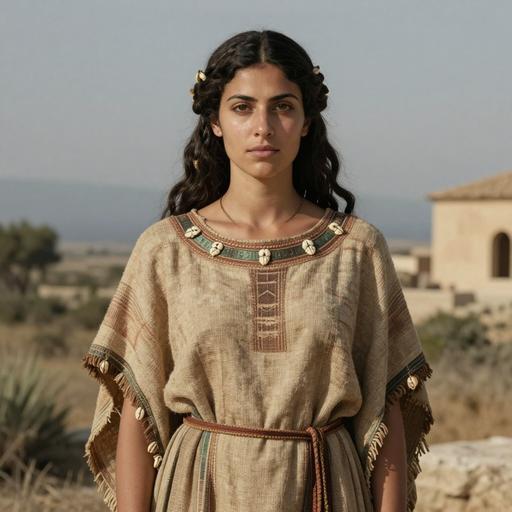
Portrait of ancient individual MA2198 from Turkey, dated 335 BCE - 30 BCE
MA2198
Turkey Hellenistic Turkey 335 BCE - 30 BCE Hellenistic Anatolia U8b1b2 Direct
Portrait of ancient individual MA2198 from Turkey, dated 335 BCE - 30 BCE
MA2198
Turkey Iron Age Anatolia 335 BCE - 30 BCE U8b1b2 Direct
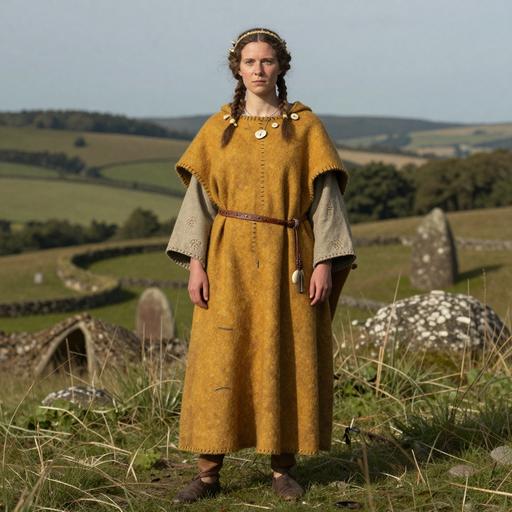
Portrait of ancient individual IND004 from Germany, dated 400 CE - 800 CE
IND004
Germany Saxon Early Medieval Alt Inden, Germany 400 CE - 800 CE Saxon Culture U8b1b1 Direct
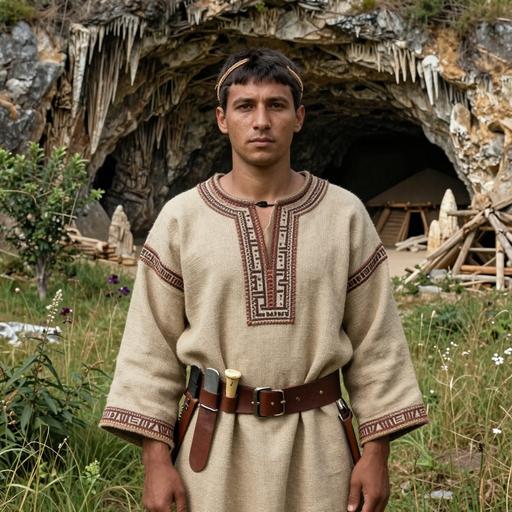
Portrait of ancient individual ORD004 from Italy, dated 516 BCE - 393 BCE
ORD004
Italy Daunian Culture Salapia, Italy 516 BCE - 393 BCE Daunian Culture U8b1b1 Direct
Portrait of ancient individual KUP020 from Hungary, dated 580 CE - 804 CE
KUP020
Hungary Avar Khaganate 580 CE - 804 CE Avar U8b1b1 Direct
Portrait of ancient individual I26765 from Croatia, dated 600 CE - 800 CE
I26765
Croatia Late Antique Croatia 600 CE - 800 CE Late Antique U8b1b1 Direct
Portrait of ancient individual I17962 from Greece, dated 773 BCE - 544 BCE
I17962
Greece Iron Age Delphi, Greece 773 BCE - 544 BCE Delphic U8b1b Direct
Portrait of ancient individual SZA-29 from Hungary, dated 900 CE - 1000 CE
SZA-29
Hungary Conqueror Commoner Hungary 900 CE - 1000 CE Magyar Commoner Culture U8b1b Direct
Portrait of ancient individual I18720 from Croatia, dated 1500 BCE - 800 BCE
I18720
Croatia Middle to Late Bronze Age Croatia 1500 BCE - 800 BCE Croatian Bronze Age U8b1b1 Direct
Chapter VI

Carrier Distribution Map

Geographic distribution of 40 ancient DNA samples carrying haplogroup U8B1B

Time Period Filter
All Time Periods
Showing all samples
Each marker represents an ancient individual
Chapter VII

Temporal Distribution

Distribution of carriers across archaeological periods

Chapter VIII

Geographic Distribution

Distribution of carriers by country of origin

Chapter IX

Country × Era Distribution

Cross-tabulation of carrier countries and archaeological periods

Data

Data & Provenance

Source information and data quality

Last Updated 2026-02-16
Confidence Score 50/100
Coverage Low
Data Source

We use the latest phylotree for MTDNA haplogroup classification and data.