Menu
mtDNA Haplogroup • Maternal Lineage

U8B1A

mtDNA Haplogroup U8B1A

~12,000 years ago
Western Mediterranean (Iberia / Italy)
2 subclades
20 ancient samples
Scroll to explore
Chapter I

The Story

The journey of mtDNA haplogroup U8B1A

Origins and Evolution

Haplogroup U8B1A is a downstream branch of U8B1, itself nested within U8 and ultimately the broader haplogroup U. The parent clade U8B1 likely formed in the Near East/West Asia during the Upper Paleolithic (~25 kya) and entered Europe with Paleolithic populations. U8B1A appears to have diversified later, plausibly during the Late Glacial to early Holocene (approximately 12 kya, with wide confidence intervals), as small founder lineages established in the western Mediterranean. The timing and geographic placement reflect a common pattern where Near Eastern-derived maternal lineages gave rise to locally differentiated subclades after entry into southern Europe.

Genetic diversity within U8B1A is low compared with widespread European haplogroups, consistent with a localized origin and long-term presence at modest frequencies rather than a major continent-scale expansion.

Subclades

U8B1A itself is a subclade of U8B1; published population surveys and ancient DNA studies report only a few downstream branches or private mutations attributable to U8B1A, indicating limited internal substructure. Where detected, the diversity suggests early local differentiation (for example, island populations such as Sardinia can show unique U8B1A variants). Because U8B1A is uncommon, comprehensive resolution of subordinate branches awaits larger high-coverage mitogenome sampling from western Mediterranean populations and ancient remains.

Geographical Distribution

Modern detections of U8B1A concentrate in the western Mediterranean and adjacent regions: Iberian Peninsula (Spain and Portugal), Sardinia and southern Italy, and to lesser extents in parts of southern France, the broader western Mediterranean, and some Near Eastern/Caucasus populations. Low-frequency occurrences have also been reported in North Africa, consistent with Mediterranean gene flow across the sea.

In ancient DNA (aDNA), U8B1 (and by extension related sublineages) appears sporadically in European hunter-gatherer contexts; U8B1A itself has been identified in a small number of archaeological samples (several secure detections in current databases), supporting continuity of this lineage from the Late Pleistocene/Early Holocene into present-day western Mediterranean populations.

Historical and Cultural Significance

Because U8B1A is relatively rare and regionally concentrated, its primary value is as a marker of deep maternal continuity in the western Mediterranean rather than as evidence for large-scale migrations. Its presence in Mesolithic contexts and persistence into the Neolithic and later periods suggests survival of pre-farming maternal lineages through the transition to agriculture in southern Europe. U8B1A may therefore help trace local hunter-gatherer ancestry, postglacial recolonization routes along the Mediterranean, and later Mediterranean interactions (including limited gene flow with North Africa and the Near East).

U8B1A is not typically associated with major Bronze Age expansions (e.g., steppe-derived movements) but can be found at low levels in populations that also carry lineages introduced or shifted in frequency during the Neolithic and Bronze Age.

Conclusion

U8B1A is a geographically focused, low-diversity mtDNA subclade derived from U8B1, probably arising in the western Mediterranean after the Last Glacial Maximum. Its modern distribution and aDNA occurrences point to continuity of maternal lines in Iberia, Sardinia and southern Italy from the Mesolithic into historical times, making it a useful marker for studies of regional continuity and localized demographic history. Future mitogenome sampling and targeted ancient DNA recovery will clarify finer substructure and exact timing of its diversification.

Key Points

  • Origins and Evolution
  • Subclades
  • Geographical Distribution
  • Historical and Cultural Significance
  • Conclusion
Chapter II

Tree & Relationships

Phylogenetic context and subclades

Evolution Path

This haplogroup's evolutionary journey from its earliest ancestor to the present.

Steps Haplogroup Age Estimate Archaeology Era Time Passed Immediate Descendants Tested Modern Descendants Ancient Connections
1 U8B1A Current ~12,000 years ago 🌾 Neolithic 12,000 years 2 25 20
2 U8B1 ~25,000 years ago 🦴 Paleolithic 25,000 years 2 33 0
3 U8B ~50,000 years ago 🦴 Paleolithic 50,000 years 1 33 1
4 U8 ~50,000 years ago 🦴 Paleolithic 50,000 years 3 58 5
5 U ~46,000 years ago 🦴 Paleolithic 46,000 years 12 2,835 110
6 R ~60,000 years ago 🦴 Paleolithic 60,000 years 12 10,987 57
7 N ~60,000 years ago 🦴 Paleolithic 60,000 years 15 15,452 13
8 L3 ~70,000 years ago 🦴 Paleolithic 70,000 years 11 17,621 6
9 L ~160,000 years ago 🦴 Paleolithic 160,000 years 7 18,987 5

Siblings (1)

Other branches from the same parent haplogroup

Chapter III

Where in the World

Geographic distribution and modern presence

Place of Origin

Western Mediterranean (Iberia / Italy)

Modern Distribution

The populations where mtDNA haplogroup U8B1A is found include:

  1. Iberian Peninsula (Spain, Portugal)
  2. Italy (including Sardinia and southern mainland Italy)
  3. Southern and Western Europe more broadly (southern France, parts of the Balkans at low frequencies)
  4. Near East / Anatolia (sporadic detections)
  5. Caucasus populations (rare occurrences)
  6. North Africa (Maghreb, low frequencies consistent with Mediterranean contact)
  7. Ancient European hunter-gatherer contexts (several aDNA detections)
CHAPTER IV

When in Time

Your haplogroup in the context of human history

~12k years ago

Haplogroup U8B1A

Your mtDNA haplogroup emerged in Western Mediterranean (Iberia / Italy)

Western Mediterranean (Iberia / Italy)
~10k years ago

Neolithic Revolution

Agriculture begins, settled communities form

~5k years ago

Bronze Age

Metalworking, writing, and early civilizations

~3k years ago

Iron Age

Iron tools, expanded trade networks

~2k years ago

Classical Antiquity

Greek and Roman civilizations flourish

Present

Present Day

Modern era

Your Haplogroup
Historical Era
Chapter IV-B

Linked Cultures

Ancient cultures associated with mtDNA haplogroup U8B1A

Cultural Heritage

These ancient cultures have been linked to haplogroup U8B1A based on matching ancient DNA samples from archaeological excavations. The presence of this haplogroup in these cultures provides insights into the migrations and population movements of populations carrying this haplogroup.

Armenian LBA-EIA Baden Culture Bulgarian EIA Czech Neolithic Early Bronze Anatolia Gonur Culture Linear Pottery Culture Middle Bronze Age Anatolia Mycenaean Popova Culture PPNB Roopkund Culture Udegram Culture
Culture assignments are based on archaeological context of ancient DNA samples and may represent regional associations during specific time periods.
Chapter V

Sample Catalog

Top 20 ancient DNA samples directly related to haplogroup U8B1A or parent clades

20 / 20 samples
Portrait Sample Country Era Date Culture mtDNA Match
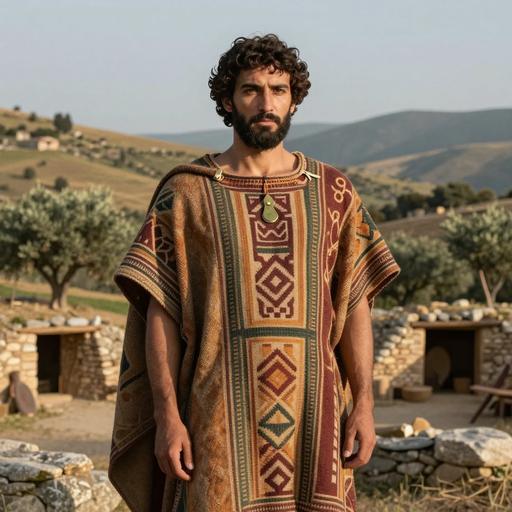
Portrait of ancient individual I6547 from Pakistan, dated 200 BCE - 100 CE
I6547
Pakistan Barikot Iron Age Settlement in Swat Valley, Pakistan 200 BCE - 100 CE Barikot Culture U8b1a1 Direct
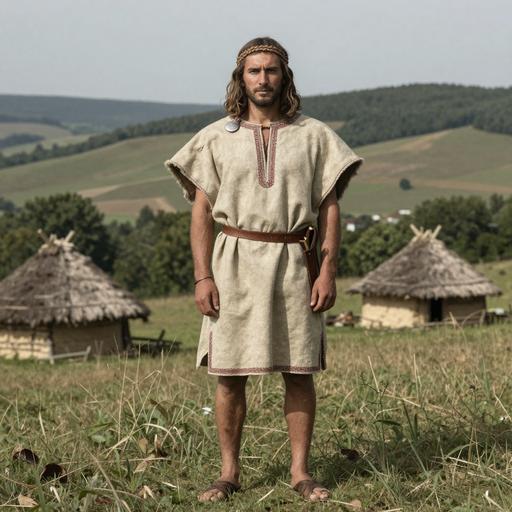
Portrait of ancient individual I34290 from Croatia, dated 300 CE - 500 CE
I34290
Croatia Late Antique Croatia 300 CE - 500 CE Late Antique U8b1a1 Direct
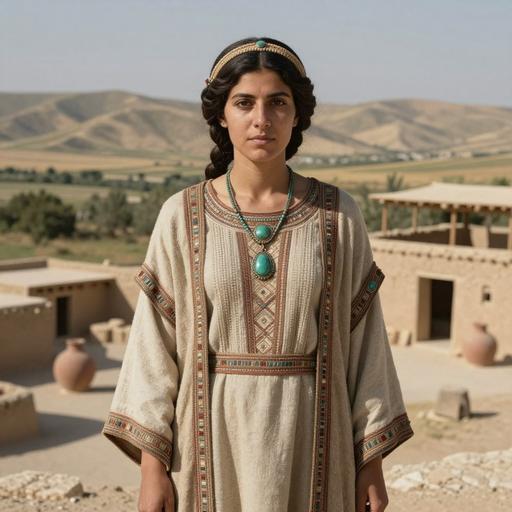
Portrait of ancient individual I8369 from Turkey, dated 500 CE - 700 CE
I8369
Turkey Byzantine Turkey 500 CE - 700 CE Byzantine Anatolia U8b1a1 Direct
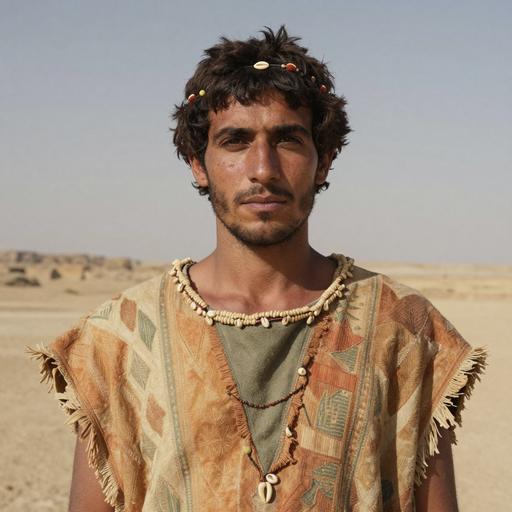
Portrait of ancient individual I0791 from United Kingdom, dated 600 CE - 950 CE
I0791
United Kingdom Early Medieval Saxon England 600 CE - 950 CE Anglo-Saxon U8b1a1 Direct
Portrait of ancient individual I28388 from Croatia, dated 600 CE - 800 CE
I28388
Croatia Avar Period Croatia 600 CE - 800 CE Avar U8b1a1 Direct
Portrait of ancient individual I20231 from Turkey, dated 750 BCE - 480 BCE
I20231
Turkey Archaic SubGeometric Turkey 750 BCE - 480 BCE Anatolian Geometric U8b1a2 Direct
Portrait of ancient individual I6946 from India, dated 772 CE - 893 CE
I6946
India Roopkund Skeletons A 772 CE - 893 CE Roopkund Culture U8b1a1 Direct
Portrait of ancient individual I19368 from Greece, dated 1070 BCE - 950 BCE
I19368
Greece Mycenaean Greece 1070 BCE - 950 BCE Mycenaean U8b1a Direct
Portrait of ancient individual I20181 from Bulgaria, dated 1100 BCE - 500 BCE
I20181
Bulgaria Early Iron Age Bulgaria 1100 BCE - 500 BCE Bulgarian EIA U8b1a1 Direct
Portrait of ancient individual I6194 from Pakistan, dated 1200 BCE - 800 BCE
I6194
Pakistan Udegram Iron Age Fortified Settlement in Swat Valley, Pakistan 1200 BCE - 800 BCE Udegram Culture U8b1a Direct
Chapter VI

Carrier Distribution Map

Geographic distribution of 20 ancient DNA samples carrying haplogroup U8B1A

Time Period Filter
All Time Periods
Showing all samples
Each marker represents an ancient individual
Chapter VII

Temporal Distribution

Distribution of carriers across archaeological periods

Chapter VIII

Geographic Distribution

Distribution of carriers by country of origin

Chapter IX

Country × Era Distribution

Cross-tabulation of carrier countries and archaeological periods

Data

Data & Provenance

Source information and data quality

Last Updated 2026-02-16
Confidence Score 50/100
Coverage Low
Data Source

We use the latest phylotree for MTDNA haplogroup classification and data.