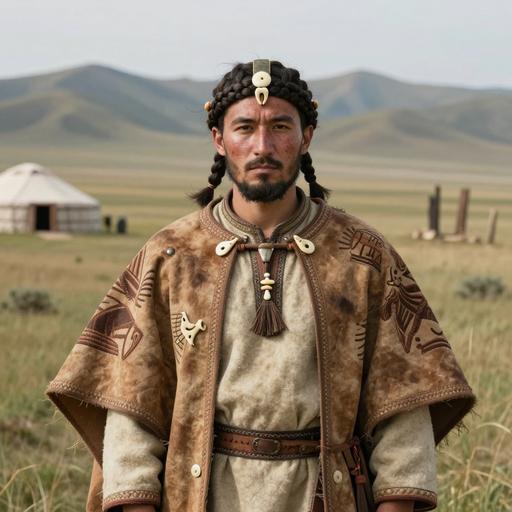
The Story
The journey of mtDNA haplogroup W1I1B
Origins and Evolution
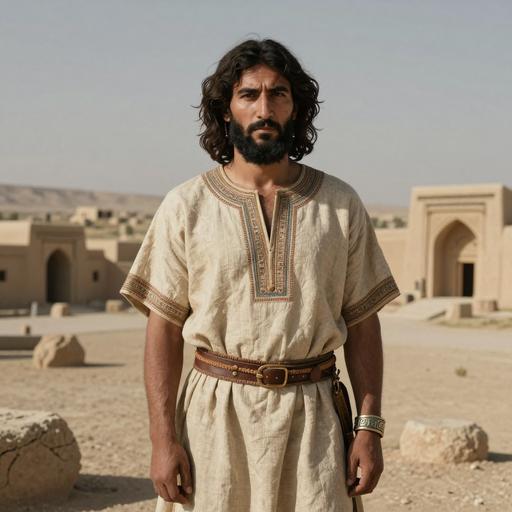
mtDNA haplogroup W1I1B is a downstream branch of the W1I1 lineage, itself nested within haplogroup W. The parent clade W1I1 has been estimated to have a mid-Holocene origin in the Near East / Caucasus (~4.5 kya). Given that W1I1B is a subclade of W1I1, its time depth is likely shallower and consistent with late Chalcolithic to Bronze Age diversification (we provisionally estimate ~3.0 kya). As with many low-frequency maternal lineages, W1I1B appears to have arisen locally within a Near Eastern/Caucasus genetic context and subsequently dispersed in small numbers through population movements associated with Bronze Age contacts, later trade routes and historical migrations.
Because the clade is rare in both modern and ancient samples, the internal phylogeny of W1I1B is not yet well resolved; the branch is defined by a small number of diagnostic control-region and coding-region variants in published datasets. Additional whole-mtDNA sequences and ancient DNA samples will be required to refine mutation-based age estimates and to reveal any internal substructure.
Subclades
At present, W1I1B is treated as a terminal or near-terminal subclade of W1I1 in available phylogenies. There are no well-documented, widely accepted downstream subclades that have been robustly reported in the literature or public phylogenetic repositories, reflecting the haplogroup's rarity and the limited sample size. Future sequencing of additional modern and ancient individuals may reveal further branching.
Geographical Distribution
W1I1B is detected at low frequencies across a geographically broad but sparse distribution that mirrors the reach of its parent clade. Modern occurrences and the limited ancient-DNA evidence place it primarily in:
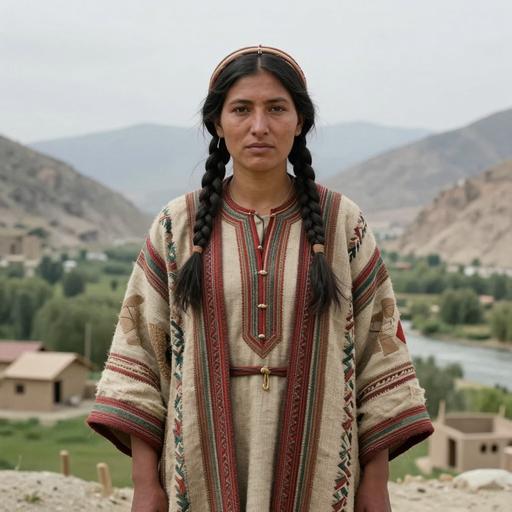
- The Caucasus (Armenia, Georgia, Azerbaijan) and adjacent Near Eastern regions (Anatolia, Iran), where W1I1 lineages likely originated and persisted.
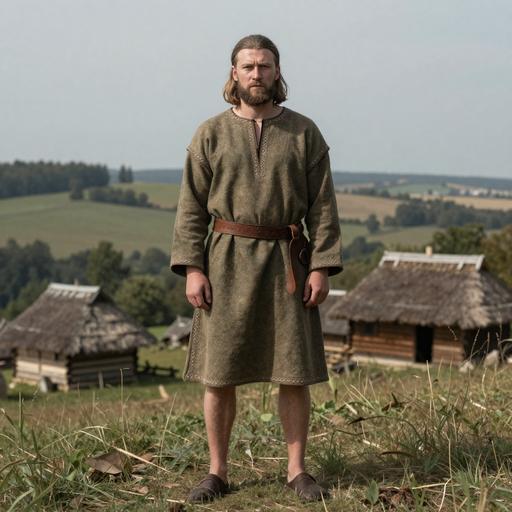
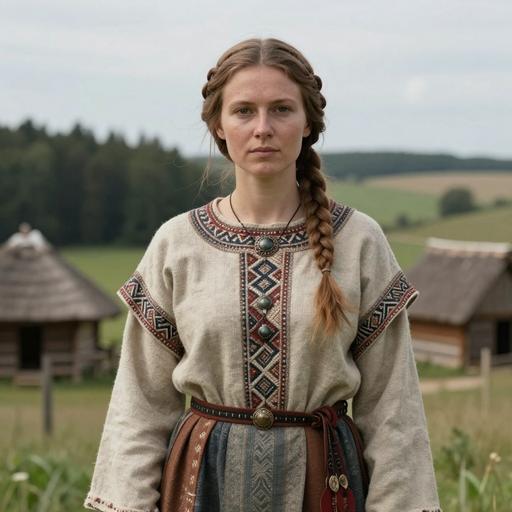
- Eastern Europe (Baltic states, Poland, western Russia) and parts of Northern Europe (including isolated occurrences in Scandinavia), likely reflecting northward and westward gene flow during the Bronze Age and later periods.
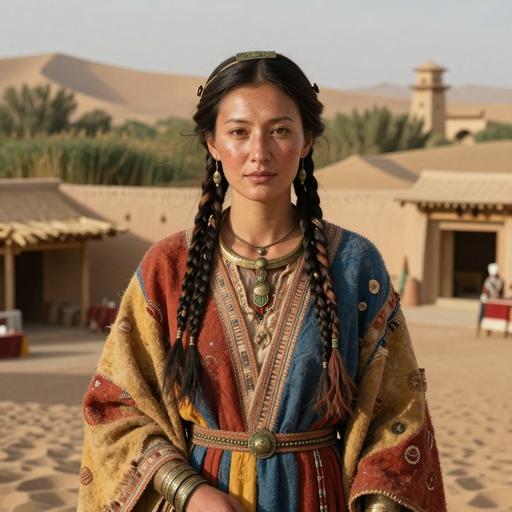
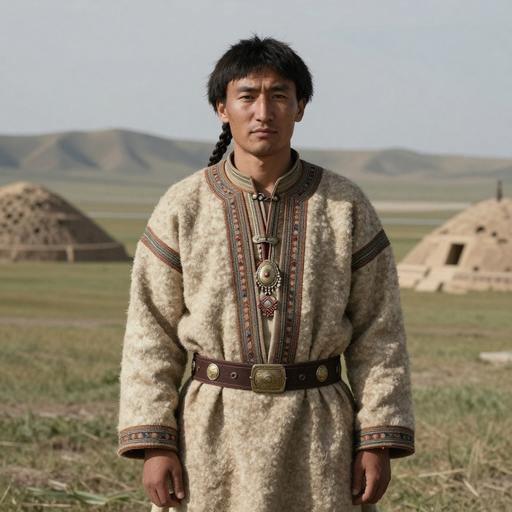
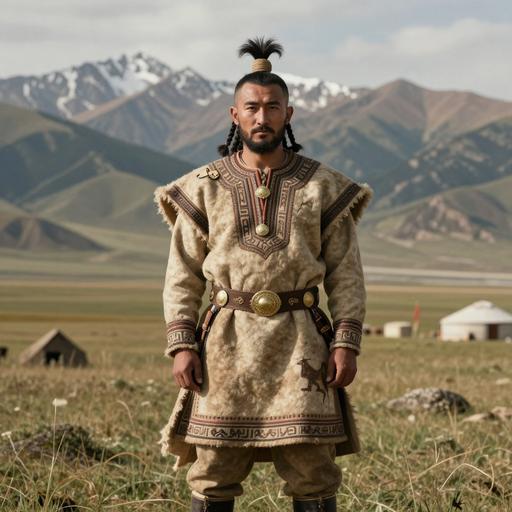
- Central and South Asia (northwest India, Pakistan, Kazakhstan, Uzbekistan, Turkmenistan), consistent with Bronze Age steppe interactions, Silk Road-era movements and historic trading networks.
- Very low-frequency occurrences reported in western China and southwestern Siberia, probably due to long-distance migration and trade contacts.
Only a small number of ancient specimens have been assigned to W1I1 or very close derivatives in published ancient-DNA databases; W1I1B itself has been identified in a very limited number of archaeological samples, indicating presence in archaeological contexts but insufficient representation to make firm region-specific inferences.
Historical and Cultural Significance
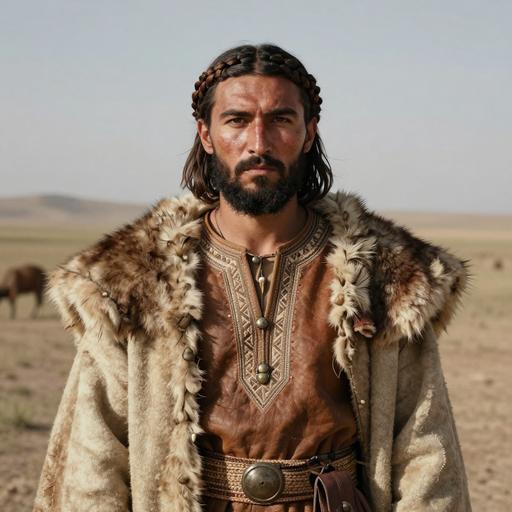
Because W1I1B is rare, it is not a hallmark lineage of any single archaeological culture, but its pattern of occurrence is consistent with Bronze Age and post-Bronze Age connectivity across the Near East, Caucasus, steppe and into Europe and South Asia. Possible cultural associations include:
- Bronze Age networks linking the Caucasus and Near East to the Pontic-Caspian steppe and to temperate Europe, which could explain low-frequency introduction into Eastern and Northern Europe.
- Silk Road and Iron Age–Medieval trade routes, which provide plausible mechanisms for its appearance in Central and South Asia and farther east in isolated cases.
Because mtDNA tracks maternal ancestry, the presence of W1I1B in small numbers across diverse regions likely reflects the movement of women (and families) within broader demographic processes — marriage networks, elite mobility, trade-linked relocations and small-scale migrations — rather than large-scale population replacement.
Conclusion
mtDNA haplogroup W1I1B represents a rare, late-branching maternal lineage that likely formed in the Near East / Caucasus during the late Chalcolithic to Bronze Age and subsequently dispersed at low frequency into Eastern and Northern Europe, Central and South Asia, and parts of western China and Siberia. Its rarity limits firm conclusions about fine-scale phylogeography and cultural associations; targeted sequencing of modern carriers and recovery of additional ancient genomes will be essential to clarify its history and demographic significance. In the meantime, W1I1B serves as an informative example of how localized maternal lineages can spread widely but sparsely through complex human mobility over the past several thousand years.
Key Points
- Origins and Evolution
- Subclades
- Geographical Distribution
- Historical and Cultural Significance
- Conclusion