The Story
The journey of mtDNA haplogroup W3A
Origins and Evolution
mtDNA haplogroup W3A is a downstream branch of haplogroup W3, itself nested within the broader West Eurasian haplogroup W. Based on its phylogenetic position and the known time depth of W3, W3A most likely arose in the Near East or adjacent South Asian regions during the early Holocene (roughly ~9 thousand years ago in this estimate). Its emergence fits the pattern of post-glacial and early Neolithic demographic expansions that redistributed maternal lineages from Near Eastern refugia and farming source regions into Europe, the Caucasus, Central Asia, and parts of South Asia.
The haplogroup is defined by a small number of coding-region and control-region mutations that distinguish it from other W3 branches. Because W3A is relatively rare and understudied compared with major West Eurasian clades (e.g., H, U), much of the fine-scale structure of W3A remains to be resolved; additional whole mitogenome sampling has the potential to reveal further sub-branches and geographic structure.
Subclades (if applicable)
At present, W3A is reported as a named subclade within published phylogenies and population surveys, but it shows limited publicly described internal branching in the literature. Where mitogenomes are available, researchers often find private or locally restricted variants indicating that W3A contains regional substructure — particularly between South Asian and European carriers. Continued full mitogenome sequencing across the Near East, South Asia, and Europe is required to confidently delineate and name finer subclades derived from W3A.
Geographical Distribution
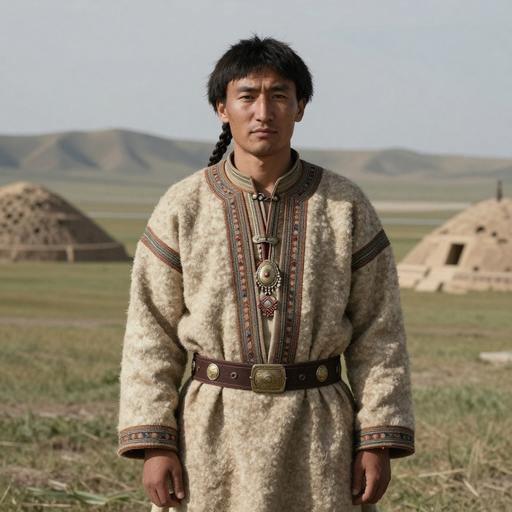
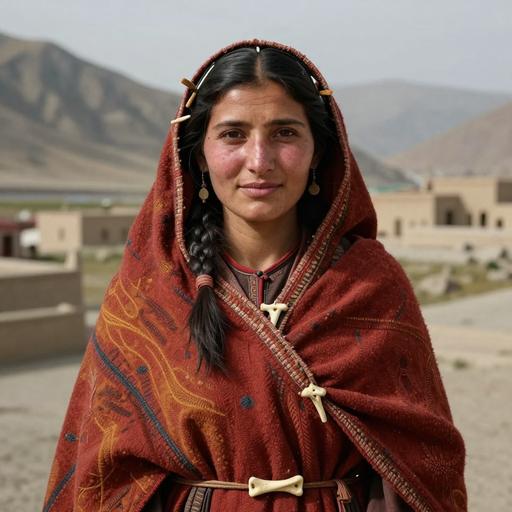
W3A exhibits a broad but low-to-moderate frequency footprint across Eurasia. Documented modern occurrences include Eastern and Northern Europe, the Caucasus, the Iranian plateau and Anatolia, South Asia (India and Pakistan), and scattered instances in Central Asia and western China / southern Siberia (e.g., among Uyghur and Altaian groups). The pattern suggests an origin in the Near East / South Asia followed by multiple dispersal episodes: an early Holocene/Neolithic spread with farming populations and subsequent gene flow along trade and migration corridors into Europe and the steppe.
Ancient DNA evidence currently includes a small number of archaeological samples (three in the referenced database), supporting a presence of W3A in past populations but indicating it was never a dominant maternal lineage in most regions sampled to date.
Historical and Cultural Significance
Because of its Near Eastern/South Asian origin and later occurrences in Europe and the Caucasus, W3A is particularly informative for inquiries into:
- Neolithic expansions from Anatolia and the Near East into Europe and adjacent regions, where small frequencies of W and W-derived lineages are consistent with farmer-associated maternal ancestry.
- Post-glacial and Holocene mobility, reflecting movements of people across the Caucasus and into Central and South Asia.
- Long-distance contacts and admixture, since the haplogroup appears in both South Asian and European contexts, indicating episodes of female-mediated gene flow over millennia.
W3A's presence in diverse population contexts (agriculturalists, mixed heritage communities, and some tribal groups) highlights its role as a minority but persistent West Eurasian maternal signal across Eurasia.
Conclusion
mtDNA W3A is a geographically widespread but low-frequency West Eurasian maternal lineage with an origin in the Near East / South Asia in the early Holocene. It complements broader phylogeographic patterns of post-glacial re-expansion and Neolithic farmer dispersals and is most valuable when combined with whole mitogenome data and autosomal/y-chromosome evidence to reconstruct regional demographic history. Current conclusions are necessarily provisional because W3A remains sparsely sampled in both modern and ancient mitogenomes; increased sequencing in understudied regions will refine its internal structure and migration history.
Key Points
- Origins and Evolution
- Subclades (if applicable)
- Geographical Distribution
- Historical and Cultural Significance
- Conclusion